
Hand numbness that shows up 20 or 40 minutes into a ride usually is not random. For many riders, it comes from too much pressure through the palm, a wrist angle that narrows space around a nerve, or a cockpit setup that makes your hands support more of your torso than they should. The two common nerve patterns are ulnar nerve irritation on the pinky side and median nerve irritation in the carpal tunnel. (orthoinfo.aaos.org)
TL;DR
- If your ring finger and pinky go numb, think ulnar nerve pressure first. (orthoinfo.aaos.org)
- If your thumb, index, and middle fingers tingle, think median nerve or carpal tunnel pattern first. (niams.nih.gov)
- Fix reach, wrist angle, and how much weight you put into the bars before you start buying more padding. (hss.edu)
- Cold, color change, neck symptoms, or numbness that lingers off the bike may mean the issue is not a simple bike-fit problem. (niams.nih.gov)
- Sudden one-sided numbness with speech, vision, balance, or facial changes is a medical emergency. Call 911. (cdc.gov)
This article is informational and not medical advice. Persistent numbness, loss of grip, hand weakness, symptoms that wake you at night, or symptoms in someone with diabetes, known neck problems, or circulation issues deserve medical evaluation. (orthoinfo.aaos.org)
Start with the finger pattern, not the padding
The biggest mistake riders make is treating every tingling hand the same way. Symptom location is the fastest clue. Ring-finger and pinky symptoms point toward the ulnar nerve, which AAOS notes can be compressed at the wrist and is classically irritated by long rides with body weight resting through the palm. Thumb, index, and middle-finger numbness fits the median nerve pattern seen in carpal tunnel syndrome. A whole-hand or arm sensation, especially with neck or shoulder discomfort, should make you question reach and neck position rather than blame grips alone. Fingers that become cold, white, or blue suggest a different possibility: Raynaud’s phenomenon or another circulation issue. (orthoinfo.aaos.org)
| What you notice | Likely issue | $0 fix to try first | Low-cost purchase if needed | When to stop self-fixing |
|---|---|---|---|---|
| Ring finger and pinky go numb | Ulnar nerve pressure at the palm or elbow | Sit a bit taller, unload your palms, change hand position more often, and check reach | Padded gloves, thicker tape, or softer grips | Weak grip, symptoms off the bike, or visible hand muscle loss |
| Thumb, index, and middle fingers tingle | Median nerve or carpal tunnel pattern | Straighten the wrists, reduce wrist extension, and review hood or lever angle | Padded gloves or softer contact points | Night symptoms, persistent numbness, or thumb weakness |
| Whole hand or arm feels odd, especially with neck tension | Reach or posture problem, neck-related nerve irritation, or a broader nerve issue | Raise or bring back the bars and relax the shoulders | A fit check before buying more parts | Symptoms happen away from riding or come with weakness |
| Fingers turn cold, white, or blue | Cold-triggered circulation problem such as a Raynaud’s pattern | Warm the hands, reduce cold exposure, and shorten cold rides | Warmer gloves or glove liners | Recurrent color changes, severe pain, ulcers, or symptoms not clearly tied to cold |
Use the HANDS Audit before you buy anything
Before you buy new gloves, run a one-ride HANDS Audit. It is a simple way to separate a setup problem from a medical one, and it forces you to look at the actual mechanics of your ride instead of guessing. Most riders who solve this quickly do three things first: map the fingers, check wrist position, and reduce how much body weight is being dumped into the bars. (orthoinfo.aaos.org)
- H – Hand map: Write down exactly which fingers go numb and whether it is one hand or both. That pattern tells you more than the intensity does. (orthoinfo.aaos.org)
- A – Angle: Look at your wrists on the bike. If they are visibly bent instead of straight, you may be creating the problem even if the bike otherwise feels comfortable. (hss.edu)
- N – Neck and reach: If your bars are low or far away, you may be holding yourself up with locked arms. HSS notes that low handlebars can increase upper-body strain. (hss.edu)
- D – Distribution: Ask whether your hands are supporting your torso. Soft elbows and a hip hinge should share the load; heavy palms are a warning sign. (hss.edu)
- S – Stay-after test: If the sensation clears within minutes of changing position, fit is more likely. If it lingers into the next day, keeps happening off the bike, or comes with weakness, stop treating it as a small nuisance. (hss.edu)
Use the audit as a decision rule. If only one or two items are clearly off, start with a small fit reset. If three or more light up, assume you need a more systematic cockpit change, not a gadget. And if the Stay-after test is positive, skip more trial and error and line up either a medical evaluation, a professional bike fit, or both. Persistent nerve compression can take months to settle, and recovery is often slower if you keep riding through it. (hss.edu)
Fix the setup before you spend money
The best fixes are usually boring, which is exactly why they work. Start with body position, then contact-point angle, then small purchases. Accessories can help, but they are often the third move, not the first. (hss.edu)
- Unload the hands first. Bend the elbows slightly, relax the shoulders, and think about hinging from the hips so your torso is not hanging from straight arms. If you feel yourself sinking into your palms, reset right away. (hss.edu)
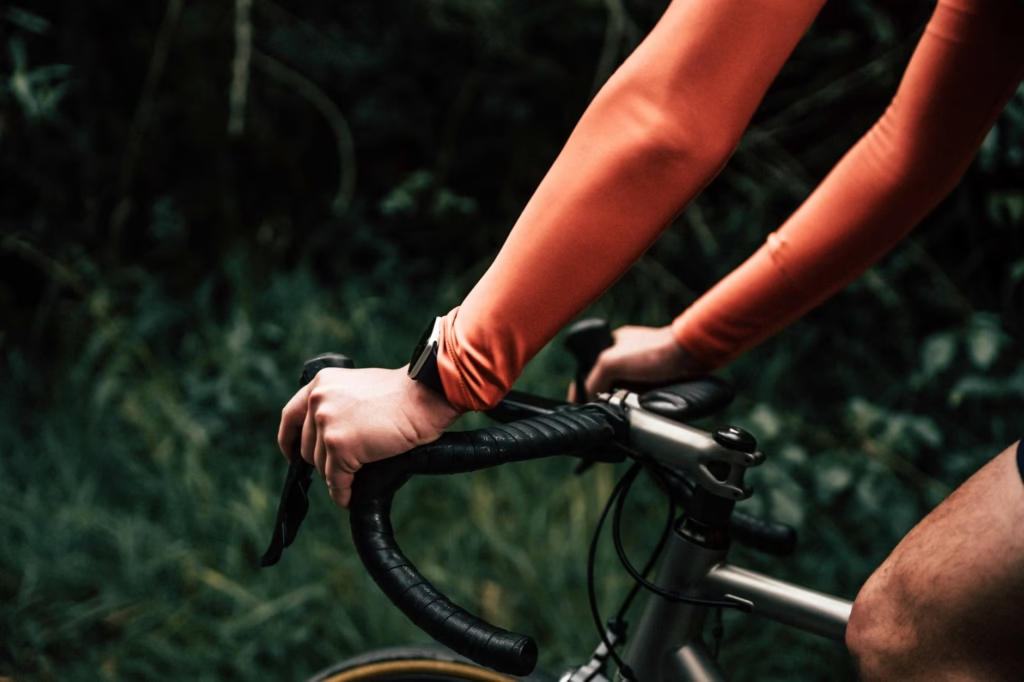
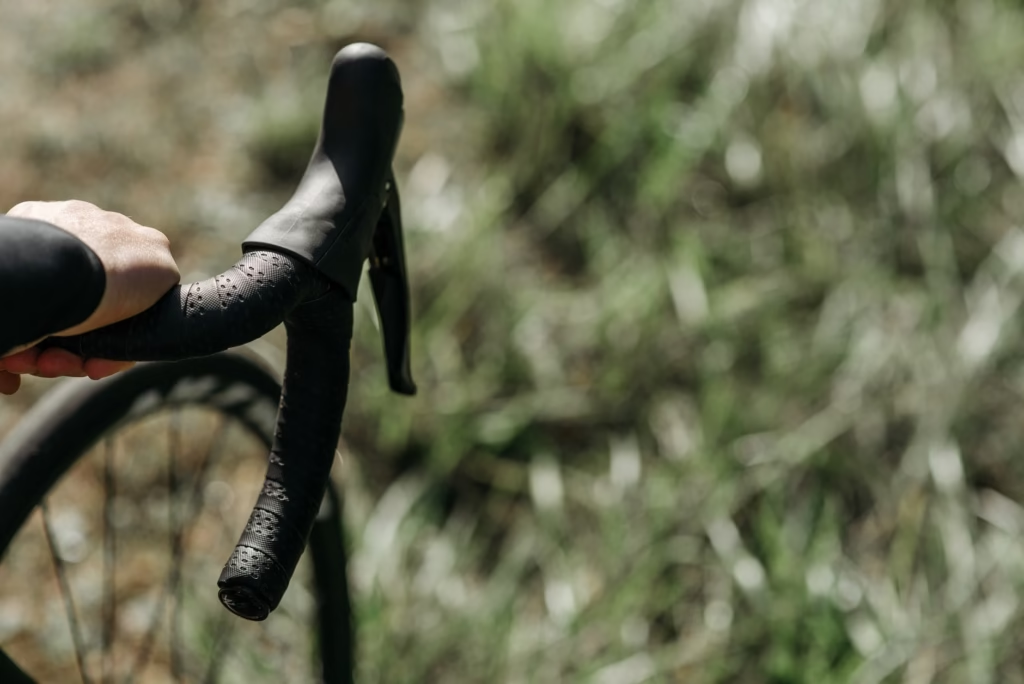
- Return the wrists to neutral. Your wrist should be as straight as the setup allows, not bent back. On flat bars, rotate brake levers and grips so your hands meet them naturally. On drop bars, hood angle matters for the same reason. (hss.edu)
- Shorten the stretch if you are overreaching. Bars that are too low or too far away make your hands more load-bearing. Raising the front end a bit or bringing the cockpit back can be more effective than buying thicker gloves. (hss.edu)
- Move your hands often. AAOS and HSS both point to frequent hand-position changes as a practical way to reduce chronic pressure on the ulnar side of the palm. For longer rides, use a simple rule: change position at least every 5 to 10 minutes or at every stoplight, climb, or bottle sip. (orthoinfo.aaos.org)
- Add cushioning only after the fit changes. Softer grips, fresh bar tape, or padded cycling gloves can help by reducing local pressure, but they should support a better setup, not hide a bad one. HSS specifically recommends gel- or foam-padded gloves or softer grips instead of wrist guards. (hss.edu)
- Do not wear wrist guards on the bike. HSS warns that they can interfere with braking and steering, which makes them a poor tradeoff for a fit problem. (hss.edu)
- If symptoms start during the ride, treat that as feedback, not a challenge. Change hand position right away, sit up, and head home if the numbness keeps building. The earlier you back off, the better the odds of avoiding a longer recovery. (hss.edu)
Here is a realistic way to handle the problem without wasting money. Say a commuter rides 18 miles round-trip on a flat-bar hybrid and gets right-hand ring-finger and pinky numbness after about 25 minutes each way. Instead of buying a $180 accessory on impulse, they set a $120 troubleshooting budget. Ride one uses no-cost changes only, including softer elbows, a reminder to change hand position every 10 minutes, and a check that the wrists are not bent back. Ride two adds $32 padded gloves and $28 better grips only if the first ride helps but does not solve it. Ride three uses the remaining $60 for a shop adjustment that raises or brings back the bars. That order keeps spending tied to evidence, not frustration. (orthoinfo.aaos.org)
Common mistakes that keep the problem going
What stalls progress is usually not a lack of toughness. It is solving the wrong problem. Riders often buy more padding when the real issue is reach, wrist angle, or simply failing to move their hands at all. Low bars, straight elbows, and ignoring the exact finger pattern are repeat offenders. (hss.edu)
- Using thicker gloves as the first fix instead of a last-mile fix.
- Locking the elbows and letting the shoulders creep up toward the ears.
- Letting the wrist bend back because the brake levers or hoods are angled wrong.
- Keeping one hand position for an entire ride.
- Trying to ride through next-day numbness.
- Assuming both hands mean it has to be the bike; carpal tunnel and other nerve issues can affect both hands, too. (medlineplus.gov)

When the first plan is not enough
Sometimes the bike is only part of the story. Persistent numbness can come from ulnar tunnel or cubital tunnel problems, carpal tunnel syndrome, neck-related nerve irritation, Raynaud’s phenomenon, or a broader peripheral neuropathy. MedlinePlus and NINDS both note that numbness and tingling can have many causes, including nerve injury, compression, diabetes, vitamin problems, and some medication- or alcohol-related nerve damage. (orthoinfo.aaos.org)
Get checked sooner rather than later if you notice weakness, trouble gripping or pinching, muscle loss in the hand, symptoms that wake you at night, color changes, or numbness that continues after the ride or shows up away from the bike. Depending on the pattern, evaluation can include a physical exam and sometimes nerve testing such as NCS or EMG. AAOS also notes that imaging may be used when something is pressing on the nerve at the wrist. (orthoinfo.aaos.org)
Emergency note: Sudden numbness or weakness in one arm or one side of the body, especially with facial droop, speech trouble, vision changes, dizziness, or severe headache, is not a bike-fit problem. Call 911 right away. (cdc.gov)
How to pressure-test whether your changes worked
Instead of doing five different things and guessing which worked, treat each different exercise as part of an ongoing experiment. Hold the route, the length and the weather as constant as you reasonably can, but change one variable at a time. This is the quickest way for you to determine if you actually reduced pressure, or if you simply had an easier day.
- Log the onset time. Note the minute the symptoms start, which fingers are involved, and whether one or both hands are affected.
- Use the next-day check. If the hand feels normal later that day and the following morning, your changes are likely helping. If numbness is still there, you have not solved the real problem. (hss.edu)
- Repeat each setup change for two or three similar rides before judging it.
- If the onset time does not move later, or the numbness gets stronger, escalate to a shop fit check or clinician instead of stacking more accessories.
Bottom line
Most numb hands on the bike are fixable, but the order matters. Read the finger pattern, reduce palm pressure, straighten the wrist, shorten or raise the cockpit if needed, and use padding as support rather than camouflage. If symptoms linger, include weakness, or come with color change or sudden one-sided neurologic symptoms, move beyond self-fixes quickly. (orthoinfo.aaos.org)
Frequently asked questions
Is some hand numbness on long rides just normal?
Common is not the same as normal. Tingling from staying in one position can happen, but repeated or progressive numbness means pressure or nerve irritation that you should address. HSS advises changing grip right away and getting evaluated if symptoms remain the next day. (hss.edu)
Which fingers matter most?
Ring finger and pinky point more toward the ulnar nerve. Thumb, index, and middle fingers fit the median nerve or carpal tunnel pattern. That simple map is one of the fastest ways to choose the right fix. (orthoinfo.aaos.org)
Do padded gloves actually work?
They can help, but mostly as a pressure reducer after you improve fit. Gloves will not fully solve bars that are too low, too far away, or forcing your wrists out of a straight position. HSS suggests padded gloves or softer grips, but also emphasizes neutral wrists and frequent position changes. (hss.edu)
Should I get a professional bike fit or see a doctor first?
If the numbness only shows up on the bike and improves quickly with position changes, a fit check is a reasonable first step. If it lasts off the bike, wakes you at night, comes with weakness, color changes, neck symptoms, or fine-motor problems, make medical evaluation the priority. (orthoinfo.aaos.org)
Can cold weather be the main reason my hands go numb?
Yes. Raynaud’s attacks can make fingers cold, numb, and sometimes white or blue, and cold exposure is a common trigger. If that matches your pattern, better insulation and warming strategies matter, but recurrent attacks are worth discussing with a clinician. (niams.nih.gov)
References
- American Academy of Orthopaedic Surgeons: Ulnar Tunnel Syndrome of the Wrist – https://orthoinfo.aaos.org/en/diseases–conditions/ulnar-tunnel-syndrome-of-the-wrist/
- Hospital for Special Surgery: What to Know about Cycling and Wrist Pain – https://www.hss.edu/health-library/move-better/wrist-pain-cycling
- Hospital for Special Surgery: 5 Common Cycling Injuries and How to Avoid Them – https://www.hss.edu/health-library/move-better/common-cycling-injuries
- NIAMS: Carpal Tunnel Syndrome – https://www.niams.nih.gov/index.php/health-topics/carpal-tunnel-syndrome
- MedlinePlus: Carpal Tunnel Syndrome – https://medlineplus.gov/carpaltunnelsyndrome.html
- CDC: Signs and Symptoms of Stroke – https://www.cdc.gov/stroke/signs-symptoms/?linkId=802504228
- NIAMS: Raynaud’s Phenomenon – https://www.niams.nih.gov/health-topics/raynauds-phenomenon
- MedlinePlus Medical Encyclopedia: Numbness and Tingling – https://medlineplus.gov/ency/article/003206.htm
- NINDS: Peripheral Neuropathy – https://www.ninds.nih.gov/health-information/disorders/peripheral-neuropathy
- MedlinePlus Medical Encyclopedia: Raynaud Phenomenon – https://medlineplus.gov/ency/article/000412.htm