
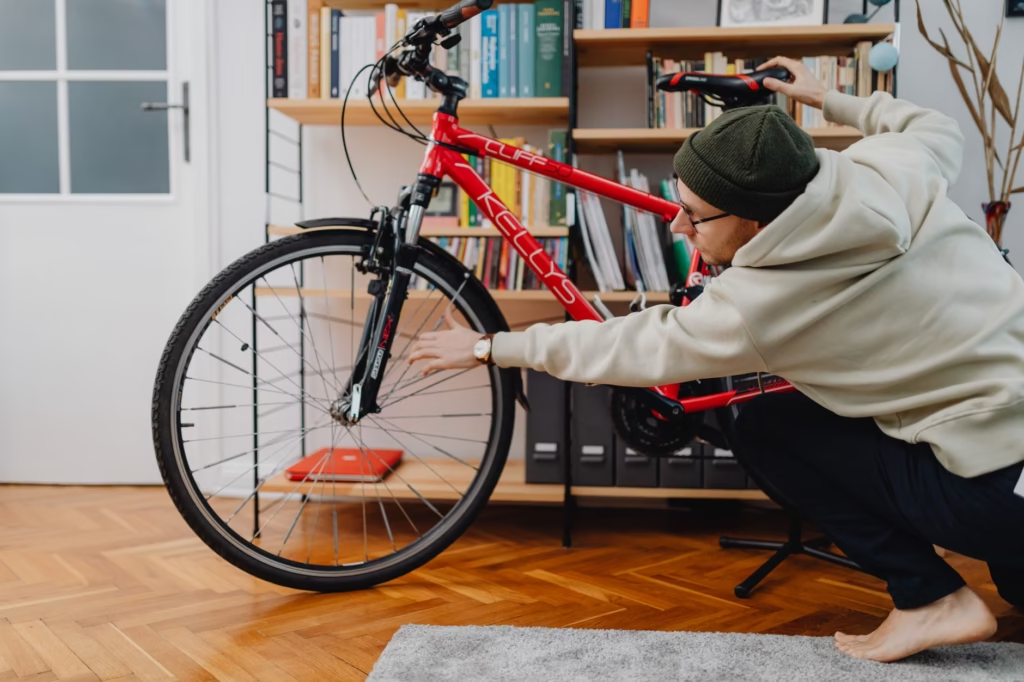
A lot of riders blame their knees, their age, or their training when the real problem is simpler: the saddle is not at the right height. The usual error is not a wildly wrong setup. It is a seat that is just low enough to keep the knee more bent than it should be, especially at the bottom of the stroke, where that extra bend gets repeated thousands of times in a ride. Research has linked low saddle height with higher knee adduction moments and other changes in knee mechanics, while newer reviews point to dynamic knee-angle checks during pedaling as the stronger way to set height. (pubmed.ncbi.nlm.nih.gov)
That matters for speed, too. Saddle height does not turn an average rider into a race winner by itself, and small changes close to your preferred position may have only trivial effects on oxygen cost or efficiency. But a clearly wrong height can alter limb kinematics, pedal-force application, cadence stability, and comfort enough to make steady rides feel harder than they should. (pubmed.ncbi.nlm.nih.gov)
TL;DR
- If your saddle is too low, your knee stays more flexed at the bottom of the pedal stroke, which can raise knee loading and make front-of-knee pain more likely. (pubmed.ncbi.nlm.nih.gov)
- The research-backed target is not a magic formula based on inseam math. Stronger evidence favors checking knee angle dynamically while pedaling, with a commonly used target of about 25° to 35° of knee flexion at bottom dead center. (pubmed.ncbi.nlm.nih.gov)
- Do not move the saddle by a centimeter and hope for the best. Make small changes, test one variable at a time, and compare similar rides.
- If pain is mixed, shows up on both sides of the knee, or started after new cleats, bigger gears, or a jump in mileage, saddle height may be only part of the story. (pubmed.ncbi.nlm.nih.gov)
- Severe pain, swelling, locking, redness, warmth, inability to bear weight, or calf discoloration are medical red flags, not bike-fit problems to troubleshoot at home. (medlineplus.gov)
Why this mistake hurts and slows you down
A low saddle increases knee flexion. In practical terms, that means the knee stays more closed through the stroke, which can increase patellofemoral stress and alter how force moves through the joint. One study in healthy recreational cyclists found that a low saddle height produced greater knee adduction moments and longer time under those moments than the other tested heights. Another found that a rider’s preferred saddle height reduced patellofemoral force compared with both high and low conditions. (pubmed.ncbi.nlm.nih.gov)
The performance side is more nuanced than internet advice suggests. A review of 41 studies found that saddle-height changes of less than 4% of leg length usually create trivial-to-small changes in lower-limb loads and no meaningful change in oxygen uptake or efficiency. That is useful because it keeps you from expecting miracles from a 2 mm tweak. But it also means a rider who is clearly outside a good range should fix height before spending money on new parts, because this is one of the cheapest fit variables to test. (pubmed.ncbi.nlm.nih.gov)
There is also a comfort and rhythm effect. Research has found that saddle height influences limb kinematics and pedal-force behavior, and at least one fatigue study found more stable cadence patterns with the higher of two tested saddle heights. If your cadence gets choppy late in the ride, that is not proof that height is wrong, but it is a useful clue. (pubmed.ncbi.nlm.nih.gov)
The HIPS check: a quick way to tell whether saddle height deserves attention
Therefore before working on the bolt, always use this original HIPS as a reference point. The purpose of the tool is to provide you with an estimate of whether the saddle needs to be raised slightly, lowered slightly, or if you should not be blaming height for a problem that may actually be caused by either the cleats, fore-aft position, or other factors such as loading or training.
- H – Hip stability: Watch your pelvis from behind or on video. If you rock side to side to reach the bottom of the stroke, the saddle may be too high.
- I – Irritation map: Pain around the front of the kneecap often pushes saddle height higher on the suspect list, while mixed inside or outside knee pain should make you check cleats, stance, and tracking before chasing height alone. (pubmed.ncbi.nlm.nih.gov)
- P – Pedal shape: If you are obviously reaching, pointing your toes to find the bottom, or losing smoothness when effort rises, height is worth auditing.
- S – Speed response: If steady endurance rides feel grindy, cadence falls off under fatigue, and nothing else changed, a height reset is a sensible low-cost test. (pubmed.ncbi.nlm.nih.gov)
Decision rule: If you see two or more low-saddle signals, raise the saddle 2 to 3 mm and retest. If you see two or more high-saddle signals, lower it 2 to 3 mm and retest. If the signals are mixed, do not keep moving height blindly. Check cleats, saddle fore-aft, recent training changes, and whether you switched shoes or pedal systems. That caution is consistent with the clinical and review literature, which points to multiple external fit factors and load errors in cycling knee pain. (pubmed.ncbi.nlm.nih.gov)
Set a baseline before you start turning the seatpost clamp
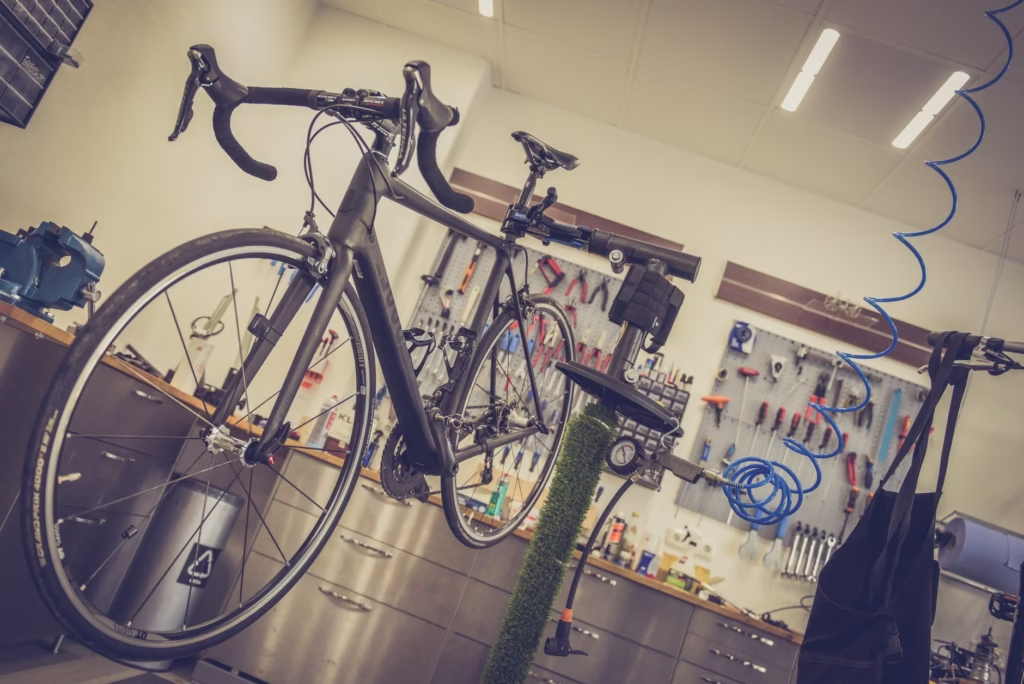
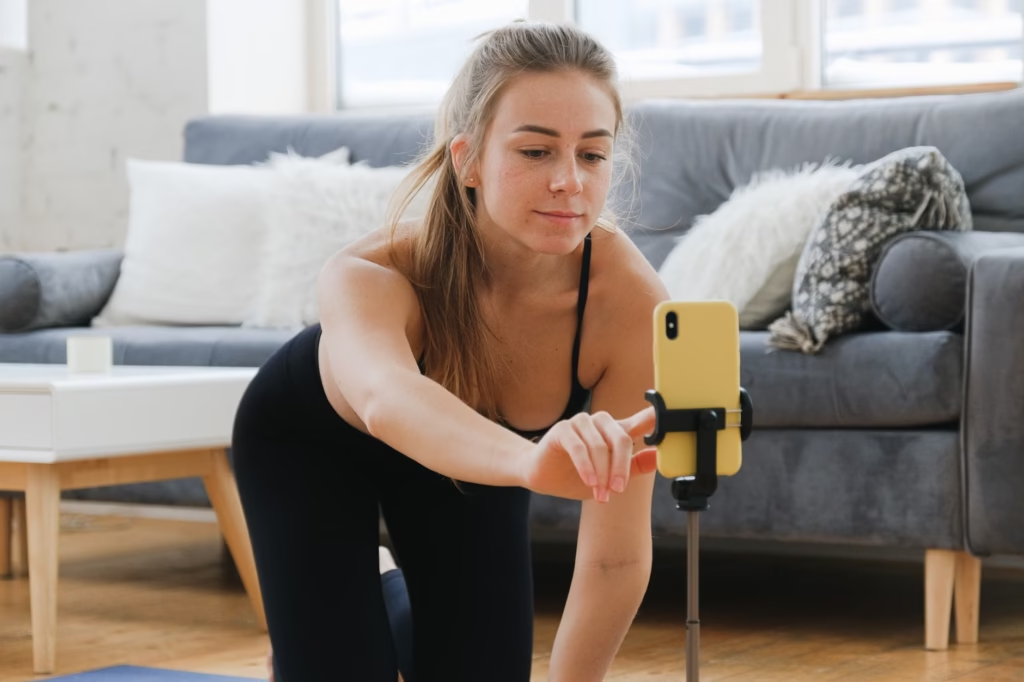
The biggest self-fit mistake is changing the saddle without a repeatable baseline. Measure your current height from the center of the bottom bracket to a repeatable point on the saddle top, following the seat-tube line. Write it down. Then warm up on a trainer or a quiet road and record a short side-view video while pedaling at your normal endurance pace. Stronger evidence favors dynamic measurement during pedaling over static formulas alone. (pubmed.ncbi.nlm.nih.gov)
- Warm up for 10 minutes in the same shoes and cleats you actually ride.
- Pedal at a normal cadence, not a show-off sprint and not an easy coast.
- Pause the video when the crank is at the bottom of the stroke and check whether your knee angle looks roughly within the widely used 25° to 35° window. (pubmed.ncbi.nlm.nih.gov)
- If you look clearly more bent than that, raise the saddle 2 to 3 mm and repeat.
- If you look clearly overreached, with hip rock, toe-pointing, or a locked-looking leg, lower the saddle 2 to 3 mm and repeat.
- Keep every other variable the same for at least one short test ride.
Informational only: Knee pain can come from overuse injuries, tendon problems, meniscus issues, arthritis, or other medical causes. If you have severe pain, major swelling, locking, redness, warmth, a deformed knee, calf discoloration, or you cannot bear weight, stop riding and contact a clinician. (medlineplus.gov)
What your symptoms usually point to
| What you notice | More likely direction | Why it matters | What to check next |
|---|---|---|---|
| Front-of-knee ache that builds after 20 to 60 minutes | Often too low | A lower saddle increases knee flexion and has been linked with higher knee loading. (pubmed.ncbi.nlm.nih.gov) | Also review big-gear riding, recent hill work, and saddle fore-aft. (pubmed.ncbi.nlm.nih.gov) |
| Hips rocking or obvious reaching at the bottom | Often too high | You may be trying to lengthen the leg artificially to find the bottom of the stroke. | Check that you did not also move the saddle backward, which can create a similar feeling. |
| Cadence gets rougher as you tire, even at steady effort | Height worth auditing | Saddle height affects kinematics and cadence stability under fatigue in the research, even if not every rider gets a large performance change. (pubmed.ncbi.nlm.nih.gov) | Retest on the same route before deciding the change worked. |
| Pain inside or outside the knee, or pain that started after new shoes or cleats | Do not assume height first | Clinical and review literature points to cleats, foot position, tracking, and other extrinsic factors. (pubmed.ncbi.nlm.nih.gov) | Check cleat rotation, stance width, and whether your feet track differently side to side. |
| Pain with swelling, locking, warmth, or inability to bear weight | Not a home fit project | Those are medical warning signs. (medlineplus.gov) | Pause riding and seek medical advice. |
A realistic reset example
Let’s take a look at a composite rider who is a 42 year-old weekend cyclist averaging 70-90 miles/week on a mostly flat rail-trail with one hilly group ride. Currently, her saddle height is 710 mm from the bottom bracket to the saddle. After 35 minutes of riding, she usually develops a dull pain in the front of her right knee (around the patella), particularly when pushing a harder gear up an incline. The cadence for her 18 mile route has decreased from 90rpm to 84rpm between the first and last thirds of the ride but the average heart rate is the same at each interval.
The HIPS check was done on her. No significant hip off center, but she has clear irritation in front of her knee and noticeably bent at the bottom of her stroke’s motion. After she rides the same session again and
logs it, she raises her saddle by 3 mm but experiences no change in her pain. She increases the amount again by another 2 mm while keeping everything else consistent (shoe model, same route, same bike tire pressure) and doing the same level of effort.
Her next two rides will require an improvement of her pain, but she also maintains the same cadence of approximately 88 – 89, and has seen an increase in average speed from 16.7 mph to 17.1 mph, with no increase in heart rate.
That does not prove 5 mm is every rider’s answer. It shows how a controlled test works. Small, measured changes are useful. Big emotional changes are not. The research review supports that mindset: near your preferred position, tiny differences may not transform physiology, so you need a repeatable process rather than a one-ride impression. (pubmed.ncbi.nlm.nih.gov)
Common mistakes that keep riders stuck
- Changing height, fore-aft, and cleats on the same day. If the knee feels better or worse, you will not know which change caused it.
- Making 8 to 10 mm jumps because the first ride still felt off. Research supports a controlled approach because smaller changes near your normal position often have modest effects. (pubmed.ncbi.nlm.nih.gov)
- Judging saddle height by whether you can touch the ground at a stop. Stopping posture and pedaling posture are not the same thing.
- Ignoring training load. Clinical reviews note that recent changes in equipment, intensity, and distance matter alongside fit. (pubmed.ncbi.nlm.nih.gov)
- Treating front-knee pain as only a height issue. Saddle fore-aft, cadence, big-gear habits, and foot position can all contribute. (pubmed.ncbi.nlm.nih.gov)
- Buying a new saddle, crank, or pedal system before testing the free adjustment you already have.
When the easy fix is not enough
Sometimes saddle height is only the first layer. If you still have pain after a careful reset, look at the rest of the system. The review literature on cycling knee biomechanics points to cadence, power output, crank length, saddle fore-aft position, and foot position as contributors. The clinical literature adds training errors and recent equipment changes. (pubmed.ncbi.nlm.nih.gov)
A professional bike fitting can offer great value, especially in the case of unusual asymmetries, and issues with the shoe cleats, or the frame size of your bike. A good bike fitter can identify all of these problems, which may be present on the non-fit model that you may not have been able to see from a cell phone video recording or through the video camera. If you have one-sided symptoms, have continued to return to fit adjusting from very minor height changes, or if you have switched pedals, shoes, or crank lengths, a professional bike fitter is a much better way to go than merely moving the saddle again.
And if the knee stays irritated off the bike, not just during pedaling, zoom out. MedlinePlus notes that overuse is only one cause of knee pain; swelling, buckling, locking, fever, warmth, or persistent pain after home care deserve medical attention. (medlineplus.gov)
How to pressure-test the new position before you call it fixed
Use the 2-3-20 rule for the next round of testing: move the saddle 2 to 3 mm, ride 20 minutes at a steady effort before judging it, and compare at least two similar rides unless symptoms worsen right away. That rule is a practical application of the evidence showing that small changes near your normal position can be subtle. (pubmed.ncbi.nlm.nih.gov)
- Ride the same route or trainer workout at roughly the same cadence and effort.
- Use the same shoes, cleats, shorts, and saddle tilt.
- Log three things only: when pain starts, whether cadence stays smooth, and whether a new hot spot appears elsewhere.
- Review side-view video again after the change.
- Keep the adjustment only if the knee feels better and no new problem shows up at the hips, hamstrings, or lower back.
- If the result is mixed, return to baseline and investigate cleats, fore-aft, or workload instead of guessing again. (pubmed.ncbi.nlm.nih.gov)
Bottom line
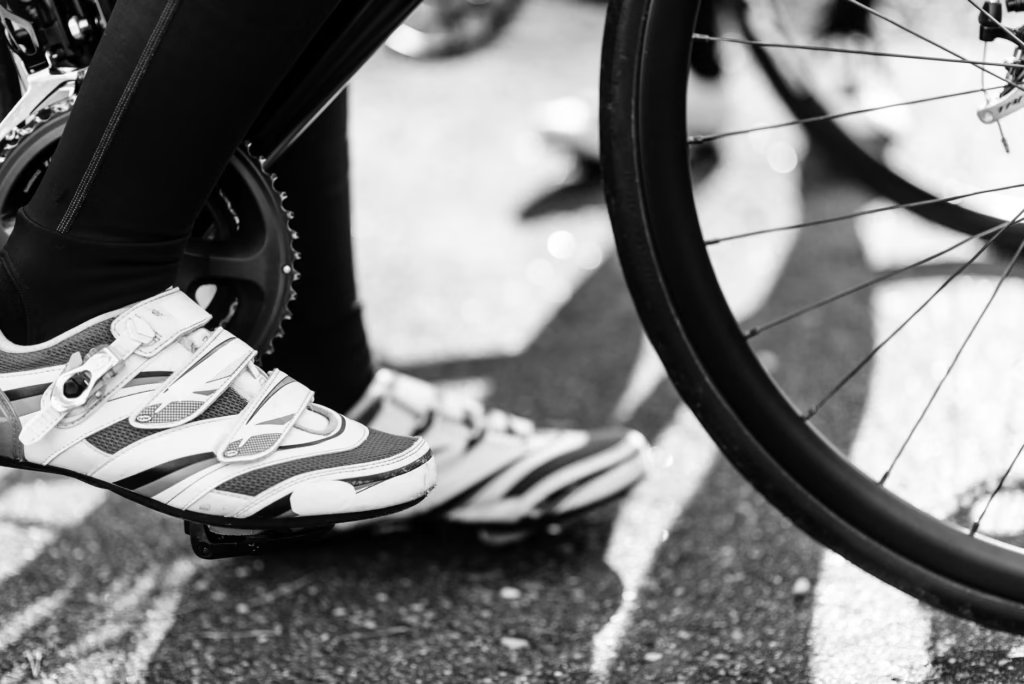
The saddle-height mistake that causes knee pain and slower rides is usually not dramatic. It is a seat that is just low enough to keep the knee too bent, load the joint more, and rob the pedal stroke of smoothness. Start with a dynamic video check, aim for a sensible knee-angle range, change height in millimeters, and verify the result over repeat rides. If the symptoms are mixed or persist, stop treating saddle height like the only lever that matters. (pubmed.ncbi.nlm.nih.gov)
Can a saddle that is only slightly too low really cause knee pain?
Yes, especially because cycling repeats the same movement for long periods. Research has linked low saddle height with greater knee adduction moments and higher patellofemoral forces than a rider’s preferred height, so a setup that is only a little off can matter when repeated over many miles. (pubmed.ncbi.nlm.nih.gov)
What knee angle should I aim for at the bottom of the pedal stroke?
The commonly used target is roughly 25° to 35° of knee flexion at bottom dead center, but current review evidence suggests the better approach is to assess that angle dynamically while pedaling rather than relying on static formulas alone. (pubmed.ncbi.nlm.nih.gov)
How much should I move the saddle at one time?
For most riders, 2 to 3 mm is a reasonable test step. That keeps the change large enough to feel but small enough to isolate. The review literature also suggests that changes near a rider’s normal position often have only modest effects, which is another reason not to make giant jumps. (pubmed.ncbi.nlm.nih.gov)
If the pain is at the front of the knee, should I just raise the saddle?
Often that is worth testing, but not automatically. Front-knee pain in cyclists can also involve saddle fore-aft, bigger-gear riding, recent increases in training, and other fit variables. Raise the saddle only in a controlled way and keep the rest of the setup unchanged while you test. (pubmed.ncbi.nlm.nih.gov)
When is a professional bike fit worth the money?
A paid fit is usually easier to justify when symptoms keep returning, the pain is one-sided, you changed shoes or cleats, or small height adjustments did not solve the issue. That is especially true if you want help separating saddle height from cleat position, fore-aft, crank length, and movement asymmetry. (pubmed.ncbi.nlm.nih.gov)
References
- Bini R, Priego-Quesada J. Methods to determine saddle height in cycling and implications of changes in performance and 5 – https://pubmed.ncbi.nlm.nih.gov/34706617/
- Wang Y et al. Cycling with Low Saddle Height is Related to Increased Knee Adduction Moments in Healthy Recreational Cycl – https://pubmed.ncbi.nlm.nih.gov/31269871/
- Bini R et al. Influence of saddle height in 3D knee loads commuter cyclists: A statistical parametric mapping analysis – https://pubmed.ncbi.nlm.nih.gov/32910745/
- Bini R et al. Saddle height effects on pedal forces, joint mechanical work and kinematics of cyclists and triathletes – https://pubmed.ncbi.nlm.nih.gov/24533494/
- Peveler W et al. Effects of saddle height on economy and anaerobic power in well-trained cyclists – https://pubmed.ncbi.nlm.nih.gov/20581695/
- Asplund C, St Pierre P. Knee pain and bicycling: fitting concepts for clinicians – https://pubmed.ncbi.nlm.nih.gov/20086406/
- Bini R, Hume P, Croft J. Effects of bicycle saddle height on knee injury risk and cycling performance – https://pubmed.ncbi.nlm.nih.gov/21615188/
- MedlinePlus Medical Encyclopedia: Knee pain – https://medlineplus.gov/ency/article/003187.htm