
Urban bike theft may look random from the victim’s side, but it usually is not random from the thief’s side. Many bikes disappear because the setup is easier than the owner realizes: a lock with too much empty space, a frame left unsecured, a removable seatpost, detachable parts left behind, or a parking choice that gives someone time to work. The uncomfortable part is that a rider can buy a decent lock and still make the bike the easiest one on the rack to steal. (govinfo.gov)
A strong lock can still fail if the bike is locked the easy way
One of the most common mistakes is treating the lock itself as the protection instead of treating the whole locking job as the protection. Official guidance from Seattle and the Metropolitan Police is very similar on the basics: use a U-lock or D-lock, secure the frame and at least one wheel to a proper rack, and ideally secure both wheels. Another common mistake is leaving too much room inside the lock or attaching it loosely to the stand. That extra space gives a thief more room to twist, pry, or maneuver tools. The U.S. Department of Justice guide on bicycle theft also notes that thieves exploit loose locks, removable posts, and wheel-only locking. (seattle.gov)
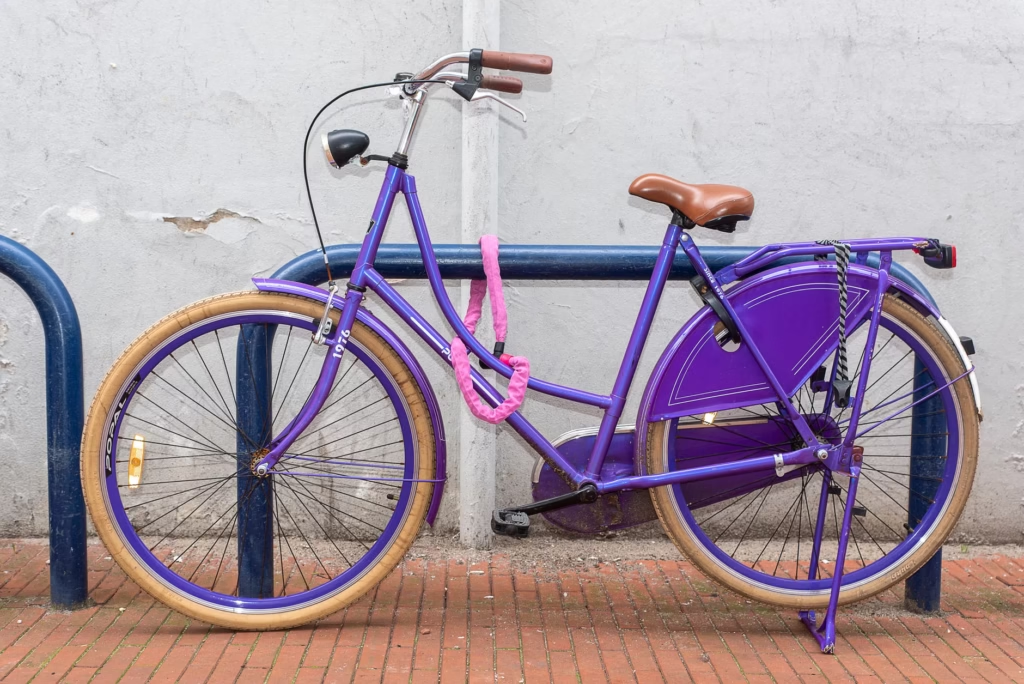
- Check the anchor first. If the rack wobbles, the sign can be removed, or the lock could slide over the top of the post, find another place. (govinfo.gov)
- Capture the frame and a wheel with the main U-lock, and attach it to a rack designed for bikes. If you can also secure the second wheel, even better. (seattle.gov)
- Keep the lock tight to the bike and close to the stand so there is less room to pry or lever it open. (met.police.uk)
- Use a second lock when the bike will be left longer, the area feels riskier, or the other wheel and saddle are easy to remove. Two different lock types can force a thief to use more than one tool. (met.police.uk)
- Take detachable items with you, especially lights, bags, and anything that comes off quickly without tools. (met.police.uk)
This is where convenience quietly beats judgment. A lot of city riders know the “proper” advice, but on a short errand they lock only the frame, only the front wheel, or rely on a thin secondary cable as if it were equivalent to the main lock. Those shortcuts matter because thieves do not need to defeat the entire bike. Sometimes they only need the easiest part. (govinfo.gov)

Parking choices can undo good hardware
Another quiet mistake is assuming a hidden spot is a safer spot. For theft prevention, the opposite is often true. Recognized cycle parking in a well-lit area gives a thief less privacy and less time. The Metropolitan Police specifically advises using secure cycle parking that is well lit and covered by CCTV when possible. That does not make a bike theft-proof, but it can improve the odds. A sturdy lock in a visible place is usually better than the same lock in a secluded corner behind a building. (met.police.uk)
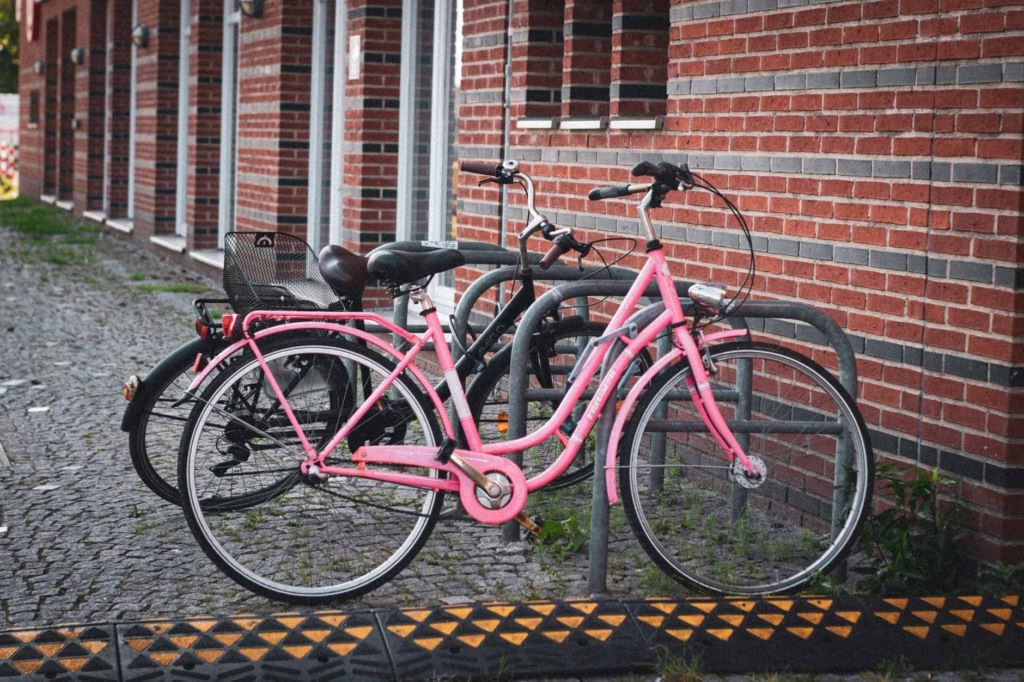
Home storage gets underestimated too. Communal basements, garages, courtyards, and residential racks feel familiar, so riders often relax their habits there. The Metropolitan Police explicitly recommends taking the same care at home as on the street. In practice, that means locking the bike even where access seems limited and avoiding small signals that advertise where the bike lives. One less obvious example is ride-tracking data. If public activity maps repeatedly start and end at the same address, they can reveal where an expensive bike is stored. (met.police.uk)
That last point matters more than many cyclists think. Strava’s current privacy controls let users hide some or all of an activity map, including an address or the start and end of rides. If a bike is kept at home or in a predictable building rack, using those controls is a simple way to stop casually publishing the storage location. It will not stop a determined thief by itself, but it removes one unnecessary exposure. (support.strava.com)
The recovery mistake usually happens before the theft
A surprising number of riders do nothing about ownership records until after the bike is gone. That is a mistake because recovery depends on details most people do not have ready under stress. Seattle’s transportation guidance says a stolen-bike report is far more useful when the owner has a description, serial number, and photographs. The Met makes the same point about registering the frame number and reporting quickly with identifying details. If the bike is stolen, speed matters because it may be moved or sold quickly. (seattle.gov)
- Store the serial or frame number somewhere other than the bike itself. (seattle.gov)
- Keep current photos, not just old product images or listing photos. (seattle.gov)
- Write down a plain-language description: color, model, notable accessories, and anything distinctive. (seattle.gov)
- Register the bike as soon as practical and update the record after major changes. (seattle.gov)
The real pattern behind urban bike theft is not that cyclists are careless. It is that small compromises feel harmless until they stack up. A better lock job, a smarter rack, a tighter routine, and a few ownership records do not make a bike untouchable. They make it less convenient to steal than the next one. In city parking, that difference is often the whole point. (govinfo.gov)
References
- U.S. Department of Justice, Office of Community Oriented Policing Services – Bicycle Theft – https://portal.cops.usdoj.gov/resourcecenter/content.ashx/cops-p141-pub.pdf
- Seattle Department of Transportation – Keep Your Bike Safe – https://www.seattle.gov/transportation/projects-and-programs/programs/bike-program/bike-security
- Metropolitan Police – Protect your bike from theft – https://www.met.police.uk/cp/crime-prevention/keeping-vehicles-safe/how-safe-is-your-bike/?intcmp=75744
- Strava Help Center – Privacy Controls – https://support.strava.com/en-us/articles/15401951-privacy-controls