
City riding becomes more manageable once the street stops looking like a stream of individual cars and starts looking like repeating patterns. The most dangerous moments are usually not the easy stretch between lights. They are the few seconds when someone turns across your line, opens a door into it, or squeezes away the space you thought you had. If you can spot those patterns early, you have time to change speed, lane position, or route before the situation becomes urgent.
Look for conflict points before you look for speed
Common bike-car crash patterns are not random. NHTSA materials on bicyclist collisions focus on turning conflicts, overtaking, failure to stop, wrong-way riding, and sudden entries from driveways or alleys. In practice, that means city riders should pay extra attention anywhere paths cross or compress: intersections, driveways, loading zones, bus stops, parking lanes, and places where a bike lane runs beside turning traffic. (nhtsa.gov)
- Check the curb first. Parked cars, delivery vans, bus stops, and driveways usually create the next problem sooner than through traffic does.
- Read the lead vehicle, not just the light. Wheel angle, a driver searching for a gap, or a car drifting right can matter more than a green signal.
- Keep an escape path. Avoid riding in a slot that leaves no room to brake or move left if a door opens or a turn begins.
- Reset your scan every block. A line that felt safe half a minute ago may be the wrong one at the next corner.
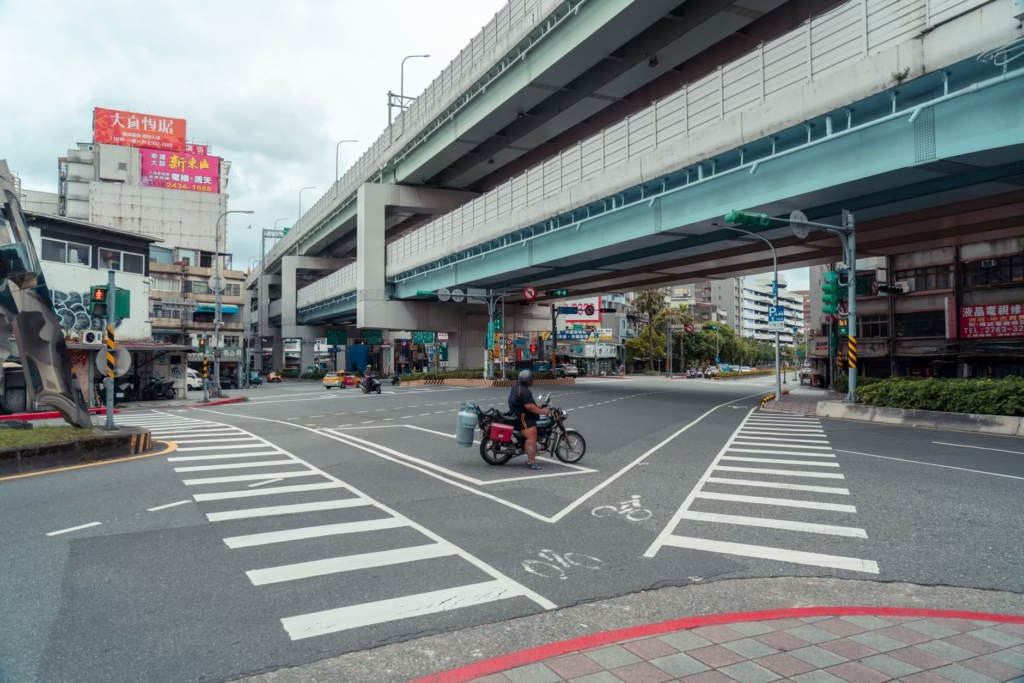
The street usually tells you what is about to go wrong
The clearest clue is intent before motion. A car’s front-wheel angle, brake lights going off, a driver’s head turning to search for a gap, or a vehicle inching toward a driveway often reveal more than the turn signal does. NHTSA specifically warns drivers turning right on red to look behind for a bicyclist approaching from the right rear, which is another way of saying a rider may already be in a conflict zone before the driver has truly seen them. If a car is creeping toward a right turn, do not assume your green light makes the situation safe. (nhtsa.gov)
Curb activity matters almost as much as signal timing. A parked car with someone still inside, a ride-share stopped midblock, or a van half-angled out of a loading space should be read as a live hazard, not static scenery. NACTO’s current protected-bike-lane guidance calls for a 3-foot buffer next to parking to account for a fully opened car door. That is a useful reminder that the painted edge beside parked cars is not automatically usable space. A steady line a bit farther out is often safer than hugging the curb. (nacto.org)
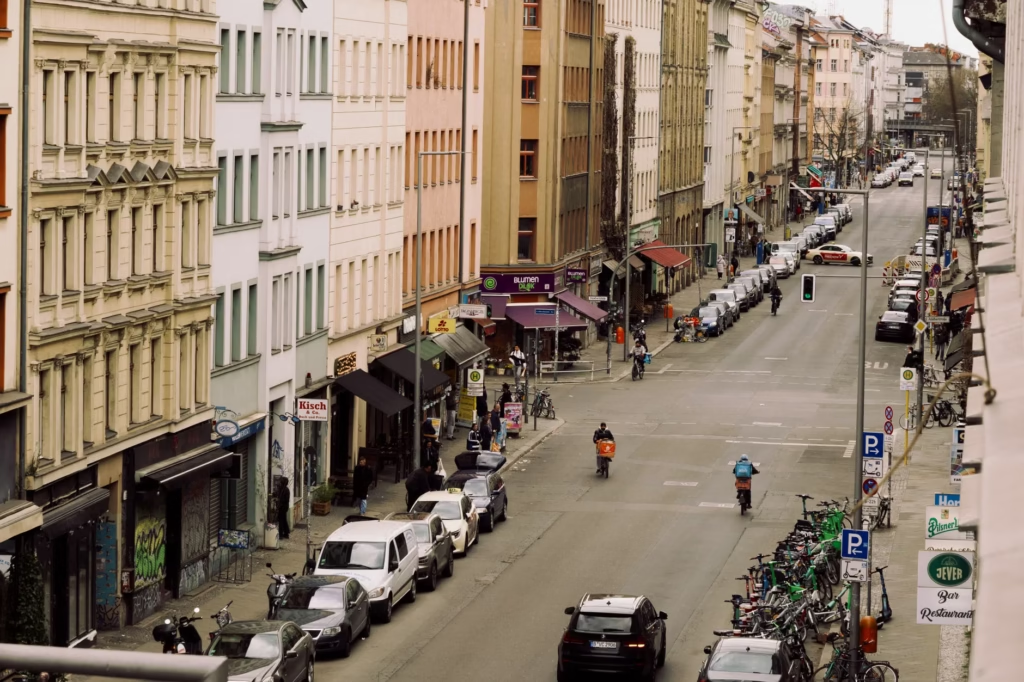
Near a truck or bus, do not move up the inside at a corner. FMCSA warns that large vehicles have blind spots and make wide right turns, so the space between the vehicle and the curb can disappear fast. (fmcsa.dot.gov)
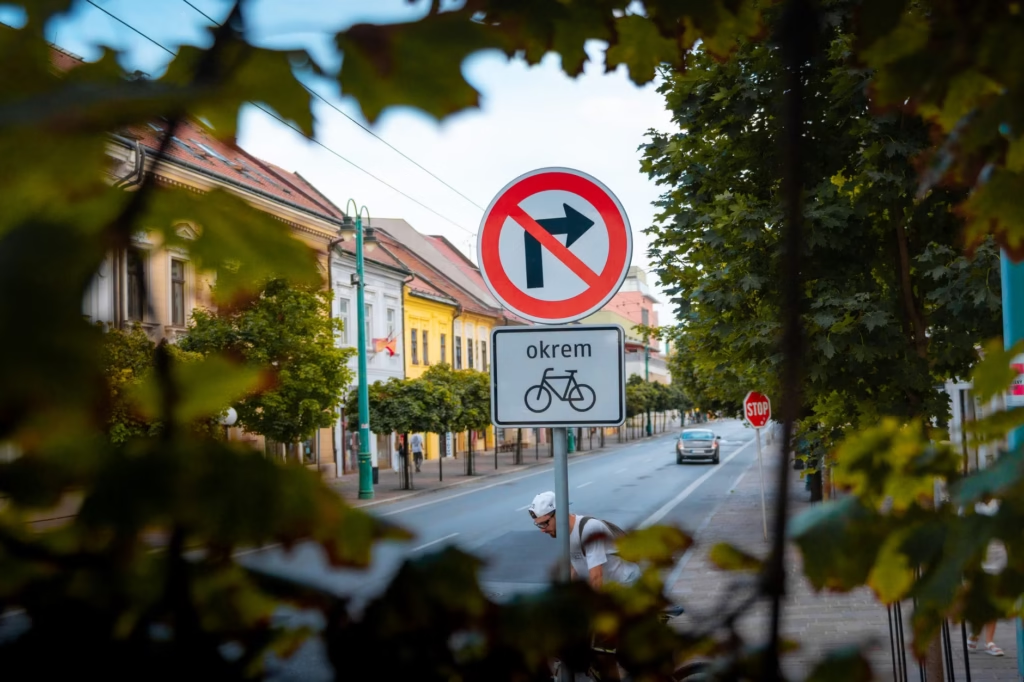
Treat these four situations as instant high-alert zones
- Right-hook zone: When a bike lane runs along the right side of cars near an intersection or driveway, a rider can end up exactly where a turning driver is least likely to check carefully. Ease off the pedals, cover the brakes, and avoid lingering beside a car’s front passenger door as the junction approaches. (nhtsa.gov)
- Left-cross zone: An oncoming driver waiting to turn left across your path may be judging gaps in car traffic more than the speed of a bike coming straight through. If the vehicle is angled to turn, slow enough to confirm the yield rather than assuming the driver has judged your approach correctly. (nhtsa.gov)
- Door-zone block: Mirrors, occupied front seats, recently parked cars, and delivery activity all raise the chance of a sudden door opening or pull-out. If staying outside the door zone means using more of the lane, a predictable line is usually better than threading the narrow strip between parked cars and moving traffic. (nacto.org)
- Truck or bus corner: If a large vehicle is signaling, slowing, or swinging slightly left before a right turn, assume the turn is wide and the blind spot is real. Drop behind it rather than trying to slip through on the right. (fmcsa.dot.gov)
Sometimes the safest move is to slow down or leave the edge
One common misunderstanding in city riding is that staying as far right as possible is always safest. It is not. When the curbside space is full of doors, drainage grates, debris, turning vehicles, or a disappearing bike lane, the better option may be to slow down, take a more visible road position early, or wait behind a conflict instead of trying to squeeze through it. Protected bike lanes exist for a reason: separating riders from moving traffic and parking activity changes the conflicts they have to manage. (nacto.org)
That does not mean one move works everywhere. Check local rules for sidewalk riding, crosswalk riding, lane position, and bike signals before assuming the same defensive choice is legal on every street. But NHTSA’s core advice is consistent: ride predictably, ride with traffic, and do not confuse having the right of way with being clearly seen. If a junction feels ambiguous, slowing dramatically or crossing on foot can be the smarter call. (nhtsa.gov)
The useful habit is simple: stop judging a street only by how much room it gives you right now. Judge it by what other road users are likely to do next. Once that becomes your default way to scan a block, dangerous city situations start looking less sudden and a lot more avoidable.
References
- NHTSA: Bicycle Safety – https://www.nhtsa.gov/road-safety/bicycle-safety
- NHTSA: Common Types of Collisions Between Bicyclists & Motorists – https://www.nhtsa.gov/sites/nhtsa.gov/files/prevent.pdf
- FMCSA: Safety Tips for Bicyclists – https://www.fmcsa.dot.gov/safety/safety-tips-bicyclists
- NACTO: Urban Bikeway Design Guide – Protected Bike Lanes – https://nacto.org/latest/urban-bikeway-design-guide-protected-bike-lanes/