
In city parking, the goal is usually deterrence, not perfection. A bike does not have to be impossible to steal to survive daily errands and commutes; it has to look slower, less convenient, and less rewarding than the easier options nearby. Across city transportation agencies and university bike-security programs, the core advice is remarkably consistent: use a quality U-lock or heavy chain, lock the frame and at least one wheel to a fixed rack, and do not rely on a cable alone as your main defense. (nyc.gov)
Start with a lock and rack thieves cannot exploit quickly
The first decision is the lock itself. A U-lock or heavy chain is the normal starting point for city use, while lightweight cables are better treated as secondary protection for parts, not as the only lock on the bike. Just as important, lock to a real bike rack or another approved fixed object. Check that the bike cannot simply be lifted over the object, and favor visible, well-lit spots over hidden corners. Designated racks are usually the safest choice both for theft prevention and for avoiding parking violations or impound issues that can come with trees, railings, and other unofficial lock-up points. (nyc.gov)
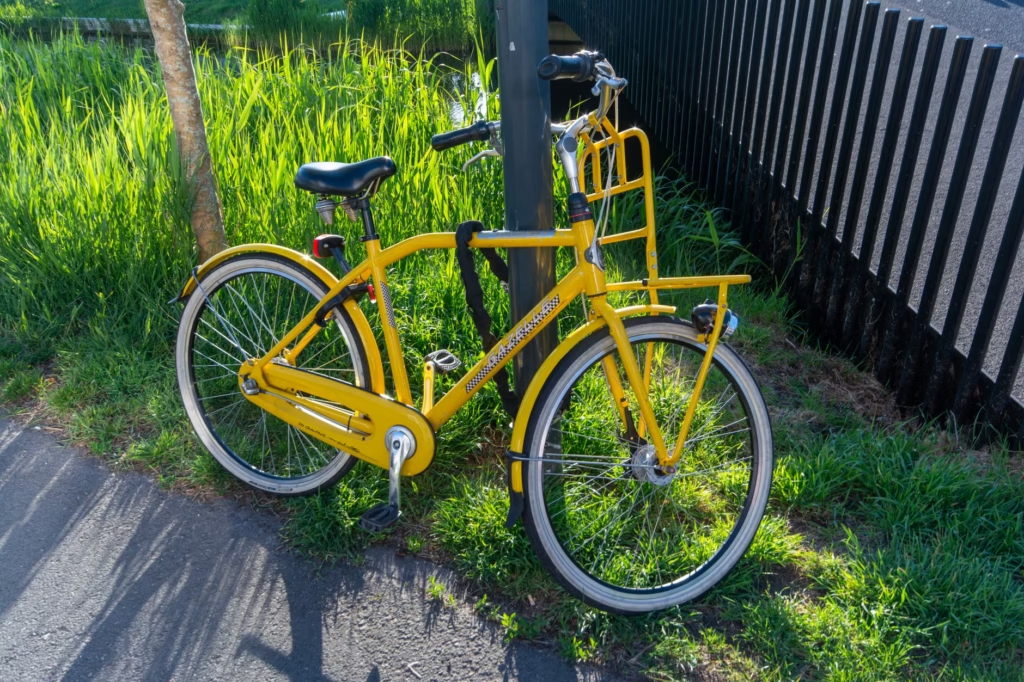
A strong lock is a deterrent, not a guarantee. Both UC Davis and Berkeley note that knowledgeable thieves can still defeat good locks, which is why parking time and location matter almost as much as the hardware itself. (transportation.ucdavis.edu)
Use a locking routine that protects the parts most likely to disappear
- Place the bike close to the rack and run the primary lock through the frame and the wheel nearest the rack. Locking only a wheel or only the frame leaves too much exposed. (seattle.gov)
- If the other wheel or the seat uses quick-release hardware, secure it with a cable, chain, or second lock. Official guidance commonly treats the cable as an add-on for parts, not as the main lock for the whole bike. (transportation.ucdavis.edu)
- Take removable accessories with you. Lights, bags, pumps, computers, and other easy-to-remove items should not stay on the bike if it will be unattended. (ucpd.berkeley.edu)
- Before walking away, tug the rack and the lock. Make sure the lock is fully closed and the bike cannot be lifted over the object it is attached to. (nyc.gov)
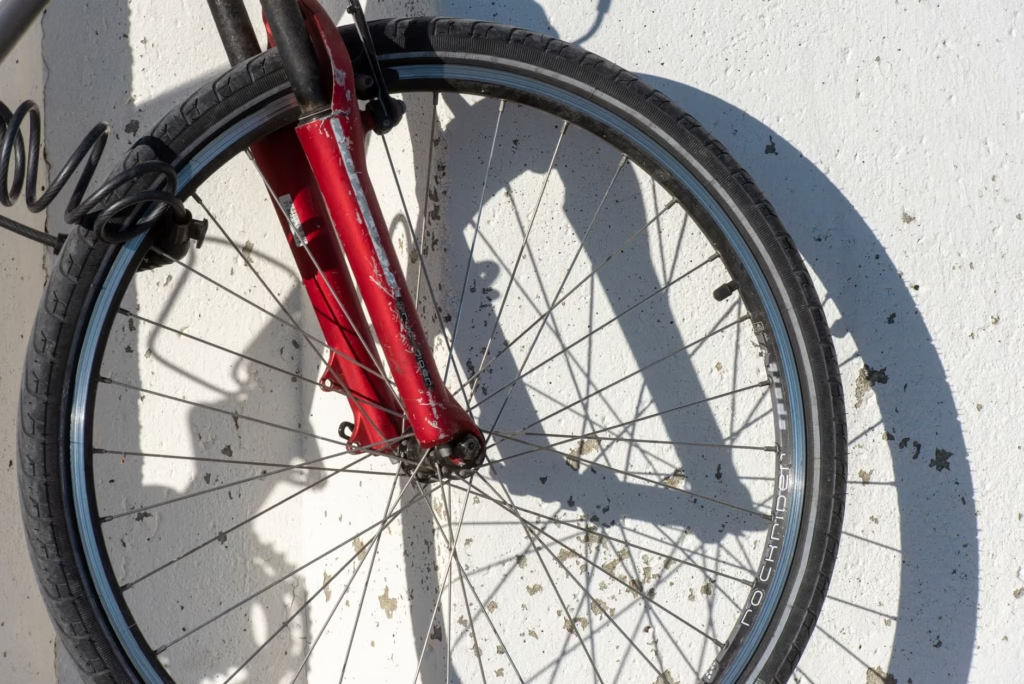
That routine is the practical baseline. From there, the main tradeoff is weight versus security. One good primary lock may be enough for a short daytime stop in a busy place. For a workday, a class block, or any spot where the bike will sit for hours, a second lock or added wheel security is usually the smarter choice. NYC DOT explicitly says more than one lock helps prevent theft, and UC Davis notes that two U-locks can provide additional security. (nyc.gov)
Good locking can still be undone by bad parking habits
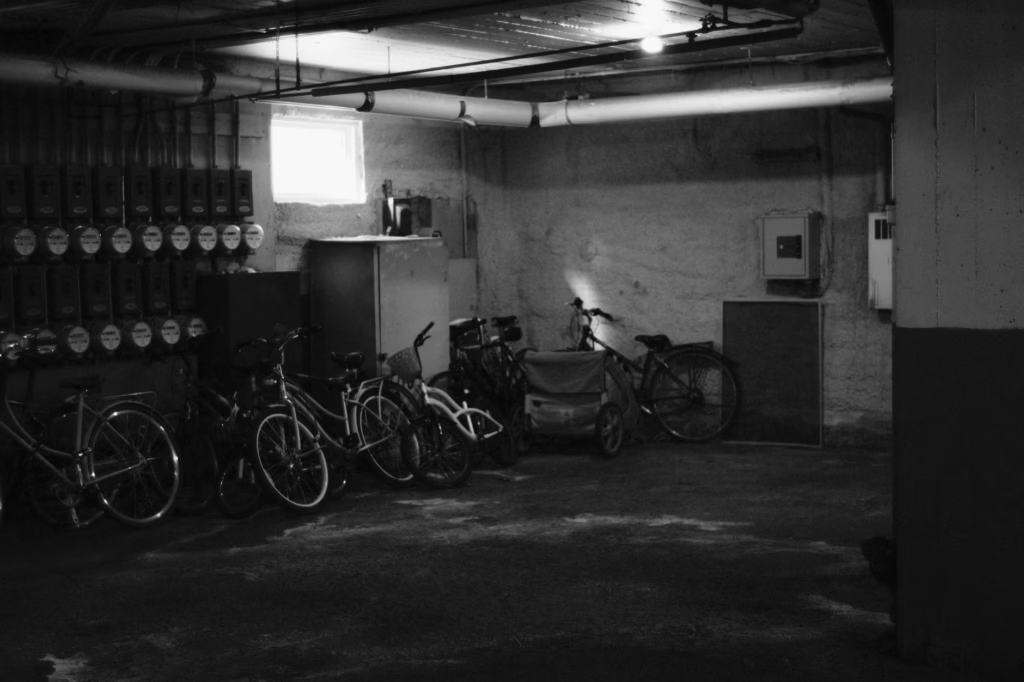
Time is part of the security equation. The longer a bike sits outside, the more opportunity there is for a thief to come back with tools or strip parts that were left unsecured. Berkeley UCPD advises avoiding overnight outdoor parking when possible and says the safest storage is indoors in a locked room. If daily parking means leaving a bike outside for long stretches, a plain commuter or older bike can be a more realistic city tool than a flashy high-end build that attracts attention and represents a bigger loss. (ucpd.berkeley.edu)
It is also worth doing the boring recovery work before anything goes wrong. Keep the serial number, current photos, and a basic description of the bike. Register it through a local program or reputable registry when those options are available. Seattle, Berkeley, and UC Davis all emphasize that proof of ownership and bike records improve the odds of identifying or recovering a stolen bike later. (seattle.gov)
A city lock-up should look annoying, not inviting. Use a real rack, secure the frame and a wheel with a quality primary lock, add protection for quick-release parts, and be honest about how long the bike will sit there. That will not make any bike theft-proof, but it does help keep it from being the easy target thieves are looking for. (nyc.gov)
References
- NYC Department of Transportation, Bike Smart brochure – https://www.nyc.gov/html/dot/downloads/pdf/dot_bikesmart_brochure.pdf
- Seattle Department of Transportation, Keep Your Bike Safe – https://www.seattle.gov/transportation/projects-and-programs/programs/bike-program/bike-security
- UC Davis Transportation Services, Bicycle Parking & Security – https://transportation.ucdavis.edu/bicycleprogram/parking_security
- UC Berkeley Police Department, Theft Prevention Tips – https://ucpd.berkeley.edu/safety/theft-prevention-tips