
Urban cycling debates often focus on bike lanes, intersections, and traffic protection. For commuters, though, the more stubborn problem can be the last 20 feet of the trip: where the bike sits for the next eight hours. A basic sidewalk rack may be enough for a coffee stop, but it is a much weaker answer for a full workday, a rail transfer, bad weather, or a heavy e-bike that cannot realistically be carried into an apartment or office. NACTO separates short-term and long-term parking for exactly this reason, and in May 2026 New York City launched planning for a 500-location secure bike parking network after identifying storage barriers for larger and heavier bikes. (nacto.org)
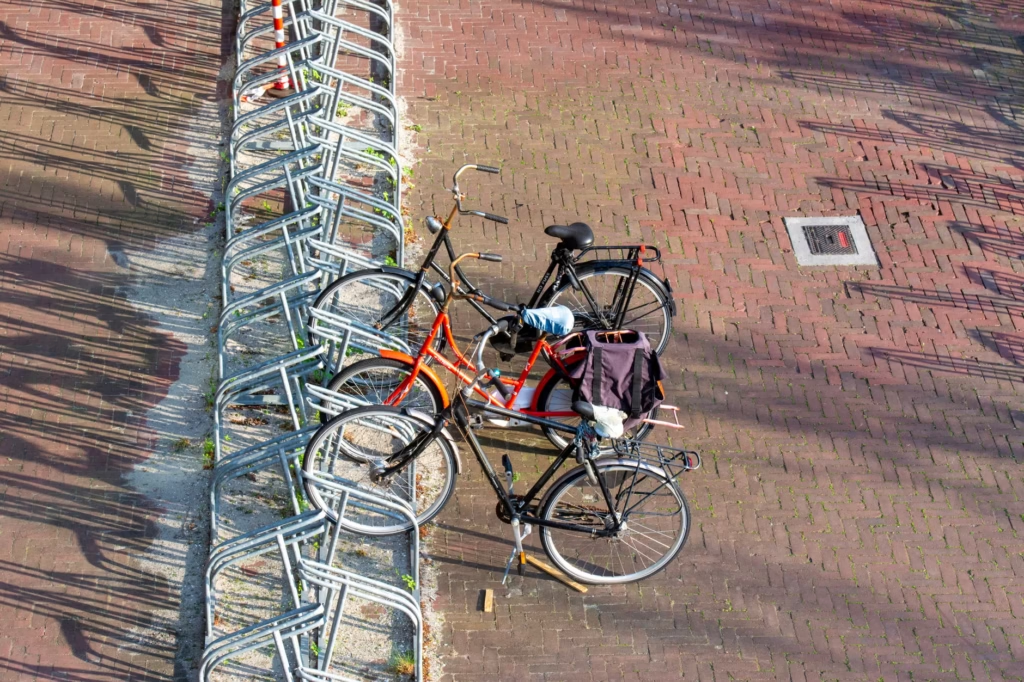
A commute can feel safe on the street and still fail at the destination
NACTO says short-term parking should be easy to see, close to entrances, and simple to use. Long-term parking is different: it is meant for several hours or overnight, and the priorities shift toward security and weather protection. That may sound like a planning detail, but it explains a lot of commuter frustration. Many cities have improved the ride itself faster than they have improved the place where the ride ends. (nacto.org)
The parking problem is also changing because the bikes are changing. NACTO’s guidance now explicitly accounts for larger devices, including long-tail and cargo bikes, while NYC DOT’s 2026 secure parking rollout described demand from riders using standard bikes, e-bikes, cargo bikes, and adaptive bikes. A rack layout that works for a lightweight road bike is not automatically adequate for a commuter e-bike with panniers, a family cargo bike, or an adaptive cycle. (nacto.org)
Why the pressure is rising in dense cities
Secure bike parking has moved beyond the old idea of a few racks near a storefront. In dense neighborhoods, it now overlaps with housing, workplace access, and transit operations. NYC DOT’s May 4, 2026, announcement made that plain: the agency said many residents lack in-home bike storage or cannot carry heavier e-bikes and cargo bikes up stairs, so secure parking is being treated as a practical ownership issue, not just a nice extra for enthusiasts. (nyc.gov)
Workplaces have been wrestling with the same gap for years. NYC DOT says its Bikes in Buildings Program has provided indoor parking to more than 13,000 bicycles in almost 400 commercial office buildings since 2009. The bigger takeaway is not that every city has the same law. It is that once bike commuting becomes ordinary, secure storage stops being a lifestyle amenity and becomes a building management issue. (nyc.gov)
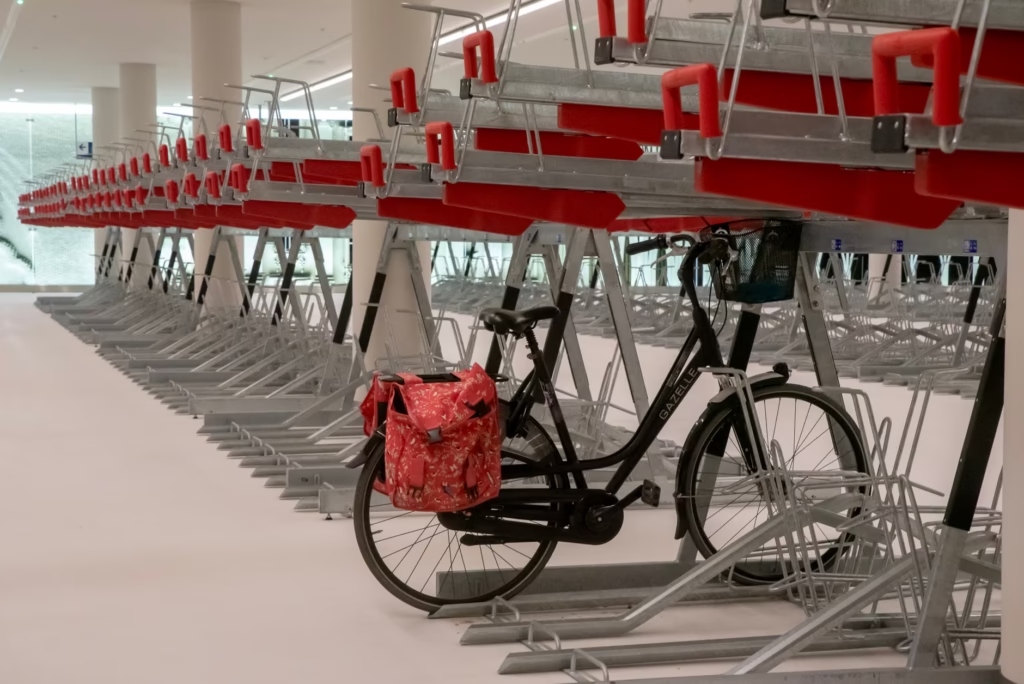
Transit agencies are moving in the same direction. Sound Transit lists a mix of free racks, on-demand lockers, and bike rooms across many stations and transit centers on its system. That matters because a mixed commute only works if riders can trust the handoff between bike and transit. Once a rider needs to leave a bike for hours at a station, ordinary curbside parking may no longer be enough. (soundtransit.org)
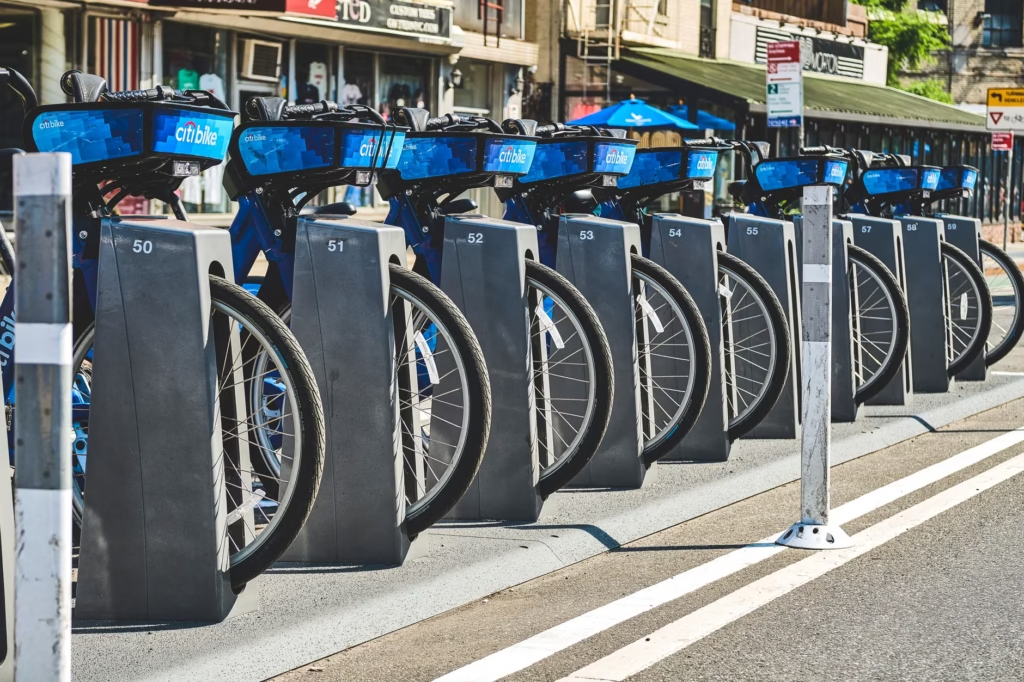
How to tell whether a destination is actually commute-ready
For commuters, the useful question is not whether a city calls itself bike-friendly. It is whether the destination passes a basic parking test before the first regular ride. A quick check can help avoid a bad surprise. (nacto.org)
- Match the parking type to the amount of time the bike will be left. An outdoor rack near the entrance may be fine for a short errand. For a workday, class block, or train transfer, look for a locker, enclosed structure, indoor bike room, or staffed facility. NACTO treats long-term parking as a separate category for a reason. (nacto.org)
- Check fit, not just availability. If the bike has panniers, fenders, a child seat, wide tires, or a cargo or long-tail frame, make sure the space actually accommodates it and still allows the frame to be locked securely. NACTO specifically advises planners to account for common sizes, shapes, and attachments. (nacto.org)
- Ask how access is managed. Is the facility open when the commute starts and ends? Is it access-card-based, first-come, first-served, or assigned? Sound Transit’s station parking options show that operating rules are part of the service, not an afterthought. (soundtransit.org)
- Treat “secure” as lower-risk, not risk-free. If a room or locker still requires the bike to be locked inside, do it. Remove easy-to-steal accessories when possible. Sound Transit explicitly tells riders to keep locking bikes even in secure bike rooms. (soundtransit.org)
A simple hypothetical makes the tradeoff clear. If the choice is a free sidewalk rack right outside a downtown station or a paid locker a block away, the better option for a daily commuter may be the slightly less convenient one. The extra minute of walking can buy controlled access, weather protection, and equipment designed for full-day parking instead of a short stop. That is often the difference between “I can bike sometimes” and “I can rely on this.” (nacto.org)
Secure bike parking is becoming a major issue because urban cycling has matured past the point where painted lanes alone can carry the system. Bigger bikes, denser housing, office access limits, and bike-to-transit trips have turned storage into real transportation infrastructure. For commuters and city planners alike, the question is no longer just whether people can ride there. It is whether they can leave a bike there with enough confidence to do it again tomorrow. (nacto.org)