
For most city riders, the most useful answer is simple: start with a rear rack and panniers. That setup moves weight off your back, keeps cargo lower on the bike, and leaves the handlebars free. A backpack still works for very light loads, and a basket can be handy for quick-access items, but once your trips regularly include groceries, a laptop, shoes, a lock, or a change of clothes, bike-mounted storage is usually the more comfortable and practical choice. (nhtsa.gov)
Match the setup to the kind of trips you actually do
- For mostly work gear, a small backpack or single pannier can be enough. If the ride is short and the load is light, carrying it on your body is fine. If the load includes a laptop, lunch, clothes, and a lock, a pannier usually becomes the easier option. (nhtsa.gov)
- For commuting plus occasional shopping, a rear rack with one or two panniers is the most versatile everyday setup. One side can hold work items, while the other stays available for a grocery stop on the way home. (bikeleague.org)
- For bulky but lighter items, a basket or crate is convenient because loading is fast and awkward shapes fit more easily. Just remember that open storage needs straps, and front-mounted baskets affect steering more directly. (bikeleague.org)
- For frequent big grocery runs or awkward cargo, a trailer or cargo bike makes more sense than trying to improvise with overloaded bags. Even cargo-bike guidance treats trailers as the better option when the load will not fit on the bike itself. (ternbicycles.com)
The mistake is choosing storage by volume alone. A load can technically fit and still make the bike annoying to ride if it sits high, swings side to side, or puts too much weight where steering and braking feel less natural. Carrying capacity is not just about how much space you have. It is also about where the weight sits and how securely it stays there. (media.trekbikes.com)
Why rear panniers are the default answer for most commuters
Rear panniers work well because they let the bike carry the load instead of your shoulders and lower back. In practical terms, weight that sits lower and is balanced from side to side usually feels calmer than a heavy messenger bag or a basket stacked high above the wheel. Even cargo-bike manufacturers emphasize a low center of gravity and even balance as the key to safer, easier handling. (ternbicycles.com)
That does not mean front storage is wrong. A small front basket is excellent for bread, a takeout container, or a tote bag that needs to come off the bike at every stop. But front loads change the feel of the bike more quickly, especially in slow turns and hard braking. The League of American Bicyclists specifically advises extra caution with sudden stops when a front rack adds weight over the front wheel. Rear storage has its own tradeoff: if everything is piled on top of the rack instead of packed low in panniers, the bike can feel top-heavy when starting, stopping, or walking it. (bikeleague.org)
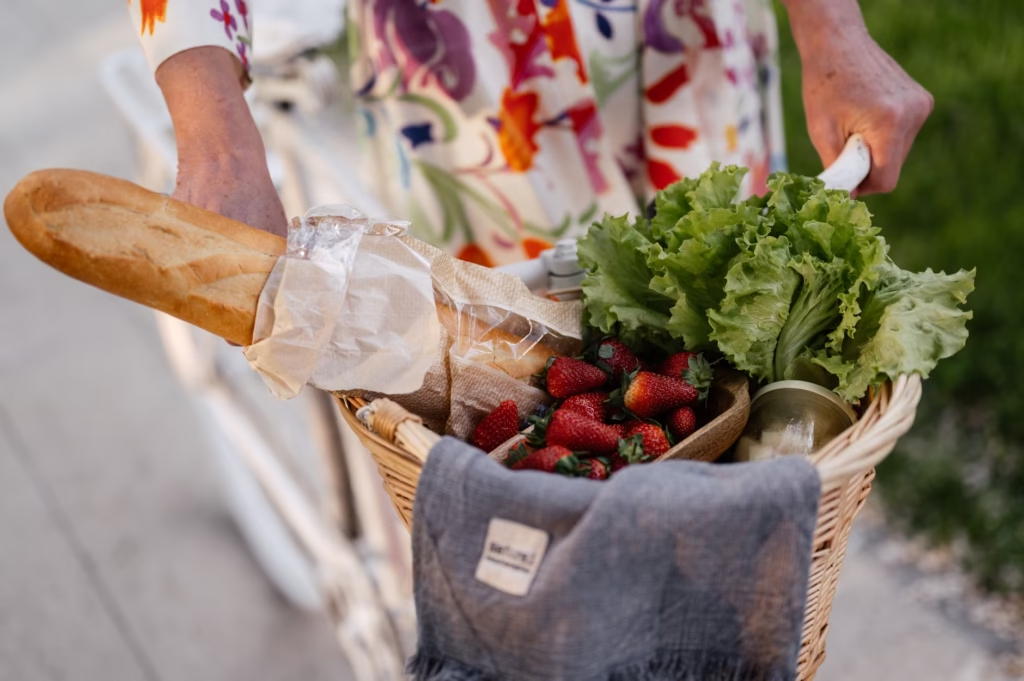
Do not hang grocery bags from the handlebars. NHTSA advises carrying items in a backpack or strapped to the back of the bike, and the League also warns against riding with a lock hanging from the bars. (nhtsa.gov)
Use a quick loading check before you roll away
- Check the limits first. Your bike, rack, basket, and any add-on accessory can each have their own maximum allowed load, and the rated limit may be printed on the rack or support bracket. (media.trekbikes.com)
- Put dense items low and split them left to right. Bottles, cans, shoes, locks, and electronics belong at the bottom of panniers or low in a basket, not perched on top. (ternbicycles.com)
- Keep the front lighter unless the bike is specifically built to carry more weight there. Front storage is great for access, but heavier cargo is usually better placed at the rear. (ternbicycles.com)
- Secure everything so nothing can bounce, swing, or reach the wheel, chain, or brake. Also make sure the load does not block your lights or reflectors. (media.trekbikes.com)
- Before joining traffic, walk the bike a few steps, turn the bars fully both ways, and make sure nothing rubs or can get tangled in moving parts. (media.trekbikes.com)
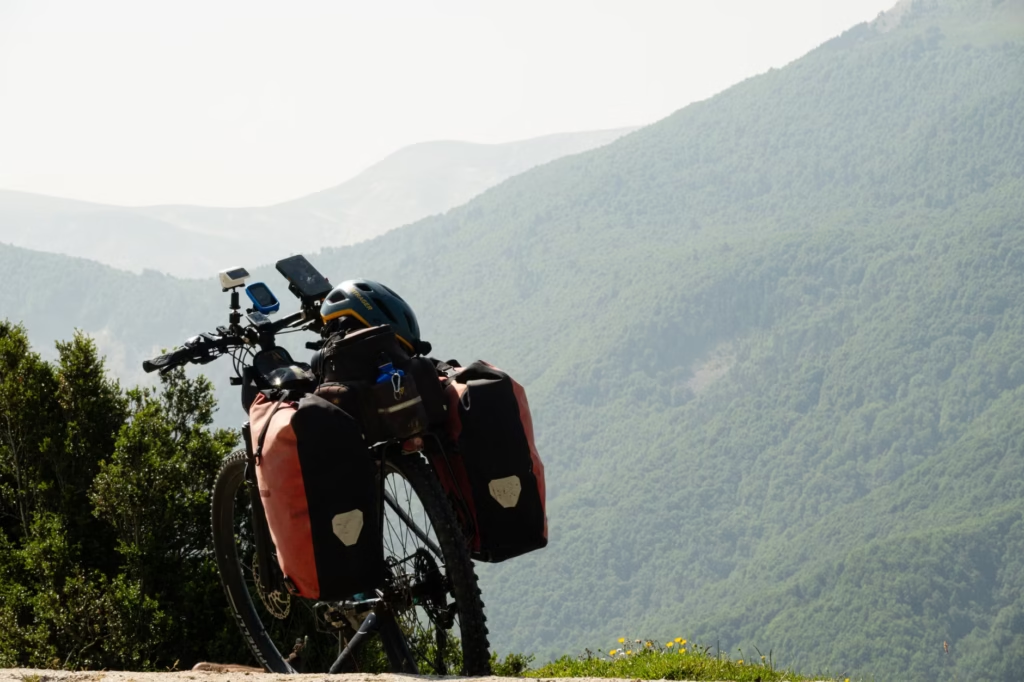
A practical weekday setup for many riders is one waterproof rear pannier plus a simple strap or cargo net. The pannier carries a laptop, lunch, small tools, and a spare layer. The strap can hold a light grocery bag or a loaf of bread on the rack deck for the ride home. A fold-flat tote inside the pannier adds overflow space without living on the bars. Add a second pannier when grocery stops become routine, and think about a trailer or cargo bike only when the load is regularly too bulky or awkward for a standard rack setup. (bikeleague.org)
The best carrying system is the one that keeps the bike predictable. If the load is low, balanced, secure, and within the bike’s rated limits, a normal city bike can handle far more daily life than many riders expect. Start with a rear rack and pannier, keep the bars clear, and let your actual errands tell you whether you need more capacity later. (media.trekbikes.com)
References
- National Highway Traffic Safety Administration: Bicycle Safety – https://www.nhtsa.gov/road-safety/bicycle-safety
- League of American Bicyclists: Commuting – https://bikeleague.org/ridesmart/commuting/
- Trek Electra Owner’s Manual – https://media.trekbikes.com/image/upload/v1696456766/EL_OwnersManual_EN-US_Oct2023_WEB.pdf
- Tern Bicycles: How to Carry Cargo on the HSD Gen 2 – https://www.ternbicycles.com/us/explore/product-guides/how-carry-cargo-hsd-gen-2