
Cargo bikes are becoming more visible in city neighborhoods because they solve a very specific problem: families need a way to move children, groceries, bags, and themselves through short, repetitive urban trips without turning every errand into a car trip. Research on family and cargo-bike use keeps circling back to the same use cases: escorting children, shopping, commuting, and chaining multiple stops into one trip. In a Bay Area study, parents said e-bikes and cargo bikes expanded access, replaced car trips, increased physical activity, and reduced stress; a recent Swiss study found that the most common cargo-bike trips included taking kids to school or activities and shopping or grocery runs. (trid.trb.org)
That does not mean cargo bikes are suddenly right for every household. It means the conditions have changed enough that more families can reasonably consider one. Electric assist has widened the pool of people who can ride with a child or a load. Urban bike guidance now explicitly accounts for cargo bikes as normal street users rather than odd exceptions. And recent trials show that when households actually get time with these bikes, many use them for the exact trips that usually lock a family into daily driving. (journals.plos.org)
TL;DR
- Families are adopting cargo bikes mainly for school drop-offs, shopping, commuting, and other chained city errands that would otherwise default to a car. (trid.trb.org)
- Electric assist matters because it makes child-carrying and load-carrying practical for more riders, not just strong or highly experienced cyclists. In a Norwegian trial with parents of young children, access to different bike types increased cycling and reduced car use, with e-bikes producing the greatest amount of cycling. (journals.plos.org)
- Better street design matters too. NACTO guidance now treats cargo bikes as expected bikeway users and calls for networks that can handle caregivers riding with children and wider devices. (nacto.org)
- For many households, the real goal is not replacing every car trip. It is replacing enough routine trips to reduce dependence on a second car or make daily life less car-centered. Recent research and trials support that pattern. (doi.org)
- The hardest parts are usually not pedaling. They are route comfort, passenger setup, secure storage, charging, weather backup, and local rules. (cpsc.gov)
The shift is practical, not ideological
A family’s everyday transportation problem is less about speed on a spec sheet than about coordination. Daycare at 8:15. Work by 9. Grocery stop on the way home. Library books, soccer bag, rain jackets, lunch box. Standard bikes can manage some of that, but cargo bikes are built around the messy reality that adults often carry children and stuff at the same time. That is why cargo-bike research repeatedly finds child-related trips and shopping near the center of actual use, rather than as occasional edge cases. (doi.org)
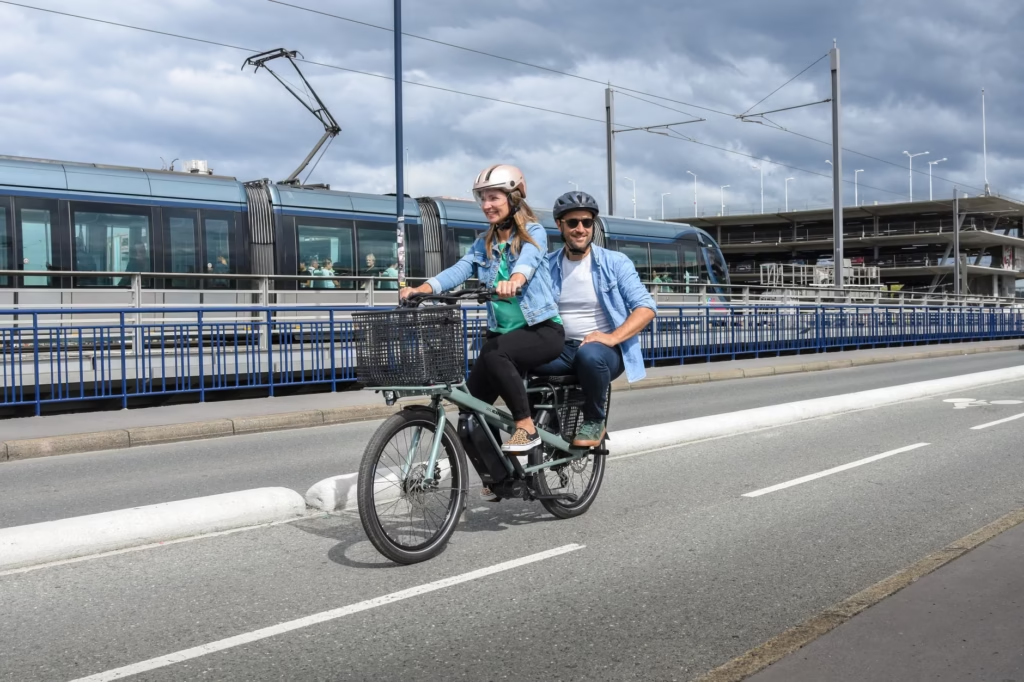
Distance helps explain part of the appeal. In the 2022 National Household Travel Survey, average network-calculated trip length was 5.8 miles for shopping trips and 6.2 miles for school or church trips. Those numbers do not prove a cargo bike works for a given family, but they do show why many routine city trips are within realistic e-cargo-bike territory. The bigger constraint is often whether the route feels safe and direct enough to repeat on a Tuesday morning with a child on board. (fhwa.dot.gov)
Why cargo bikes are showing up in more family routines
Electric assist changed who can use these bikes
The major change is not that families suddenly got more athletic. It is that electric assist made heavy, stop-and-go transportation riding more manageable. In the Norwegian randomized trial involving parents with children in kindergarten, access to different bike types increased cycling and decreased car use, and e-bikes generated the greatest total cycling amount. In the Bay Area interview study, parents also described e-bikes as improving access and making child transportation more feasible. That combination matters because daily family travel usually includes hills, time pressure, and repeat trips, not leisurely rides in perfect weather. (journals.plos.org)
Cities are slowly designing for real family cycling
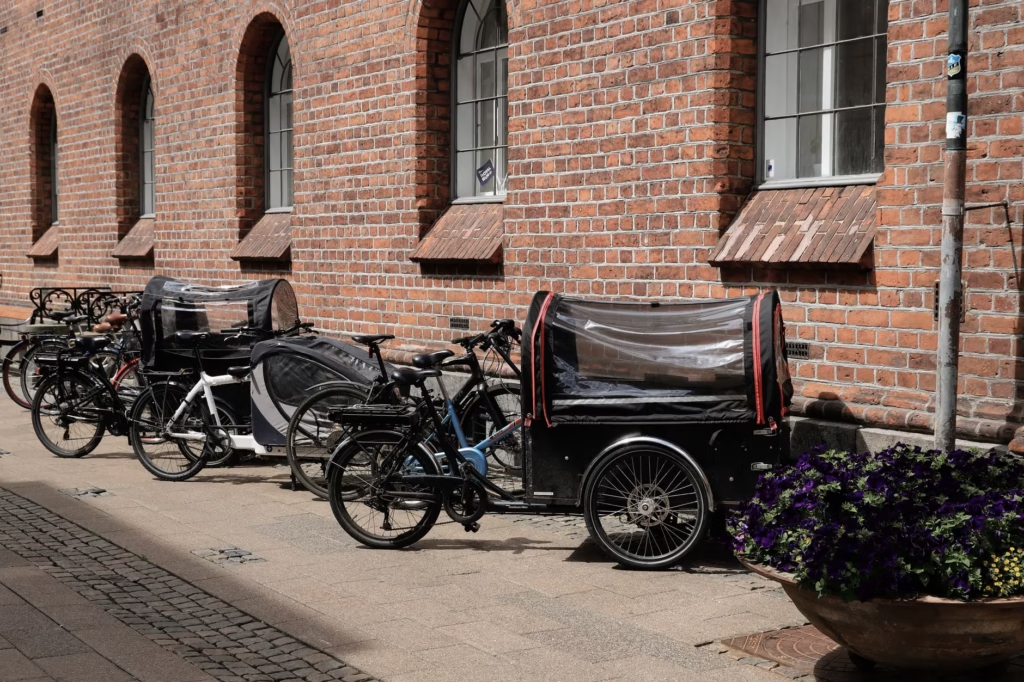
The planning world has also moved. NACTO’s current guidance explicitly says principal bike routes should provide enough space for a caregiver to ride alongside a child while a cargo trike passes, and its bikeway design guidance treats cargo bikes as normal design vehicles that require wider operating space and turning room. The broader federal safety push is similar: USDOT says state and local agencies have a major role in improving safety for people biking and can use federal programs to build safer bicycle infrastructure. That does not mean every city is family-bike friendly. It does mean the standard is no longer “a painted line is enough.” (nacto.org)
Families are replacing inconvenient car trips, not trying to win an argument
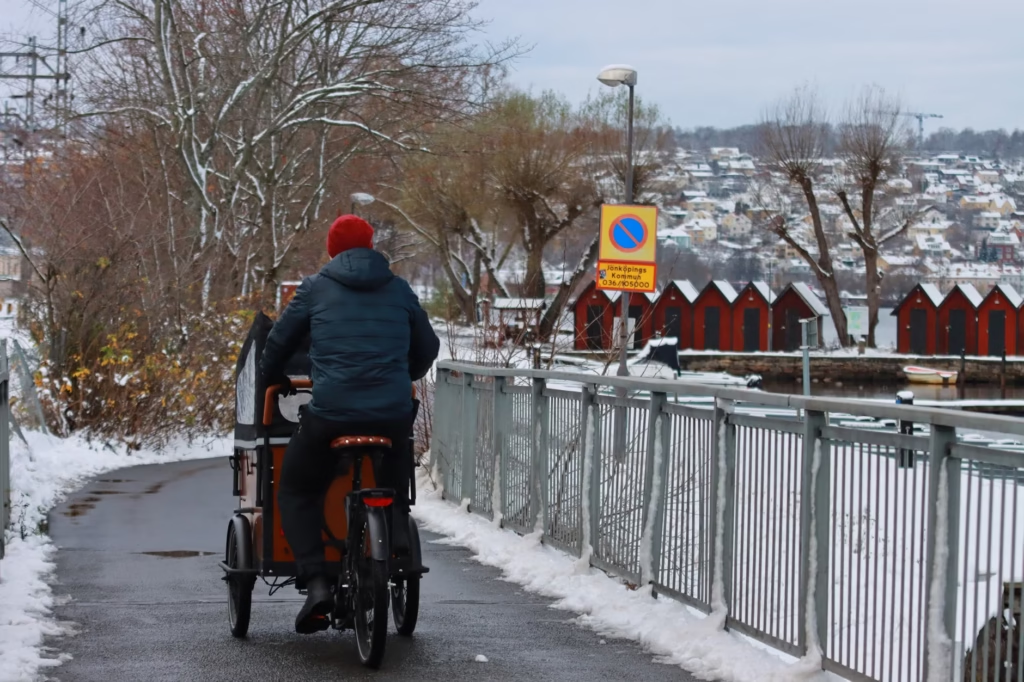
One reason cargo bikes feel newly practical is that more households view them as partial replacements, not total replacements. That is a much easier test to pass. In the Swiss cargo-bike-owner survey, researchers found evidence not only of car-trip substitution but also of deeper household changes around car ownership; one-third of respondents reported giving up owning or purchasing a future car after adopting a cargo bike. In a one-month 2026 e-cargo-bike trial involving 49 suburban households in Leeds, Brighton, and Oxford, over half of the mileage ridden replaced car trips and 20% of participants later bought an e-cargo bike. Those are context-specific findings, not guarantees. Still, they show why families increasingly compare a cargo bike to a second car, not to a perfect all-purpose vehicle. (doi.org)
Use the 80 Percent Trip Test before buying
A useful way to think about cargo bikes is the 80 Percent Trip Test. This is an editorial decision rule, not an industry standard: if one cargo bike can handle roughly 80% of a household’s repeating city trips, it can be a genuinely transformative transportation tool even if it does not replace every rare or difficult trip.
- Map the repeat trips first. School runs, daycare, grocery stops, park trips, and short commutes matter more than occasional airport or warehouse-store trips.
- Judge the route, not just the mileage. A shorter route with hostile crossings can be worse than a slightly longer route with protected lanes or calmer side streets. NHTSA recommends choosing routes with less traffic and slower speeds when possible. (nhtsa.gov)
- Look at passenger reality. How many children need to ride, how old they are, how much gear they bring, and whether they can reliably get in and out of the bike without chaos.
- Check friction at home. If storage is awkward, charging is inconvenient, or theft risk is high, the bike may not become part of the daily routine even if the riding itself is easy.
- Plan the hard 20 percent. Bad-weather backup, car-share access, transit, or one remaining household car often matters more than squeezing every trip into the bike.
If the bike covers most weekday trips, it does not need to cover everything to be worth owning. Many successful households use cargo bikes as the default option and keep a backup mode for outlier trips.
A simple hypothetical example shows the difference. Imagine a household with one child in preschool, a grocery store a mile away, a playground two miles away, and one adult who sometimes rides to a transit station. A cargo bike that handles the preschool loop, after-school errands, and most weekend neighborhood trips may remove far more driving than a bike that is technically capable of a longer commute but awkward for pickups. That is why family adoption tends to be about routine usefulness, not maximum range.
Choosing the bike format matters more than chasing a brand
Families often start by comparing motors, batteries, or price tags. Those matter, but bike layout usually matters first because it determines loading style, child comfort, parking footprint, and how natural the bike feels in traffic.
| Household pattern | Often a strong fit | Why it tends to work | Main compromise |
|---|---|---|---|
| One or two kids, frequent school runs, wants handling closest to a normal bike | Longtail | Easy transition for riders coming from standard bikes; good for child seats, panniers, and routine errands | Rear loading can feel cramped as children get bigger; parking length still matters |
| Two younger children, lots of conversation and eye contact, weather cover matters | Front-loader or front-box bike | Children and cargo stay in front, which can make loading and supervising easier | Larger footprint, slower low-speed turning, and more demanding storage needs |
| Mixed errands, tighter apartment or row-house storage, occasional passenger use | Compact cargo or midtail | More manageable footprint while still carrying groceries or one child comfortably | Usually less total capacity and less long-term flexibility |
| Heavy shopping or gear hauling is the priority, child carrying is occasional or none | Cargo bike plus trailer or larger front-loader | Lets the household size capacity around real hauling needs | Can add complexity, width, or parking difficulty |
Whichever format looks best on paper, confirm the manufacturer’s actual passenger and weight limits, the seating or harness options for your children’s ages, and the dimensions of the places where the bike will live. Requirements for riding location, helmets, and other rules can also vary by community, so local verification matters. (cpsc.gov)
What families usually gain when the bike actually fits the routine
The first gain is often time reliability. On short city trips, cargo bikes can be slower in a straight line than cars but faster door to door because they avoid parking hunts, pickup-lane backups, and awkward curb access. That is especially true for repeat trips where the destination is close but car friction is high. Families also gain a vehicle that can stop almost exactly where the task is happening, which is valuable when the job is not just “travel” but “travel plus shepherding a child.”
The second gain is that transportation doubles as ordinary physical activity instead of a separate fitness task. In the Bay Area study, parents described more physical activity, greater accessibility, and less stress. In the Norwegian trial, parents with access to the bikes increased cycling and reduced driving. That does not mean every ride feels easy. It means the effort is often manageable enough to repeat, which is what makes a transportation habit stick. (trid.trb.org)
There is also a family-life benefit that gets dismissed too easily. Parents in the Bay Area interviews reported more family quality time, and child-carrying studies repeatedly show that the school-and-errand layer of mobility is where cargo bikes are most useful. In practice, that means the bike is not just moving a person from A to B. It is holding together a set of ordinary caregiving tasks that otherwise push households toward habitual driving. (trid.trb.org)
What families often underestimate
Safety and route quality come first
A cargo bike can make city transportation more practical, but it does not erase traffic risk. NHTSA notes that when a crash occurs between a vehicle and a bike, the cyclist is the one most likely to be injured. The AAP also warns that carrying a young passenger on an adult bicycle affects stability and braking time. For families, that means route choice, speed control, predictable riding, passenger restraints, lights, and rider practice matter at least as much as the bike itself. (nhtsa.gov)
Build safety into the routine, not just the hardware: practice empty first, then with ballast, then with the child; use the supplied charger and approved replacement battery only; wear a bicycle helmet; and follow local rules for where and how the bike can be ridden. CPSC says helmet, riding-location, and roadway-use rules differ by community, and it advises consumers to stay present while charging micromobility devices. (cpsc.gov)
Storage, security, and charging can make or break the idea
A cargo bike that lives awkwardly is a cargo bike that gets used less. Before buying, measure the gate, hallway, elevator, shed, and curb storage situation. If the bike is electric, the charging plan matters too. CPSC advises consumers to use micromobility products and batteries that are designed, manufactured, and certified to applicable safety standards, to charge only with the supplied charger or an approved replacement, and not to charge while sleeping. Those points are especially important for apartment households or anyone storing the bike indoors. (cpsc.gov)
Weather, hills, and awkward loads are real, but not automatic deal-breakers
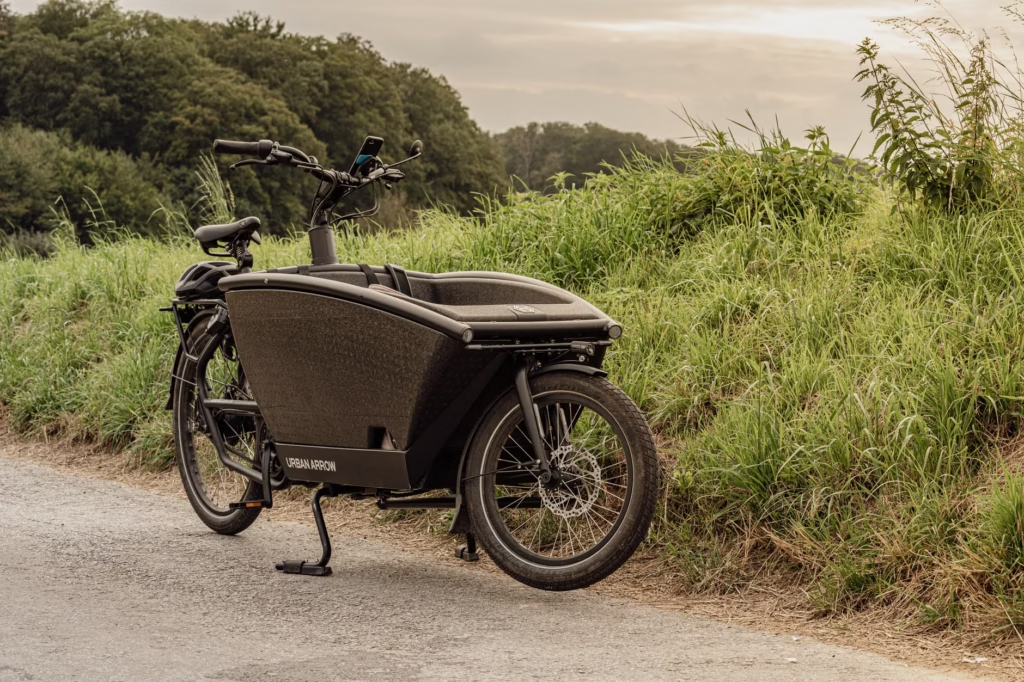
Bad weather and elevation still matter. So do school bags, musical instruments, sports equipment, and tired children who do not want to climb aboard. But these are often planning problems more than absolute barriers. Rain covers, layered clothing, better pannier organization, and a clear backup mode for the worst days do a lot of work. The Norwegian parent trial is a useful reminder here: cycling rose overall, car use fell, and e-bikes generated the most total riding, including through a long study period spanning multiple seasons. That should not be romanticized, but it does suggest that many households overestimate how often weather makes cargo-bike transportation impossible. (journals.plos.org)
A smart first-month plan
- Map one normal week of trips before shopping. Count the recurring destinations, the children involved, and the cargo you actually carry.
- Rent, borrow, or join a try-before-you-buy program if one exists. Recent trials found that real-world access can change travel behavior and encourage long-term uptake. (leeds.ac.uk)
- Test the exact school-run or grocery route at the exact time you would normally travel. NHTSA recommends choosing routes with less traffic and slower speeds when possible. (nhtsa.gov)
- Practice handling in stages: empty bike, weighted bike, then child passenger. The AAP warns that a young passenger changes stability and braking. (publications.aap.org)
- Set up storage, lock strategy, and charging before the bike becomes a habit. CPSC says to use the supplied charger, stay present while charging, and avoid modified battery packs or chargers. (cpsc.gov)
- Keep a backup for the trips the bike should not force. Transit, car-share, or one household car is often part of a durable family transportation system, not evidence the bike failed.
What this trend means for city transportation
When more families use cargo bikes, the significance goes beyond cycling culture. It changes what city transportation planners have to treat as normal. A bike lane that works only for a fast solo rider is not enough if cities want more children, caregivers, older adults, and utility riders on the network. NACTO’s guidance reflects that shift by treating cargo bikes, side-by-side riding, and wider devices as ordinary design cases, not fringe uses. That is one reason family cargo biking matters: it reveals whether a city’s transportation system works for real-life household travel, not just for idealized commuters. (nacto.org)
More families are using cargo bikes because the bikes now match an overlooked transportation job: short, repetitive, child-and-stuff-heavy urban travel. They are not a universal substitute for cars, and they do not remove real safety, storage, or legal complications. But for households with the right routes and routines, they can turn everyday city transportation into something cheaper to run, easier to park, more active, and less dependent on constant driving. The practical next step is simple: test the real trips, not the idea. If the bike works on the school run and the grocery stop, the rest of the decision gets much clearer. (doi.org)
FAQ
Can a cargo bike really replace a family car?
Sometimes a second car, often many daily trips, and only occasionally a primary car. The more realistic benchmark is whether the bike can handle most repeating urban trips. Research on cargo-bike owners and recent trials shows substantial car-trip substitution, but not a universal one-bike-for-all-cases outcome. (doi.org)
Are cargo bikes much harder to ride than regular bikes?
They are different, especially at low speed, while starting, and while braking with passengers or cargo. The learning curve is usually manageable, but it is real. Practice matters, and the AAP’s warning that passenger-carrying affects stability and braking is a good reason to build skills gradually. (publications.aap.org)
Is carrying kids on a cargo bike automatically safe?
No. Safety depends on the route, the bike’s passenger setup, rider skill, speed, visibility, and local traffic conditions. NHTSA emphasizes defensive, predictable riding and proper helmet use, while CPSC stresses helmets, device checks, and compliance with local rules. (nhtsa.gov)
What should apartment dwellers think about before buying?
Start with storage width, security, weight, elevator or stair access, and charging. For e-cargo bikes, CPSC says to use certified products and batteries, charge with the supplied charger or approved replacement, stay present while charging, and avoid modified battery packs. (cpsc.gov)
Do e-bike and cargo-bike rules vary by location?
Yes. CPSC notes that helmet requirements, riding locations, and roadway-use rules differ by community. Families should verify state and local rules, plus any school or building policies that affect parking or charging. (cpsc.gov)
References
- Federal Highway Administration – Summary of Travel Trends: 2022 National Household Travel Survey – https://www.fhwa.dot.gov/policyinformation/2022Summary_of_Travel_Trends_Report.pdf
- Springer Transportation – Cargo bikes and their modal shift effects: from substitution to car renunciation – https://link.springer.com/article/10.1007/s11116-024-10569-3
- TRID – Electric bicycles and cargo bikes: Tools for parents to keep on biking in auto-centric communities? Findings from – https://trid.trb.org/View/1991196
- PLOS ONE – From cars to bikes: The effect of an intervention providing access to different bike types: A randomized – https://journals.plos.org/plosone/article?id=10.1371%2Fjournal.pone.0219304
- NACTO – Planning a Bike Network – https://nacto.org/publication/urban-bikeway-design-guide/planning-and-developing-a-bikeable-city/planning-a-bike-network/
- NACTO – Design Controls for Bicycle Facilities – https://nacto.org/publication/urban-bikeway-design-guide/designing-bikeways-for-all-ages-and-abilities/design-controls-for-bicycle-facilities/
- U.S. Department of Transportation – Improving Safety for Walking, Biking, and Rolling – https://www.transportation.gov/pedestrian-bicycle-safety
- NHTSA – Bicycle Safety – https://www.nhtsa.gov/road-safety/bicycle-safety
- CPSC – Micromobility: E-Bikes, E-Scooters and Hoverboards – https://www.cpsc.gov/Safety-Education/Safety-Education-Centers/Micromobility-Information-Center
- CPSC – Micromobility Battery Charging Safety PSA – https://www.cpsc.gov/node/65775
- American Academy of Pediatrics – TIPP: Child as a Passenger on an Adult’s Bicycle – https://doi.org/10.1542/peo_document313
- University of Leeds – Trial shows e-cargo bikes can replace cars – https://www.leeds.ac.uk/research-32/news/article/5975/trial-shows-e-cargo-bikes-can-replace-cars