
Cycling at night is not simply daytime riding with a headlight attached. The whole risk picture changes. In daylight, the basic job is to ride predictably and manage traffic conflicts that everyone can usually see developing. After dark, a bigger part of the job is making sure drivers recognize a bicycle early enough to react correctly, while also giving yourself more time to spot pavement defects, parked-car doors, debris, and turns. NHTSA notes that more than half of bicyclist fatalities occur in dawn, dusk, or nighttime conditions. That does not mean every night ride is inherently unsafe, but it does mean low-light riding deserves its own strategy rather than just a brighter version of the daytime one. (nhtsa.gov)
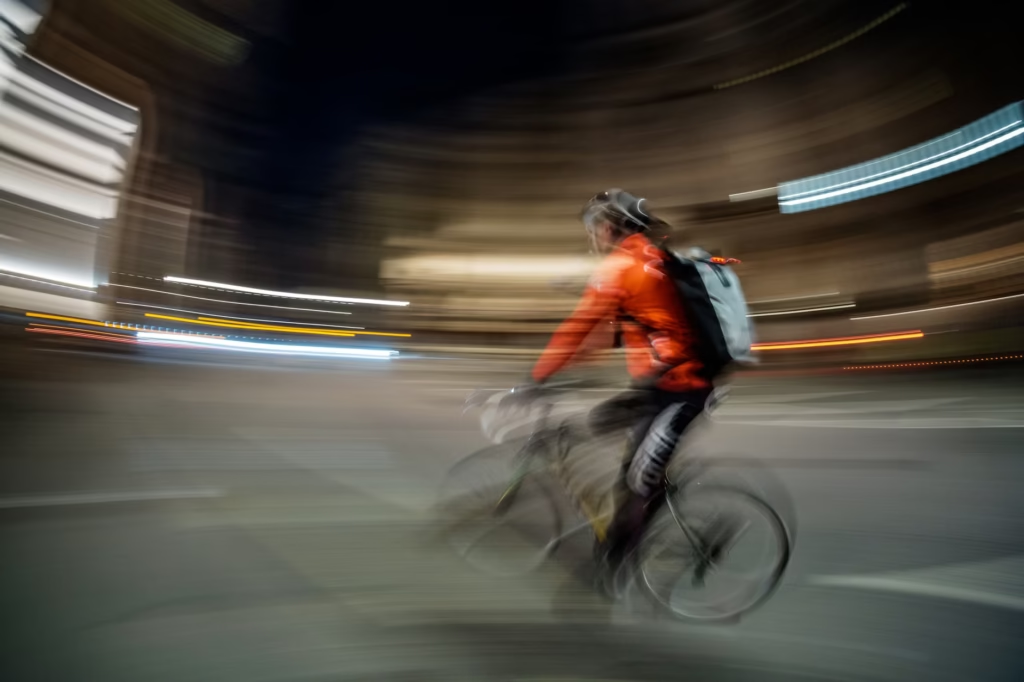
At night, visibility becomes the first safety problem
What changes after sunset is not only brightness. Drivers are dealing with narrower sight lines, glare from headlights, reduced contrast, and the extra mental step of figuring out whether the small moving light ahead is a bicycle, a parked object, or something crossing their path. NHTSA’s bicycle safety guidance lists poor visibility as a major factor in fatal bike crashes, and its safety materials emphasize that night riding requires active lighting and reflective equipment, not just ordinary clothing. (nhtsa.gov)
That is why “wear something bright” is incomplete advice. Bright colors help in daylight, but NHTSA’s educational material specifically notes that white clothing is not necessarily more visible to motorists at night. After dark, retroreflective material and active lights matter more because they return light to the driver or create their own visible signal. NHTSA also notes that active visibility aids such as lights may improve detection more effectively than passive aids alone, while cautioning that conspicuity measures are not a guarantee against crashes by themselves. In other words, lights and reflective gear are necessary, but they do not replace defensive riding and better route choices. (nhtsa.gov)
Use a setup that helps drivers recognize a bicycle early
Night equipment has two separate jobs. First, it has to help the rider see the road surface and upcoming hazards. Second, it has to help other road users identify the rider as a bicycle soon enough to judge speed and direction. NHTSA advises a white front light and a red rear light and reflectors for night riding, and its countermeasures guidance says most states require a white front headlight and red rear reflector at night, though exact rules vary by state. A good night setup also creates side visibility, because many serious conflicts happen when a driver is entering or crossing the rider’s path rather than approaching from directly behind. (nhtsa.gov)
- Start with the legal basics: confirm a white front light and red rear light or reflector, then check your local rules for mounting, beam, and flashing requirements. (nhtsa.gov)
- Do a real visibility check before leaving. Stand back from the bike in a dim area, look at it from the front, rear, and slight side angles, and make sure the bicycle still reads clearly as a moving rider rather than a small pin of light.
- Aim the front light to illuminate the lane ahead without shining straight into other road users’ eyes. A powerful light pointed too high can create glare and still leave the pavement immediately in front of the wheel poorly lit.
- Add reflection where motion happens. Pedals, ankles, shoes, wheels, or other moving parts can make the rider’s motion pattern easier to notice at night than a static patch on a jacket alone. (nhtsa.gov)
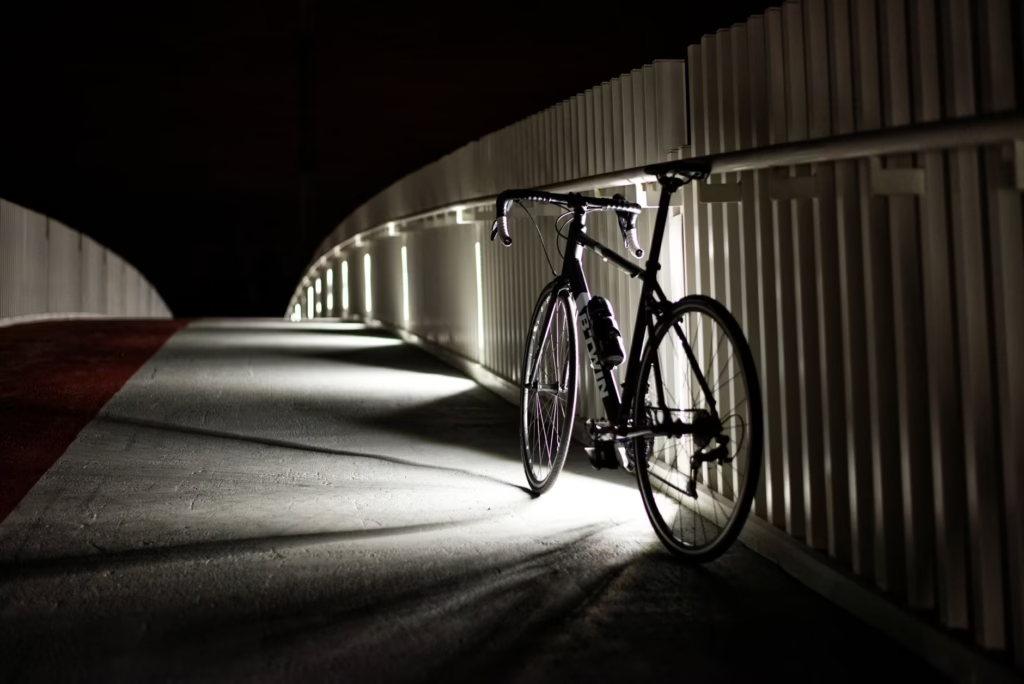
If you cannot comfortably stop within the distance your front light clearly reveals, the issue is not courage. It is pace.
Change the ride, not just the gear
A daytime route and a nighttime route should not automatically be the same. FHWA’s current nighttime-visibility work emphasizes how much darkness changes roadway risk for all users, and NHTSA’s guidance on conspicuity points out that visibility improvements are only one piece of safer riding conditions. A practical takeaway is to value simpler streets over faster ones after dark: lower vehicle speeds, better ambient lighting, fewer complicated intersections, and fewer surprise driveway movements usually matter more than saving a few minutes. (fhwa.dot.gov)
Consider a simple hypothetical commute. In daylight, a rider may feel comfortable on an arterial road with a painted bike lane because traffic patterns are easy to read from a distance. At night, that same road may involve faster closing speeds, more glare, and darker gaps between streetlights that hide debris or turning movements. A parallel residential street or protected route can be the safer option even if it is longer. That is not a universal rule, but it is often the right way to think: after dark, reduce complexity first, then add speed back only if the route still feels readable and controllable.
- Signal earlier than you would in daylight, because drivers may need longer to understand your position and intention.
- Hold a steady line. Sudden weaving around parked cars or drainage grates is harder for others to interpret at night.
- Be cautious about the road edge. Shadows, rough pavement, and debris collect there, and hugging the edge can also make a rider less noticeable.
Night strategy still sits on top of the ordinary basics: a bike with working brakes, tires in good condition, and a properly fitted helmet still matters every time. But the real difference is mental. Daytime riding is often about negotiating space. Night riding is about negotiating time: the time it takes to be seen, recognized, and avoided, and the time it takes to read the road before it surprises you. Build the ride around that difference, and night cycling becomes much more deliberate and much less dependent on luck. (nhtsa.gov)
References
- NHTSA – Bicycle Safety: Bike Safety Tips for Kids and Adults – https://www.nhtsa.gov/road-safety/bicycle-safety
- NHTSA – Active Lighting Laws – https://www.nhtsa.gov/book/countermeasures-that-work/bicycle-safety/countermeasures/legislation-and-licensing/active
- NHTSA – Bicyclist Conspicuity and Visibility (DOT HS 811 614) – https://www.nhtsa.gov/sites/nhtsa.gov/files/811614.pdf
- Federal Highway Administration – EDC-7: Nighttime Visibility for Safety – https://www.fhwa.dot.gov/innovation/everydaycounts/edc_7/nighttime_visibility.cfm