
Most first-bike regret is not caused by picking the cheapest model in the shop. It usually starts with a different mistake: buying a bike that looks fast, rugged, or aspirational instead of one built for the routes, posture, and errands that will make up 80 percent of your riding. Different types of riding call for different bikes, and fit matters right away. NHTSA says riders should be able to reach the pedals and easily grip the brakes, while REI notes that poor fit can lead to aches and discomfort that discourage riding. (nhtsa.gov)
TL;DR
- The biggest beginner mistake is buying a bike for a fantasy use case instead of your real first 90 days of riding.
- For most new riders, fit, route, and total first-month cost matter more than upgraded components.
- A smart starter budget includes the bike, helmet, lock, lights, flat kit, and setup or tune-up costs.
- If a bike fails fit, use, or support checks, do not try to rescue it with better parts.
The mistake is shopping for the wrong job
A beginner who plans to ride paved neighborhood loops, greenways, and short errands often buys an entry road bike because it looks serious, or a mountain bike because it seems universally capable. But the basic buying guidance from both REI and the League of American Bicyclists starts with the same question: where and how will you ride? Road bikes are built for paved riding and a more bent-forward posture, hybrid bikes are more upright and versatile for streets plus light unpaved use, and mountain bikes are meant for rougher off-road terrain. (rei.com)
That mismatch creates instant regret in three ways. First, it hurts: if the reach to the bars or brakes is wrong, or the riding position is more aggressive than you expected, you feel it in your hands, neck, shoulders, or lower back. Second, it complicates ordinary life: a bike that is great for speed may be awkward for carrying a lock, lights, or a small bag. Third, it leaks money, because beginners start buying fixes for a bike that never matched the real job in the first place. NHTSA’s fit guidance is blunt here: you should not have to stretch to reach or squeeze the brakes. (nhtsa.gov)
Use the RIDE Filter before you buy
Before assessing any candidate, use the RIDE Filter to compare brands, colours and sizes of wheel and specifications in relation to other candidates. This is a very basic design for first-time purchasers looking for a suitable first bike rather than for first-time usage. If any bike does not meet the requirements from a filter, you should prevent that bike from being sold.
| Test | Question | Pass | Red flag |
|---|---|---|---|
| Route | Where will 80% of your miles happen? | The bike category matches your actual pavement, greenway, light gravel, or trail use. | You are buying for a once-a-month fantasy ride instead of everyday use. |
| Interface | Can you reach the pedals and brakes comfortably? | Soft bend in the arms, easy brake reach, stable stop, no stretching. | Locked elbows, cramped back, or you have to reach for the brakes. (nhtsa.gov) |
| Day-one cost | What is the real first-month total? | Bike plus helmet, lock, lights, flat kit, and setup still fit the budget. | The frame used your whole budget, so essentials get skipped or go on a credit card. |
| Exit plan | What happens if ride No. 2 feels wrong? | Return, warranty, and first-service terms are clear before you pay. | You are assuming there is a universal grace period for buyer regret. (consumer.ftc.gov) |
This is the part many beginners miss: a nicer component group does not fix a wrong category choice. REI notes that as bike prices rise within a category, you are often paying for higher-performance components or frame materials. That can matter later. It does not turn the wrong tool into the right one. A lighter, pricier wrong bike is still the wrong bike. (rei.com)
A $899 sale bike can become a $1,294 regret
Consider a realistic starter scenario. A new rider plans to do three things over the next three months: two 6-mile paved path rides each week, a short weekend coffee run, and occasional errands around town. The rider buys a $899 entry road bike online because it is marked down and looks like a serious fitness purchase. After checkout come the real-world add-ons: a helmet, lock, lights, floor pump, spare tube and tire levers, and a local shop assembly and tune-up. Then comes the first correction purchase, because the original saddle or position feels wrong. Suddenly, the “sale” bike is not a $899 decision anymore.
| Cost item | Wrong-first-choice road bike | Better-fit hybrid | Why it matters |
|---|---|---|---|
| Bike price | $899 | $649 | The hybrid better matches short paved rides and errands. |
| Helmet, lock, lights, pump, flat kit | $230 | $230 | The accessory stack is real either way. |
| Assembly or initial setup | $120 | $40 | Online bargains often shift setup costs to you. |
| Comfort correction | $45 | $0 to $20 | Small fixes are normal; major rescue spending is a warning sign. |
| Estimated total | $1,294 | $919 | The mismatch costs about $375 more before the rider even decides whether cycling sticks. |
The basic financial lesson is that most people spend too much money as a beginner motorcyclist by matching their riding style with their spending style. The best way to do this is by choosing a modestly priced motorcycle, which meets your needs, instead of purchasing an expensive motorcycle, which only meets your wants or imagination. In addition, the best initial motorcycle purchase for many households is one that allows enough extra space for safety gear, maintenance/servicing, and/or factoring in the possibility that your preferences, tastes, and style will change after a few actual motorcycle rides.
Which first-bike category usually makes sense
For most adult beginners, the safest financial starting point is the bike that matches the surface and posture you will use most often. NHTSA says different types of riding require different bikes, and the basic buying advice from REI and the League starts with route, terrain, cargo, and intended use. (nhtsa.gov)
| Your real first 3 months | Usually smarter starter | Why it avoids regret | Common risky buy |
|---|---|---|---|
| Neighborhood streets, paved paths, short fitness rides, and small errands | Hybrid or fitness bike (rei.com) | More comfortable posture, practical versatility, and lower odds of a painful first month. | Aggressive entry road bike |
| Actual off-road riding on uneven trails | Hardtail mountain bike (rei.com) | Real trail capability without paying for full-suspension complexity too early. | Cheap pseudo-mountain bike bought only for looks |
| Short, flat leisure rides near home | Cruiser or comfort bike for short, flat rides (rei.com) | Comfort matters more than speed if the routes are easy and short. | Heavy comfort bike for hilly commuting |
| Longer commutes, steep hills, or mobility limits where extra assist solves a real use problem | E-bike from a reputable brand with appropriate certification (cpsc.gov) | The motor solves the real barrier instead of making a hard ride slightly fancier. | Ultra-cheap e-bike with vague battery and charger details |
| Tight budget and uncertain commitment | Used hybrid from a reputable shop or an inspected private seller | Lower downside while you learn what you actually enjoy. | A brand-new bike with no fit help and weak resale demand |
A smarter way to shop in one afternoon
A good first purchase is boring in the best way. It fits, it stops predictably, and it suits the routes you will actually ride. REI notes that specialty shops can adjust fit during a test ride or after purchase, so use that help before paying for upgrades. (rei.com)
- Write down the first three rides you honestly expect to do in the next 90 days. Be specific: distance, surface, hills, and whether you need to carry anything.
- Circle where 80% of those miles happen. Shop for that use case, not the occasional beach trip, charity ride, or someday trail weekend.
- Set an all-in budget, not a bike-only budget. For many beginners, reserving 20% to 30% of the total for gear and support is more realistic than spending everything on the frame.
- Test the brakes, reach, and riding posture before thinking about color or drivetrain. If you feel stretched in the store, that is information, not a challenge to tough out.
- Ask what service is included. A free tune-up or fit adjustment can be worth more than a small discount on the tag price.
- Do not buy until the bike passes all four parts of the RIDE Filter.
Costs beginners forget until checkout
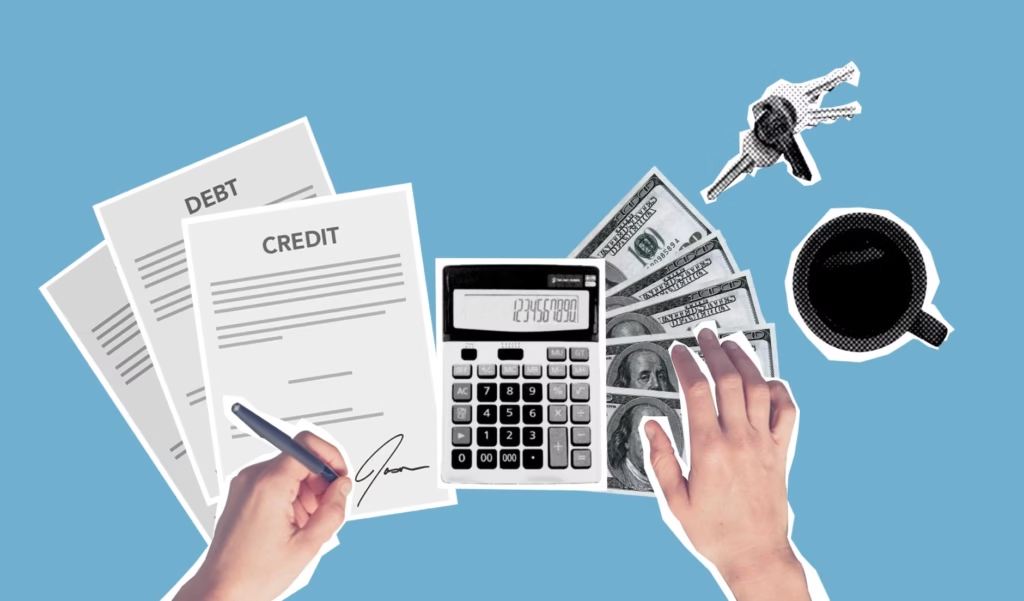
- Helmet: often $40 to $100 for a properly fitting model. All bicycle helmets sold in the United States must meet CPSC standards, but fit still matters for protection. (nhtsa.gov)
- Lock: often $40 to $100 if you will ever park outside. Skipping this cost usually means either bad security or not using the bike for errands.
- Lights: often $25 to $80 if any riding could happen in low visibility. NHTSA recommends a white front light, red rear light, and reflectors when visibility is poor. (nhtsa.gov)
- Flat kit and pump: often $25 to $60. Even casual riders eventually need a tube, levers, and a way to add air.
- Cargo or comfort add-ons: roughly $40 to $150 for a rear rack, basic bag, fenders, or a better saddle if the bike truly needs one.
- Assembly, fit, or first tune-up: anywhere from $0 to $150 depending on where you buy and how much support is included.
Common mistakes that make a good deal expensive
- Buying for identity instead of routine. Many regrets start with choosing the bike that signals a serious rider, not the bike that suits a serious beginner.
- Paying for higher-end parts before proving you like the riding position. Within a category, higher prices often buy lighter materials or nicer components, not a better match for your life. (rei.com)
- Ignoring brake reach and handlebar stretch during the test ride. If you cannot comfortably reach the brakes or feel overextended in the store, that usually does not improve on mile five. (nhtsa.gov)
- Treating “mountain bike” as a synonym for “beginner bike.” Off-road features can be useful, but unnecessary suspension and knobby tires are often extra cost and extra drag for mostly paved use. (rei.com)
- Assuming a return will save you. The FTC’s Cooling-Off Rule generally does not cover purchases made entirely online, by mail, by phone, or after negotiations at a seller’s regular place of business, so ordinary bike purchases usually come down to the store’s written policy. (consumer.ftc.gov)
- If electric, chasing the cheapest battery instead of the safest system. CPSC says compliance with relevant UL standards, including UL 2849 for e-bikes, significantly reduces fire risk. (cpsc.gov)
When your first plan still is not enough
Some riders just starting out may have genuinely conflicting usage – commuting during the weekdays over pavement, perhaps crushing gravel trails on the weekends, climbing up steep hills, having limited room for storage and perhaps a sore knee. In those cases a first bike may not exist, and your best solution is to select the bike that works for 80% of your needs, but understand there will be some compromise on the 20% (due to lack of design). Another great back-up plan would be renting categories for a weekend or purchasing used from a shop that can prepare you by checking the fit and mechanical condition of the bike, before deciding to spend serious money.
If the answer might be an e-bike, become more selective, not less. CPSC urges consumers to use micromobility products and batteries that are designed, manufactured, and certified to applicable safety standards, and the agency has said compliance with relevant UL standards, including UL 2849 for e-bikes, significantly reduces the risk of injuries and deaths from micromobility fires. (cpsc.gov)
If you already bought the wrong bike
- Get a fit check before you give up on the bike. Seat height, fore-aft position, and bar setup can solve smaller issues.
- Fix low-cost contact points first: grips, pedals, saddle, or tires if they address a real comfort or traction problem.
- Add function, not fantasy. A rack, lights, or everyday tires may improve usefulness more than a flashy component swap.
- Use a rescue-spending cap. If fixes are heading past roughly 25% of what a better replacement bike would cost, stop and reassess.
- If it still feels wrong after modest changes, sell early while the bike is still clean and current, and treat the loss as tuition for a better second purchase.
How to pressure-test the purchase before you pay
You do not need expert-level bike knowledge to verify that a purchase makes sense. You need a short audit that forces the store-floor story to compete with your actual life. NHTSA’s basic fit advice and REI’s pre-ride guidance are useful here because they keep the process practical: control, comfort, and function first. (nhtsa.gov)
- Ride the bike for at least 15 to 20 minutes, ideally on terrain similar to where you will actually ride.
- Start, stop, and turn at low speed. Make sure you can comfortably grip the brakes and stand over the bike without feeling awkward. (nhtsa.gov)
- Ask for the out-the-door total with the accessories you truly need, not just the bike’s tag price.
- If buying online or used, budget for a local setup or inspection. Before riding, run an ABC check: Air, Brakes, Chain. (rei.com)
- Get the return policy, warranty, and any included service in writing. Do not assume a federal three-day undo button applies to your purchase. (consumer.ftc.gov)
- If a salesperson cannot clearly explain why this bike fits your route better than the next one, slow down. Confusion is a reason to wait, not a reason to buy.
Bottom line
One of the biggest issues new bikers have is not spending too much money; buying the wrong type of bike for the type of riding they actually do. By finding the right size of bike for your body and the type of riding you plan to do and on what type of terrain you plan to ride, you will significantly increase your chances of developing a cycling habit rather than just learning a valuable lesson. Start with real-world conditions versus showroom conditions when making your purchase and you will typically get more for your money.
Frequently asked questions
Is a hybrid better than a road bike for most beginners?
For many beginners, yes. If your riding is mostly neighborhood streets, paved paths, short fitness rides, and small errands, a hybrid often offers a more upright position and broader versatility. A road bike can still be right if your main goal is longer paved rides and you are comfortable with a more forward posture. (rei.com)
Should I buy new or used if I am not sure I will stick with cycling?
You can lessen the financial hit by purchasing a secondhand bike if you choose a traditional style hybrid/hardtail model that has been inspected by an established bicycle repair facility or a reputable seller. It’s best to plan on having the bike serviced/tuned before purchasing it or inspect it yourself to confirm that it fits properly instead of purchasing a wrongly sized model simply because you find it at a low price.
How much should I reserve beyond the bike price?
A practical rule is to hold back about 20% to 30% of your all-in budget for accessories and setup. A beginner who needs a helmet, lock, lights, and basic flat gear can easily spend another $150 to $300, and more if the bike will be used for commuting or parked outside regularly.
What if the bike feels wrong after one ride?
Start with a fit check and small contact-point changes before assuming the whole purchase was a mistake. But check the written return policy right away. The FTC’s Cooling-Off Rule generally does not cover the ordinary online or in-store bike purchases most shoppers make, so your options depend heavily on the retailer’s terms. (consumer.ftc.gov)
What matters most on a beginner e-bike?
Fit, brakes, service support, and battery-system safety matter more than a flashy top speed claim. CPSC urges consumers to use products and batteries that are designed, manufactured, and certified to applicable safety standards, and OSHA lists UL 2849 among recognized standards for electrical systems for e-bikes. (cpsc.gov)
References
- REI Expert Advice: Bikes: How to Choose – https://www.rei.com/learn/expert-advice/bicycle.html
- REI Expert Advice: Bike Fitting Basics – https://www.rei.com/learn/expert-advice/bike-fit.html
- REI Expert Advice: How to Do a Pre-Ride Bike Inspection – https://www.rei.com/learn/expert-advice/pre-ride-inspection.html
- League of American Bicyclists: How To Choose a Bike – https://bikeleague.org/videos/how-to-choose-a-bike/
- FTC Consumer Advice: Buyer’s Remorse: The FTC’s Cooling-Off Rule May Help – https://consumer.ftc.gov/articles/buyers-remorse-ftcs-cooling-rule-may-help
- NHTSA: Bicycle Safety – https://www.nhtsa.gov/road-safety/bicycle-safety
- NHTSA: Fitting a Bike – https://www.nhtsa.gov/sites/nhtsa.gov/files/2024-07/bike-safety-fitting-a-bicycle.pdf
- NHTSA: Universal Bicycle Helmet Laws – https://www.nhtsa.gov/book/countermeasures-that-work/bicycle-safety/countermeasures/legislation-and-licensing/universal
- CPSC: Micromobility: E-Bikes, E-Scooters and Hoverboards – https://www.cpsc.gov/Safety-Education/Safety-Education-Centers/Micromobility-Information-Center
- CPSC: Calls on Manufacturers to Comply with Safety Standards for Battery-Powered Products – https://www.cpsc.gov/Newsroom/News-Releases/2023/CPSC-Calls-on-Manufacturers-to-Comply-with-Safety-Standards-for-Battery-Powered-Products-to-Reduce-the-Risk-of-Injury-and-Death
- OSHA: Nationally Recognized Testing Laboratory Program – UL – https://www.osha.gov/nationally-recognized-testing-laboratory-program/ul