
Most people do not stop bike commuting because they suddenly decide they dislike riding. They stop because the commute becomes too fragile. One bad route, one flat on a rushed morning, one week of arriving sweaty, or one scary interaction with traffic can turn a good habit into a draining obligation. The way to keep commuting is usually not more willpower. It is removing the points of friction that make the ride hard to repeat.
If the route feels tense, the habit usually does not last
The fastest line on a map is often the wrong commuter route. NHTSA advises planning routes with less traffic and slower speeds when riding on roads, and the League of American Bicyclists recommends judging a route by traffic volume, road width and condition, terrain, and not just distance. The League also notes that a slightly longer route can be much more pleasant. (nhtsa.gov)
That matters because commuters do not evaluate a ride like a weekend workout. They evaluate it by repeatability. A route with frequent close passes, awkward left turns, stressful intersections, or a rough final approach to the office might be survivable once. Five days a week, it becomes mentally expensive.
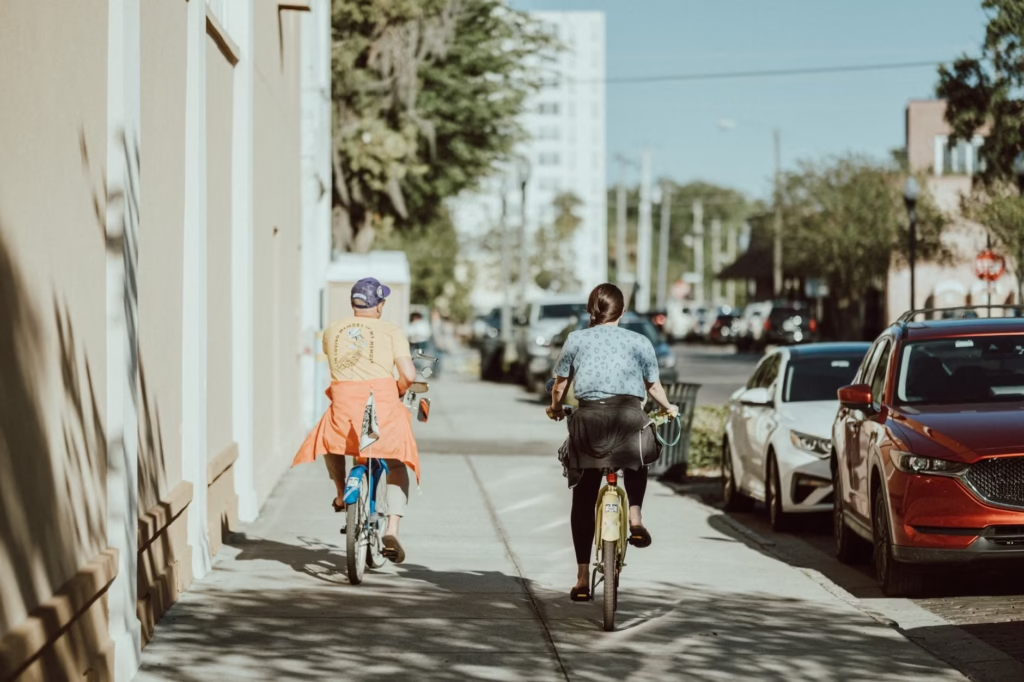
Before giving up on commuting, test two alternate routes on a weekend and pick the one you would still ride when tired, late, or after a rough workday. The calmer route is usually the sustainable one. (bikeleague.org)
Weather, sweat, and carrying stuff are usually logistics problems
A lot of riders say weather is the reason they stopped, but the real issue is often the routine around weather. The League suggests a relaxed pace for short commutes, spare clothes at work, waterproof and breathable fabrics, layers for cold days, and fenders or rain gear for wet rides. It also recommends practical carrying options such as a rack, panniers, or basket instead of assuming a backpack is the only answer. (bikeleague.org)
The useful shift is to stop treating every commute like a full-effort ride. If a rider has a six-mile trip and keeps arriving overheated, slowing down may solve the problem better than buying more gear. If rain is the blocker, leaving shoes, socks, and a towel at work may matter more than chasing the perfect jacket. If afternoons are brutal, biking in and taking transit home still counts as a successful commuting routine.
There is also a limit to the “just tough it out” mentality. NHTSA recommends lights and bright or reflective gear at night or when visibility is poor, and it advises riders to stay focused, predictable, and alert to hazards. Local rules on equipment and where to ride can vary, so in ice, flooding, lightning, or on roads that leave no reasonable riding space, choosing another way to travel is a judgment call, not a failure. (nhtsa.gov)
Tiny mechanical problems end a lot of commutes
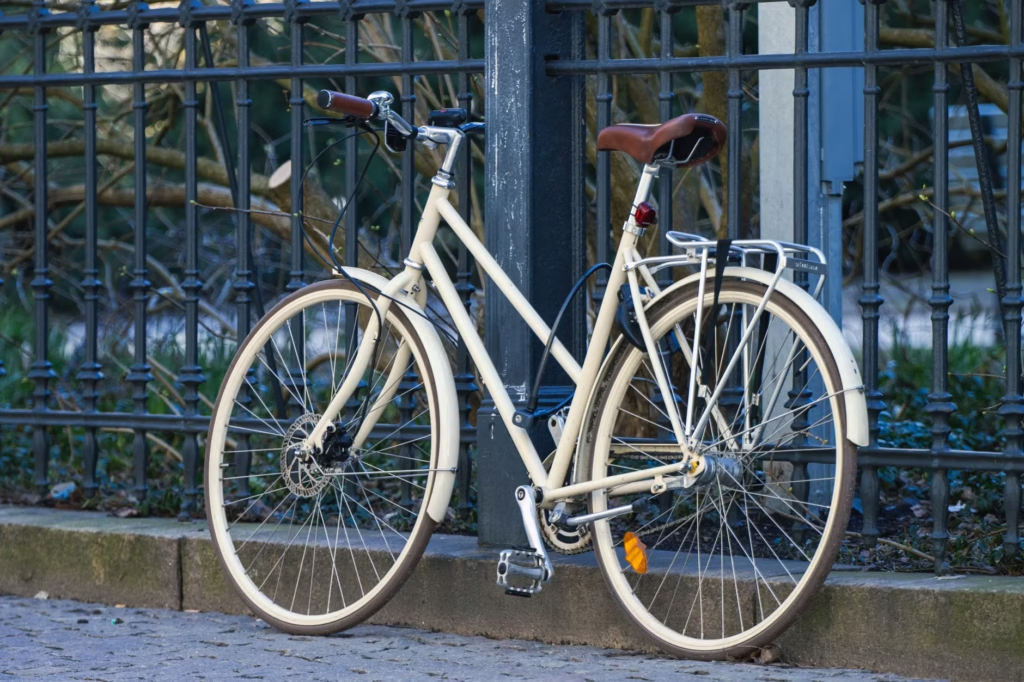
A commuter bike does not need to be fancy, but it does need to work every time. NHTSA’s pre-ride check says to inspect air, brakes, and chain before riding, and the League advises learning basic flat repair, checking brake pads, and replacing worn tires. Small issues are what make ordinary riders give up, because they show up on busy mornings when there is no extra time. (nhtsa.gov)
A 60-second pre-ride habit
- Check tire pressure and look for cuts or worn tread. NHTSA says the correct pressure is usually printed on the tire sidewall, and both NHTSA and the League recommend replacing worn or damaged tires. (nhtsa.gov)
- Squeeze both brakes before rolling out. They should stop the bike cleanly, and NHTSA says the pads should not be worn down and the brakes should not rub while the wheel spins. (nhtsa.gov)
- Glance at the chain. NHTSA recommends making sure it is tight, clean, lubricated, and rust-free so it can move freely when changing gears. (nhtsa.gov)
- If the ride may happen in low light, confirm the lights are ready. NHTSA recommends a white front light, a red rear light, and reflectors when riding at night or in poor visibility. (nhtsa.gov)
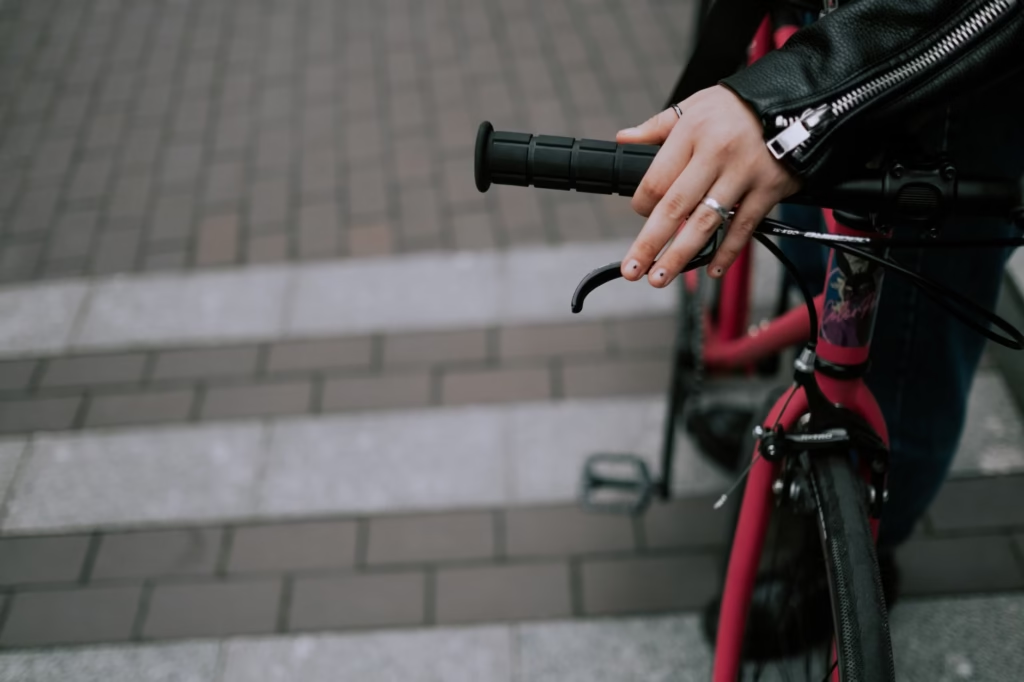
Fit matters too. NHTSA says a bike should let a rider reach the pedals while seated, grip the brakes easily, keep a slight bend in the leg at the bottom of the pedal stroke, and maintain a comfortable reach to the bars with a soft bend in the arms. If numb hands, knee pain, or saddle dread show up early in the ride, that is usually a setup issue worth adjusting, not proof that commuting simply is not for you. (nhtsa.gov)
The commute lasts longer when it has a backup plan
Another common failure point is making the ride too all-or-nothing. The League recommends thinking about indoor or covered parking, bringing tools you know how to use, and keeping the bike in good working order. In practice, the habit lasts longer when there is redundancy: a lock that is quick to use, a spare tube, a pump, backup clothes, and a fallback option for days when something goes wrong. (bikeleague.org)
A simple one-week audit
- After each commute, rate it from 1 to 5 for route stress, comfort, bike reliability, and destination logistics.
- If route stress scores lowest, change streets before buying more gear.
- If comfort scores lowest, slow the pace, adjust clothing, or move cargo off your back.
- If reliability scores lowest, schedule a tune-up and learn one repair skill well.
- If destination logistics scores lowest, solve parking, storage, or clothes at work first.
Most people do not abandon bike commuting because cycling stopped making sense. They abandon it because one unresolved problem keeps charging a daily tax. Make the route calmer, the routine simpler, the bike more dependable, and the plan less rigid. A modest commute that works on ordinary days will outlast an ambitious one that only works when everything goes right.
References
- NHTSA – Bicycle Safety – https://www.nhtsa.gov/road-safety/bicycle-safety
- NHTSA – Bicycle Safety: Fitting a Bike – https://www.nhtsa.gov/sites/nhtsa.gov/files/2024-07/bike-safety-fitting-a-bicycle.pdf
- NHTSA – Bicycle Safety: Pre-Ride Safety Check – https://www.nhtsa.gov/sites/nhtsa.gov/files/2024-07/bike-safety-pre-ride-bicycle-check.pdf
- League of American Bicyclists – Commuting – https://bikeleague.org/ridesmart/commuting/