
Cargo bikes are not replacing every car trip in every city. What they are changing, quickly, is the short urban trip that cars often handle badly anyway: the grocery stop, the school drop-off, the daycare pickup linked to an errand, the local delivery run, or the last mile between a neighborhood and a destination. In the Federal Highway Administration’s 2022 National Household Travel Survey, the average shopping trip was 5.8 miles and the average school or church trip was 6.2 miles. Earlier FHWA analysis also found that seven of every 10 vehicle trips were less than 10 miles. Those are exactly the distances where parking friction, street congestion, and curb access can matter as much as top speed. (fhwa.dot.gov)
That is why cargo bikes matter beyond cycling culture. When a bike can carry a week’s groceries, one or two children, work gear, or a stack of deliveries, the practical question shifts from can this person bike? to is this particular trip better done by bike? ITDP describes e-bikes as close substitutes for cars on many urban trips because they cover longer distances with less effort, and research on parents using e-bikes and cargo bikes in the San Francisco Bay Area found that they substituted for car trips, expanded access, and reduced stress around transporting children. (itdp.org)
Table of Contents
- Why short urban errands are the sweet spot
- Grocery runs are often the first successful swap
- School trips show why cargo bikes are more than oversized bikes
- Choose the format around the trip, not the marketing
- Use the Trip Replacement Test before you buy
- When more households use cargo bikes, the whole street works differently
- The tradeoffs that determine whether the change sticks
- Where cargo bikes are least likely to work well
- The real change is behavioral as much as mechanical
- Frequently Asked Questions
- References
TL;DR
- Cargo bikes are strongest on short, repeated urban trips where carrying capacity and easy parking matter more than maximum speed. FHWA trip data helps explain why grocery and school runs are such good candidates. (fhwa.dot.gov)
- They are especially effective for trip chaining, such as taking a child to school and continuing to work, a cafe, or a store without re-parking a car or waiting in pickup lines. Family-use research points to exactly this kind of substitution. (tandfonline.com)
- The biggest adoption mistakes are usually not about power or range first. They are more often about route stress, home storage, destination parking, child setup, and charging safety. (nacto.org)
- Cities get the largest benefit when cargo bikes are treated as ordinary transportation, with safe networks, curb space, parking, and delivery infrastructure, rather than as a niche recreation product. (nacto.org)
Why short urban errands are the sweet spot
A cargo bike succeeds where the city already compresses daily life. Dense neighborhoods put homes, schools, groceries, parks, and transit closer together. That lowers distance, but it also raises the hidden cost of driving: searching for parking, idling in pickup queues, double-parking for quick stops, unloading kids, then doing the whole sequence again at the next destination. A cargo bike does not eliminate effort, but it often removes those delays. On short trips, curb-to-door efficiency can matter more than a car’s ability to travel faster between red lights. That practical logic is one reason e-bikes and cargo bikes fit so well into ITDP’s vision of compact urban transportation, and why NACTO’s network guidance emphasizes direct, comfortable routes to commercial districts, schools, and other daily destinations. (itdp.org)
This does not mean every city resident should buy one. Cargo bikes work best when repeated trips share four conditions: manageable distance, a low-stress route, a realistic load, and secure parking or storage. Miss one of those and the bike may still be useful, but it will stay occasional instead of becoming part of weekly life. The households that get the most value are usually not the ones trying to replace all driving. They are the ones replacing the same annoying short trips over and over. (nacto.org)
Grocery runs are often the first successful swap
The grocery run is usually the easiest trip to convert because it combines a short distance with a modest but bulky load. The 2022 National Household Travel Survey put the average shopping trip at 5.8 miles. That is close enough for a conventional bike in some places, but much more widely practical on an e-cargo bike when there is wind, a hill, a child on board, or a return trip with a full load. (fhwa.dot.gov)
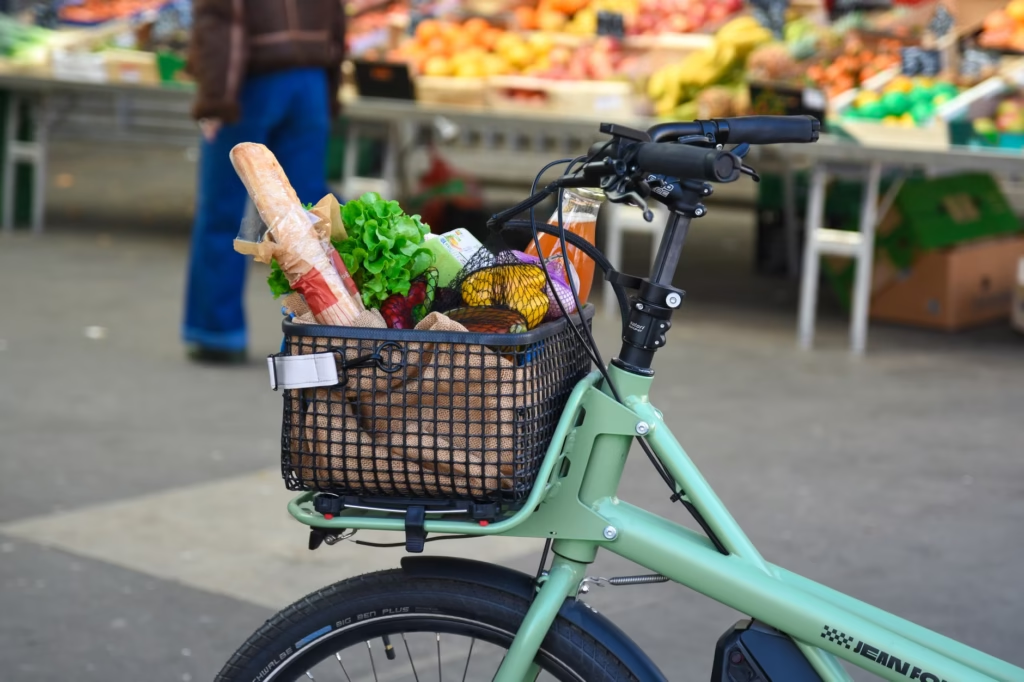
The deeper change is behavioral. Shopping by cargo bike tends to break one large, infrequent, car-dependent haul into smaller, more regular trips. That is not automatically better for every household, but in walkable and bikeable neighborhoods it can reduce planning friction. Milk, produce, pharmacy items, a loaf of bread, a hardware stop, and a library return can all happen on the same vehicle without needing a trunk. For many riders, the cargo bike becomes a rolling utility tool rather than an alternative version of a road bike. Research on cargo bike users has found meaningful mode substitution after purchase, with many reporting fewer car trips specifically because the bike could handle children and gear. (trid.trb.org)
- The store is close enough that a five- to 20-minute ride feels normal rather than heroic. FHWA trip distances suggest many urban shopping trips fall into that band. (fhwa.dot.gov)
- Parking a car near the entrance is unpredictable, expensive, or irritating, while bike parking is usually closer to the door. This is a major part of the real time savings on short urban errands. (nacto.org)
- The household already buys groceries in multiple trips, or could do so without hardship, instead of relying on one warehouse-style stock-up run.
- The route can be made calm enough to carry a load home without feeling rushed by faster traffic. NACTO’s guidance is explicit that everyday bikeways need to work for people moving cargo, not only for confident solo riders. (nacto.org)
A realistic example helps. Imagine a household with a grocery store 1.5 miles away, a school another mile beyond it, and a protected bike route covering most of the trip. A car may still win on a huge once-a-month stock-up. But for two midweek food trips and one school-linked errand, a cargo bike can be easier because it turns three parking events into none. In a denser neighborhood, that is a transportation advantage, not just a lifestyle preference. (nacto.org)
School trips show why cargo bikes are more than oversized bikes
School transport is where cargo bikes change household logistics most clearly. Parents are not simply carrying children from point A to point B. They are coordinating schedules, bags, rain gear, snacks, a possible second stop, and the constant time pressure of getting somewhere else immediately after. The family-use research from the Bay Area found that e-bikes and cargo bikes helped caretakers keep biking after having children, substitute for car trips, and feel less stressed about everyday travel. (tandfonline.com)
That matters because the school trip is rarely a standalone trip. It is linked to work, daycare, coffee, a return ride home, or a grocery stop on the way back. This is where cargo bikes outperform the standard image of a bicycle as a one-person, point-to-point tool. They allow trip chaining without a car and without the awkward feeling that every extra stop requires a new parking search and another full unloading process. NACTO’s network planning language captures this shift well: principal routes should be able to accommodate different speeds and devices, even allowing a caregiver to ride next to a child while a cargo trike passes with deliveries. (nacto.org)
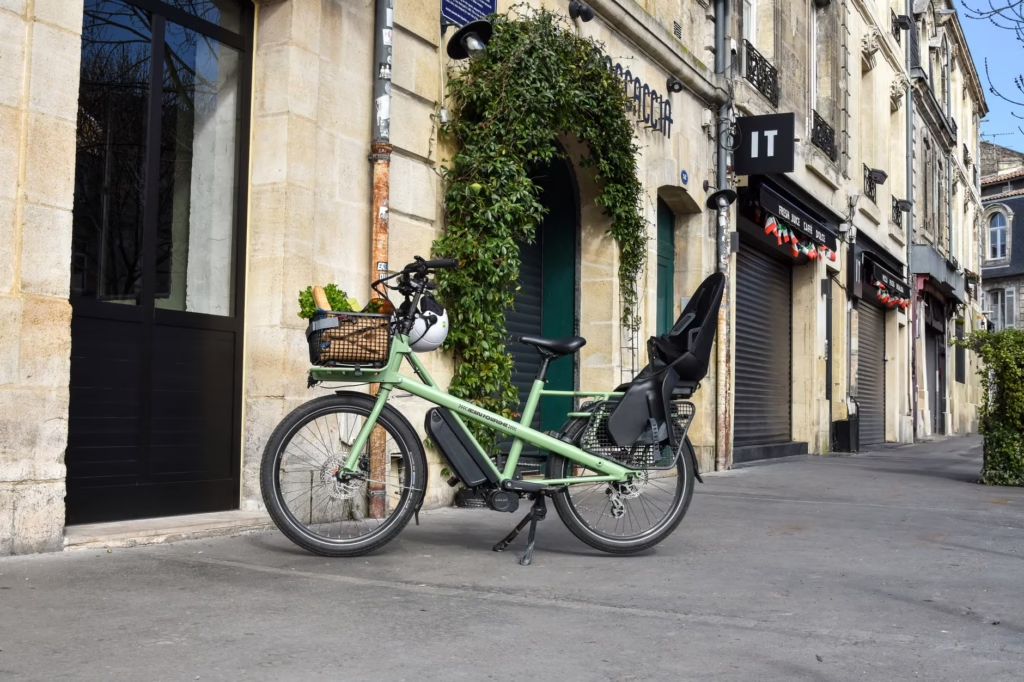
Local rules still matter. Passenger-carrying rules, helmet requirements, and where different e-bike classes may be used vary by state and city. CPSC also advises riders to follow manufacturer directions and check weight and age limits for the device. Before using a cargo bike for school transport, verify both local traffic rules and the specific bike’s approved passenger setup. (cpsc.gov)
Choose the format around the trip, not the marketing
Cargo bikes are not one category in practice. A household moving one child and a backpack has a different problem from a household moving two children, soccer gear, and groceries. The table below is less about brand names than about matching the bike format to the trip pattern. The descriptions synthesize mainstream cargo-bike types commonly discussed in urban transport and e-cargo guidance. (itdp.org)
| Format | Best fit | What it does well | Watch-outs |
|---|---|---|---|
| Longtail | One or two kids, backpacks, medium grocery runs, fast stop-and-go errands | Feels closest to a regular bike and is often easier to store than a box bike | Rear space fills up quickly, and passenger loading needs a stable routine |
| Front-loader or box bike | Two kids, bulky groceries, frequent family outings, visible cargo | Keeps passengers and bags in front of the rider and makes conversation easy | Longer wheelbase, wider turning circle, and a bigger home-storage footprint |
| Compact cargo bike | Apartment living, mixed errands, one child or heavier shopping loads | More maneuverable in tight city streets and easier to fit in smaller storage areas | Usually offers less growth room for a larger family or bulky cargo |
| Trailer with a standard or e-bike | Occasional hauling when daily passenger use is not the main job | Lower commitment if a rider already owns a compatible bike | Less convenient for everyday loading, parking, and child transport |
The common buying mistake is choosing for maximum theoretical capability instead of routine usefulness. A front-loader may look like the ultimate family machine, but a longtail can be the better real-world answer if the bike must pass through a narrow gate, fit into a building storage room, or be handled by multiple adults with different comfort levels. The right question is not which type is best. It is which type gets used four days a week. (tandfonline.com)
Use the Trip Replacement Test before you buy
A cargo bike purchase makes more sense when it is tied to a specific replacement pattern. The Trip Replacement Test is a simple five-step decision rule for households deciding whether a cargo bike will become transportation or remain an expensive experiment.
- List the five short trips the household repeats most often in a normal week. Include distance, purpose, and whether parking is usually annoying. FHWA trip data is useful here because it shows how many errands already fall in cargo-bike range. (fhwa.dot.gov)
- Check route stress, not just mileage. A two-mile trip on a calm neighborhood street can be easier than a one-mile trip on a fast arterial with poor crossings. NACTO’s guidance repeatedly centers comfort and separation from higher-speed traffic for all-ages use. (nacto.org)
- Match the load to the approved setup. Children, seats, rails, bags, and rain covers all count. CPSC advises riders to review manufacturer directions and weight and age limits before riding. (cpsc.gov)
- Solve storage and destination parking before comparing motors and accessories. If the bike is hard to park at home or impossible to secure at the school or store, daily use will stall.
- Do a loaded test ride in realistic conditions. A cargo bike that feels calm with an empty frame may feel very different with groceries, a child, or a hill.
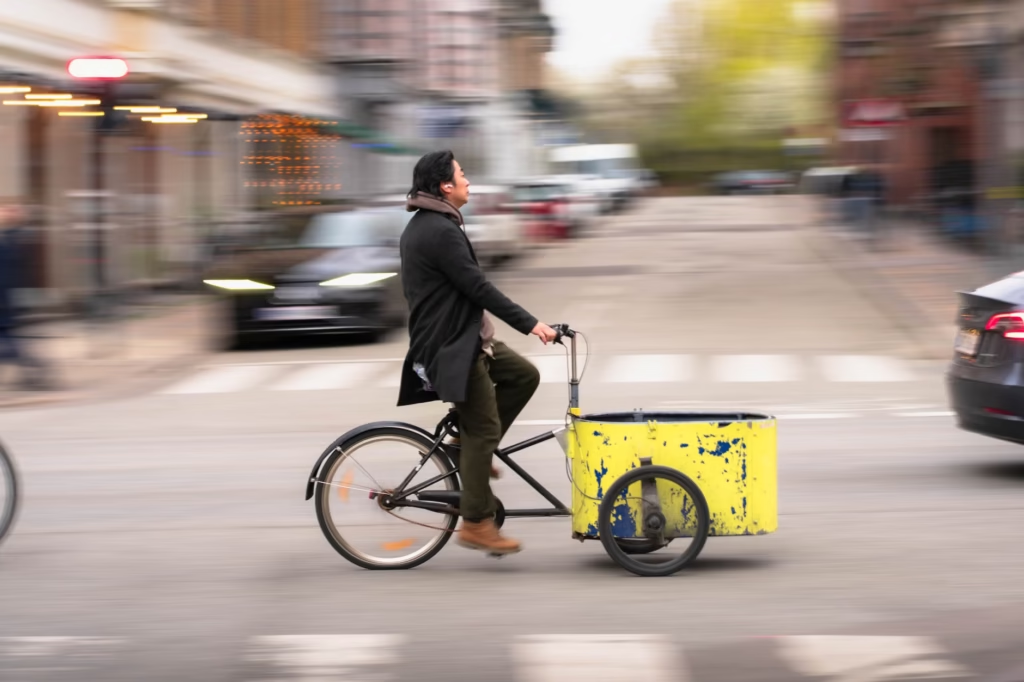
Here is the practical threshold: if three or more recurring trips pass that test comfortably, the odds of regular use are much better. If only one very occasional trip fits, a shared cargo bike, trailer, delivery service, or a simple car-and-bike mix may be the smarter answer. This is also where trial programs and test loans can matter. Even recent e-cargo research in the UK built household trials around training, accessories, and real-life usage rather than assuming the bike alone would solve adoption barriers. (mdpi.com)
When more households use cargo bikes, the whole street works differently
The household benefit is obvious. The citywide benefit is more interesting. Cargo bikes make transportation smaller. They reduce the street space needed per trip, ease curb pressure, and create a credible way to move both people and goods without defaulting to a full-sized car or van. That is why NACTO’s all-ages-and-abilities guidance explicitly includes people moving goods, caregivers with children, delivery workers, adaptive cycles, and other wider or longer vehicles in bikeway design. Cargo bikes are not a side case anymore. They are a design case. (nacto.org)
That shift is also visible in freight. Boston’s Boston Delivers pilot ran from September 2023 through January 2025 and completed 18,375 deliveries, about 20,000 items, using e-cargo bikes. The city framed it as a way to right-size delivery vehicles for streets where large vehicles create congestion and safety conflicts. In New York City, DOT said in a June 3, 2026, press release that its microhub pilot had reduced more than 3,000 truck trips, and the agency reported that commercial cargo bike deliveries had grown at least seven-fold since the earlier cargo bike pilot began. (boston.gov)
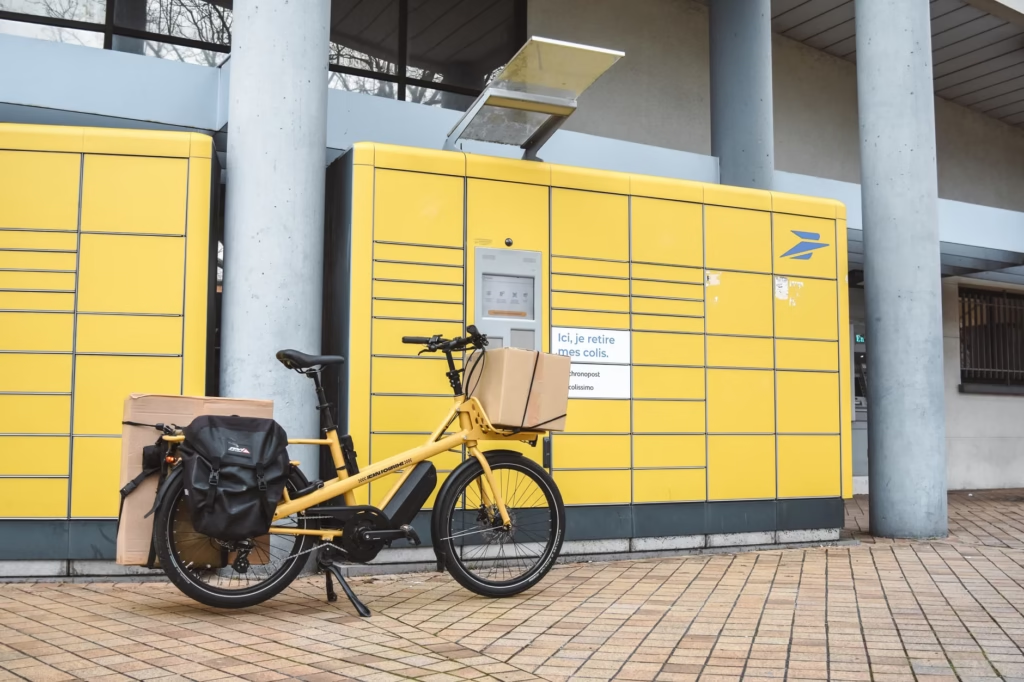
Those examples matter because they show cargo bikes moving from personal experimentation to transport policy. Cities are no longer treating them only as bicycles with bigger baskets. They are building curb rules, delivery training, microhubs, and cargo corrals around them. NYC DOT’s freight pages now include commercial cargo bicycle guidance, loading access, and training requirements alongside other delivery policy tools. That is a strong signal that cargo bikes are becoming part of the urban transportation system, not just part of consumer choice. (nyc.gov)
The tradeoffs that determine whether the change sticks
Cargo bikes are practical, but they are not frictionless. Upfront cost can be high. Home storage can be harder than the ride itself, especially in apartments with stairs. Theft risk is a real concern in some neighborhoods. And a heavier, longer bike changes handling, braking feel, turning radius, and the amount of space needed when loading children or bags. None of those are reasons not to buy one. They are reasons to treat it as transportation equipment instead of impulse outdoor gear.
Practice matters. Start empty, then loaded, then loaded with real passengers if the setup is approved for that use. CPSC advises checking brakes, tires, lights, frame, and other components before riding, always wearing a bicycle helmet, following local traffic rules, and reviewing device weight and age limits. Recent CPSC actions have also involved both e-bike batteries and child-passenger restraint issues on cargo bikes, which is a useful reminder to register the product, monitor recalls, and use approved accessories rather than improvised solutions. (cpsc.gov)
Charging is another overlooked issue, especially with e-cargo models. CPSC says consumers should use micromobility devices and batteries designed, manufactured, and certified to applicable safety standards, charge only with the manufacturer-provided or recommended charger, stay present while charging, and never charge while asleep or away from home. It also warns against universal chargers, modified battery packs, and repurposed cells. That advice should be treated as part of the ownership decision, not as fine print after purchase. (cpsc.gov)
- Buying for maximum range before solving storage and parking.
- Assuming any bike lane will feel comfortable with children or heavy cargo. NACTO’s guidance makes clear that route comfort and separation are decisive. (nacto.org)
- Skipping a loaded test ride and discovering later that starts, stops, and turns feel unstable.
- Using unapproved passenger setups, aftermarket battery workarounds, or universal chargers. CPSC explicitly warns against those shortcuts. (cpsc.gov)
Where cargo bikes are least likely to work well
The weak cases are predictable. A household whose routine trips are long, fast, and spread across hostile arterial roads may find a cargo bike useful on weekends but unrealistic on weekdays. The same is true where a building has no secure storage, where destination parking is impossible, or where snow and debris are rarely cleared from bikeways. NACTO explicitly notes that principal routes need maintenance attention, including snow removal and repair, because a bike network that is technically present but poorly maintained does not function as daily transportation. (nacto.org)
This is also where the hype needs discipline. Cargo bikes are not a universal substitute for family cars, rural driving, long medical trips, or bulky warehouse shopping. The better claim is narrower and stronger: in the right urban conditions, they replace a meaningful share of repeated short trips, and that is enough to change how households and cities use the street. Research on cargo bike owners and family users supports that narrower conclusion much better than grand promises about abandoning cars altogether. (trid.trb.org)
The real change is behavioral as much as mechanical
Cargo bikes are changing urban transportation because they shrink the number of trips that truly need a car. They make everyday hauling normal enough that the rider does not feel like they are improvising. For grocery runs, that can mean less parking friction and more flexible shopping. For school trips, it can mean smoother trip chaining and less dependence on pickup lines. For cities, it can mean designing streets and freight systems around smaller, lighter vehicles that fit urban space more intelligently. The practical next step is simple: map one week of recurring short trips, run the Trip Replacement Test, and judge the idea against the route and storage reality rather than the marketing. That is where the useful answer usually appears. (fhwa.dot.gov)
Frequently Asked Questions
Do cargo bikes need electric assist to be useful?
No, but electric assist expands the number of households and trip types that can use them comfortably. ITDP’s 2024 report argues that e-bikes are close substitutes for cars on many short urban trips because they extend distance and reduce effort, especially when hills, children, or heavy cargo are involved. (itdp.org)
Can a cargo bike really replace a car?
It can replace many car trips without replacing every function of a car. The strongest cases are repeated short errands, school transport, and linked neighborhood trips. Research on cargo bike users found meaningful travel behavior change after purchase, but that is not the same as a universal full car replacement. (trid.trb.org)
What matters more, range or route?
For most urban households, route quality matters more first. A short but stressful route can kill regular use faster than limited range. NACTO’s guidance emphasizes direct, comfortable, separated routes for all-ages riding, including people carrying cargo and children. (nacto.org)
Are cargo bikes safe for carrying children?
They can be, but the setup has to be approved and used correctly. CPSC advises riders to follow manufacturer directions, check weight and age limits, wear helmets, inspect the bike before riding, and obey local rules. It is also wise to monitor recalls, because recent CPSC actions have included both battery and child-restraint issues affecting e-bikes and cargo bikes. (cpsc.gov)
How are cities using cargo bikes beyond family transportation?
Cities are increasingly using them in freight and curb-management policy. Boston ran an e-cargo delivery pilot that completed more than 18,000 deliveries, and New York City has paired cargo bikes with microhubs and other freight reforms to reduce truck trips and support cleaner last-mile delivery. (boston.gov)
References
- Federal Highway Administration: Summary of Travel Trends, 2022 National Household Travel Survey – https://www.fhwa.dot.gov/policyinformation/2022Summary_of_Travel_Trends_Report.pdf
- NACTO: Designing for All Ages and Abilities – https://nacto.org/publication/urban-bikeway-design-guide/planning-and-developing-a-bikeable-city/designing-for-all-ages-and-abilities/
- NACTO: Planning a Bike Network – https://nacto.org/publication/urban-bikeway-design-guide/planning-and-developing-a-bikeable-city/planning-a-bike-network/
- Institute for Transportation and Development Policy: E-bikes: Charging Toward Compact Cycling Cities – https://itdp.org/publication/e-bikes-charging-toward-compact-cycling-cities/
- Alainna Thomas: Electric bicycles and cargo bikes – Tools for parents to keep on biking in auto-centric communities? – https://www.tandfonline.com/doi/pdf/10.1080/15568318.2021.1914787
- Boston.gov: Boston Delivers – https://www.boston.gov/departments/transportation/boston-delivers
- NYC DOT: Microhubs Reduced More Than 3,000 Truck Trips on New York City Streets – https://www.nyc.gov/html/dot/html/pr2026/microhubs-reduced-truck-trips.shtml
- NYC DOT: Deliveries in New York City – https://www.nyc.gov/html/dot/html/motorist/deliveries.shtml
- CPSC: Micromobility Information Center – https://www.cpsc.gov/Safety-Education/Safety-Education-Centers/Micromobility-Information-Center
- CPSC Warning: Lithium-ion batteries for Rad Power Bikes e-bikes – https://www.cpsc.gov/Warnings/2026/CPSC-Warns-Consumers-to-Immediately-Stop-Using-Batteries-for-E-Bikes-from-Rad-Power-Bikes-Due-to-Fire-Hazard-Risk-of-Serious-Injury-or-Death
- CPSC Recall: Urban Arrow FamilyNext Pro Cargo E-Bikes – https://www.cpsc.gov/Recalls/2026/Gazelle-USA-Recalls-Urban-Arrow-FamilyNext-Pro-Cargo-E-Bikes-Due-to-Injury-Hazard