
A bike lane can be separated from traffic and still feel stressful. That is not a contradiction. A protected bike lane may use posts, curbs, parked cars, or a raised edge to create space from general traffic, and U.S. guidance treats separated bicycle lanes as an important safety treatment. But that label mostly describes the segment between conflict points. It does not guarantee that the stressful parts of the trip, especially turns, crossings, and curbside access, have been resolved well. (nacto.org)
Comfort is not a trivial concern. FHWA’s Bikeway Selection Guide uses Level of Traffic Stress to classify how comfortable a bikeway is for different riders, and the factors it highlights include parking turnover, curbside activity, driveway and intersection frequency, direction of operation, transit considerations, and network gaps. When a protected lane feels unsafe, that reaction is often picking up real design friction. (highways.fhwa.dot.gov)
TL;DR
- A protected bike lane may be safer overall than a painted lane, but riders often judge it by the moments where protection breaks down: intersections, driveways, bus stops, loading zones, and maintenance failures. (nacto.org)
- The biggest gap between technical protection and felt safety is usually at openings, where turning drivers, limited sight lines, and unclear priority create uncertainty. (highways.dot.gov)
- Not all protection works the same way. Research and guidance show that separation type, visibility, intersection treatment, curbside management, and obstruction control all affect outcomes. (iihs.org)
- A quick way to judge a lane is to inspect continuity, visibility, turn speed, priority, and day-to-day usability at every opening, not just the comfortable midblock stretch. (nacto.org)
Protection on the block is not the same as comfort through the corridor
This distinction shows up in research as well as rider experience. FHWA’s recent crash-modification work found segment-level crash reductions for several separated bike lane configurations, but the researchers were not able to develop robust models for intersections or entire corridors because intersection applications were inconsistent. In plain language, a lane can perform well on the easier midblock stretch and still feel bad where the hard decisions happen. (highways.dot.gov)
That is why technically protected is a narrow description. It tells you there is some physical separation from moving traffic. It does not tell you whether a driver turning right can see the rider early enough, whether a driveway has been daylighted, whether the bus stop is legible, whether delivery vans block the path, or whether winter debris turns the lane into a narrow chute. Those details help determine whether a facility feels low-stress to ordinary riders rather than only to confident commuters. (highways.dot.gov)
Why the danger feeling spikes at intersections, driveways, and corners
Intersections compress several problems into one moment. FHWA notes that the transition from a nonintersection separated bike lane to an intersection creates many challenges and can introduce confusing configurations. NACTO’s guidance reaches the same conclusion from a design angle: protected bike lanes should continue through intersections and driveways, and designers should avoid dropping the buffer or forcing last-second mixing on the approach. (highways.dot.gov)
Consider a hypothetical example. A rider is moving comfortably along a parking-protected lane on a retail street. Midblock, the barrier works. Then the lane reaches a signalized corner, parking runs too close to the crossing, a driver is trying to turn right while watching for pedestrians and a gap in traffic, and the rider suddenly feels exposed even though the facility is still technically protected. What changed was not the label of the lane. It was the amount of uncertainty packed into that opening.
Visibility can be blocked by the same elements that create separation
Parking protection is a common example. A parking lane can shield riders from moving traffic, but if the corner is not opened up, sight lines collapse right where turning decisions happen. NACTO recommends visibility zones at turn conflicts, including 10 to 20 feet ahead of the bikeway in some unsignalized cases and larger clear zones near parking-protected conditions. It also recommends setbacks, typically around 10 feet, so riders and drivers can see each other before the crossing instead of meeting in a blind spot. (nacto.org)
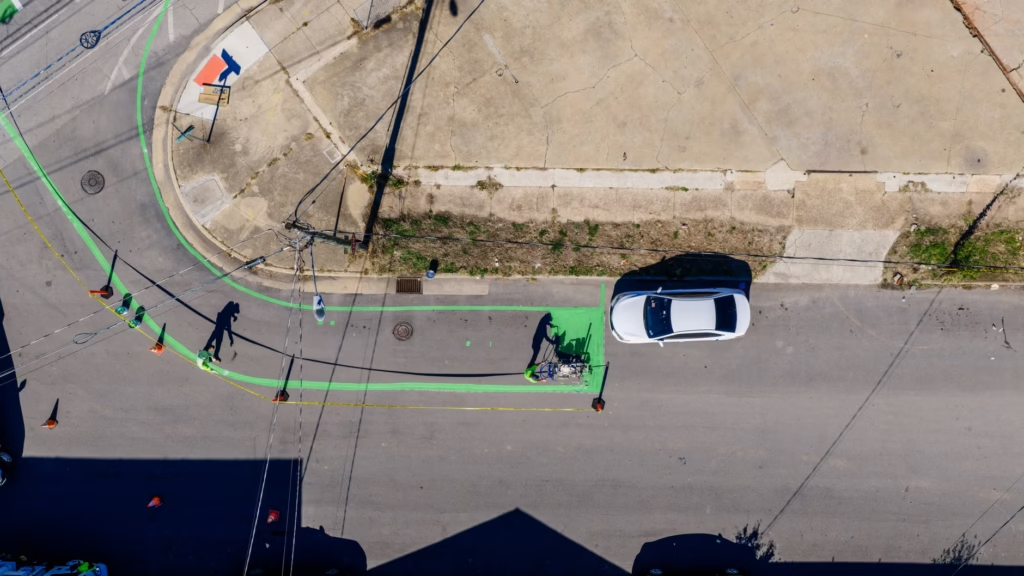
Signal rules matter too. The current MUTCD says turns on red must be prohibited across separated bicycle lanes while bicyclists are allowed to proceed through the intersection. That does not fix every conflict, but it reflects the same principle: once a crossing movement exists, visibility and timing matter as much as the barrier did midblock. (mutcd.fhwa.dot.gov)
Two-way lanes on one side ask everyone to look in less familiar directions
Two-way or contraflow protected bike lanes can be useful, especially where they improve network continuity or avoid conflicts elsewhere on the street. But both MUTCD and NACTO note that they introduce additional conflict points and expectation problems at intersections and driveways. Drivers may not anticipate bike traffic approaching from the second direction, and people crossing on foot have another stream to read as well. A lane can therefore be technically protected and still feel mentally demanding because it requires more scanning and more unusual yielding behavior from everyone. (mutcd.fhwa.dot.gov)
Curbside activity turns protection into a crossing problem
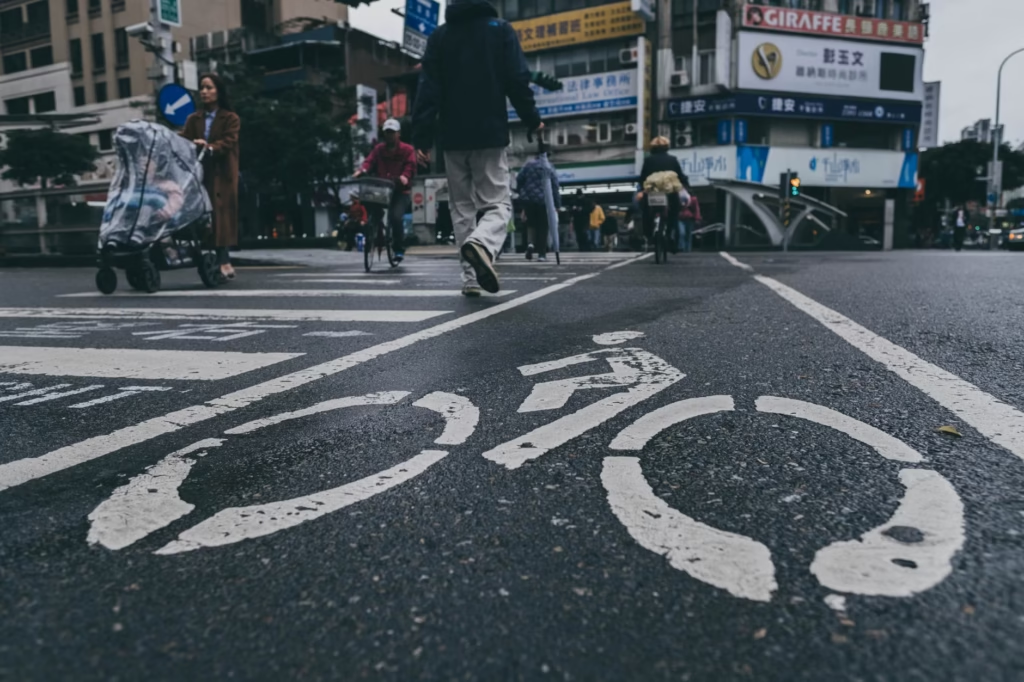
Loading, pickups, streeteries, accessible parking, and transit stops all create a similar pattern: the bike lane is safe until somebody needs to cross it. NACTO recommends placing loading zones at the start or end of blocks where possible and maintaining clear, legible transit stop designs such as boarding islands. MassDOT’s guidance notes that near-side bus stops can reduce approach sight distance for right-turning motorists before they cross a separated bike lane. When curbside access is improvised instead of designed, riders may feel the lane is protected from traffic but not from the street’s actual daily activity. (nacto.org)
A narrow or obstructed lane can feel like a trap
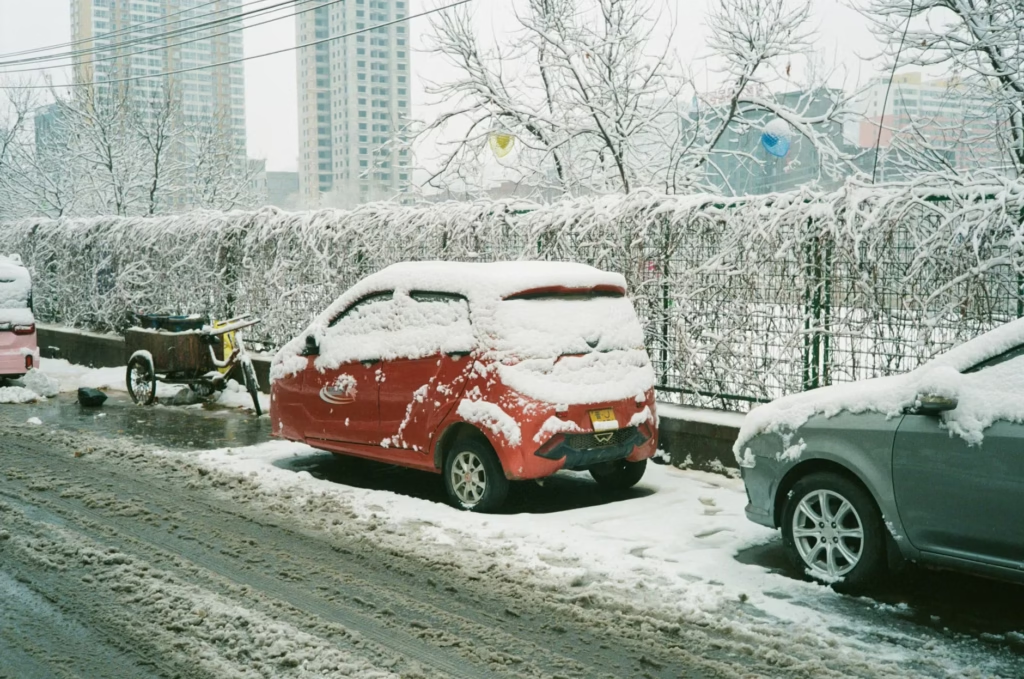
Separation can become its own problem when there is no easy escape path. NACTO recommends enough rideable width for side-by-side riding and passing, with a minimum rideable width of roughly 6.5 to 7 feet for one-way protected lanes and a wider preferred range in many contexts. Maintenance guidance from NACTO and MassDOT stresses that protected lanes are more likely to accumulate debris, snow, ice, and obstructions, and that designers should ensure sweeping and snow-clearing equipment can physically fit. IIHS research also found higher risk where temporary blockages were present, and higher risk associated with tracks and downhill grades. A protected lane that is pinched, blocked, slick, or littered can feel worse than an unprotected lane simply because the rider has fewer options. (nacto.org)
The Five-Point Openings Test
A practical way to read a protected lane is to judge every opening, not every block. The Five-Point Openings Test is an editorial checklist, not a formal engineering standard. It translates common design guidance into field questions a rider, planner, or neighborhood advocate can use in minutes. The five checks come directly from recurring themes in current U.S. guidance: continuity, visibility, speed management, clear priority, and usable maintenance conditions. (nacto.org)
- Continuity: Does the protected space stay legible through the opening, or does the buffer disappear right before a turn? If the answer is no, the facility is protected only between conflicts. (nacto.org)
- Visibility: Can the rider and turning driver see each other well before the crossing point? Look for clear corners, daylighting, and a setback rather than parked cars or street furniture right at the conflict. (nacto.org)
- Turn speed: Does the geometry force a slow turn, or can a driver sweep across the bike crossing at speed? Corner islands, smaller radii, wedges, and raised crossings usually help. (nacto.org)
- Priority: Is it obvious who goes when? Crossbike markings, stop lines, signal phasing, and no-turn-on-red controls where appropriate reduce guesswork. (nacto.org)
- Usability: Is the lane still usable when it is raining, snowing, trash day is underway, or delivery activity peaks? If not, the theoretical design is stronger than the real one. (nacto.org)
Editorial rule of thumb: if a protected lane fails two or more of these checks at the same corner, the problem is probably design, not rider confidence.
| What you see | Why it feels unsafe | What better design usually does |
|---|---|---|
| The buffer disappears before the intersection. | The rider is asked to negotiate with turning traffic at the point of highest uncertainty. | Keep the protected approach through the conflict and avoid last-second mixing. (nacto.org) |
| Parking runs close to the corner. | Sight lines are blocked, so riders and drivers notice each other late. | Create visibility zones and set back the bikeway from the turn. (nacto.org) |
| A two-way lane sits on one side of the street. | Drivers and pedestrians must check for bike traffic from directions they may not expect. | Use extra visibility, clear markings, and stronger turn management at driveways and intersections. (nacto.org) |
| Bus passengers or delivery workers cross anywhere through the lane. | The conflict has moved from cars to curbside access, but it is still a conflict. | Use boarding islands, clear crossings, and smarter loading placement. (nacto.org) |
| The lane is full of debris, snow, standing water, or work-zone clutter. | Riders cannot comfortably stay in the protected space and may have no easy escape route. | Design and maintain the lane for sweeping, drainage, and all-weather use. (nacto.org) |
| The lane is technically protected but too narrow for passing or daily maintenance. | Protection feels confining rather than comfortable. | Provide adequate rideable width and enough clear width for maintenance equipment. (nacto.org) |
The pattern across these examples is simple: midblock protection reduces one category of stress, but every opening reintroduces risk through visibility, turning, or blockage. Riders usually feel unsafe not because the barrier is meaningless, but because the barrier solved only one part of the problem. (iihs.org)
What well-designed protected lanes do differently
- They protect the approach to the conflict, not just the easy middle of the block. Good designs continue the bikeway through intersections and driveways instead of quietly reverting to a merge at the corner. (nacto.org)
- They create mutual visibility. Clear corners, parking setbacks, and visibility zones help riders and drivers detect each other early enough to yield deliberately rather than react suddenly. (nacto.org)
- They slow turning vehicles. Corner islands, tighter geometry, and, in some contexts, raised crossings or time-separated signal phases reduce the speed and ambiguity of turns over the bikeway. (nacto.org)
- They manage curbside access on purpose. Loading at block ends, transit boarding islands, and channelized pedestrian crossings make the bike lane easier to read for everyone. (nacto.org)
- They plan for real maintenance. Sweeping, snow removal, vegetation trimming, drainage, and construction detours are treated as safety operations, not afterthoughts. (nacto.org)
- They fit into a low-stress network. FHWA and MassDOT guidance both emphasize that connectivity and operational consistency matter; a comfortable lane that abruptly dumps riders into fast mixed traffic will still feel incomplete. (highways.dot.gov)
How to evaluate a protected lane without waiting years for crash data
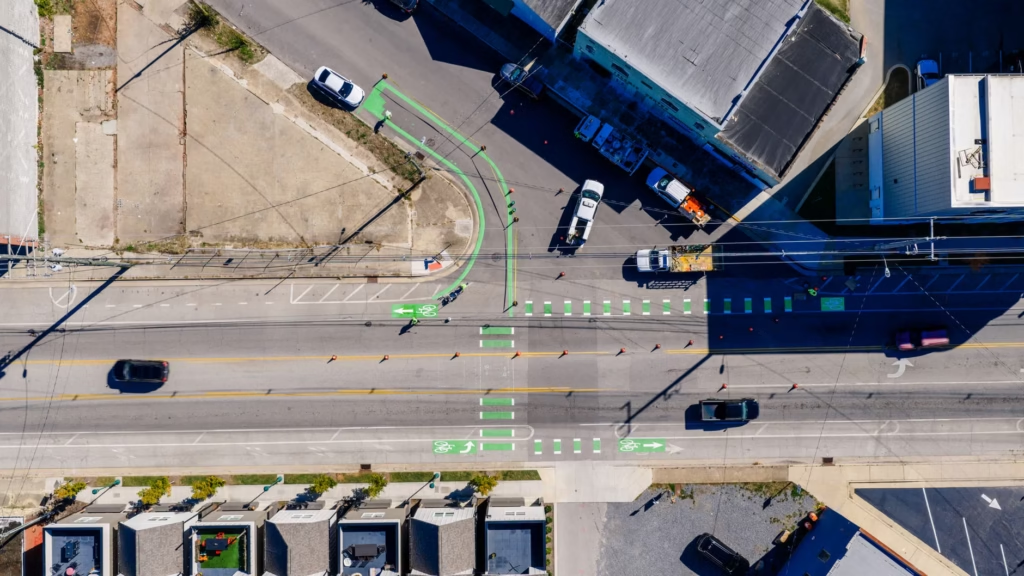
FHWA describes a road safety audit as a formal safety performance examination that includes field review. Most readers are not conducting a formal audit, but the same idea is useful: observe the facility in the field, at the points where behavior becomes complicated, and at the times when the street is actually busy. (highways.fhwa.dot.gov)
- Start at each intersection or driveway, not the middle of the block. Count how many openings occur in a short distance.
- Stand where a turning driver waits. If a rider disappears behind parked cars, signs, shrubs, or a shelter until the last moment, note it.
- Watch turn speeds. If cars roll quickly across the bike crossing or stop inside it, the geometry is probably doing too little work.
- Check the lane during real curbside activity. Delivery windows, school pickup, transit peaks, and weekend nightlife can reveal conflicts that a quiet midday visit misses.
- Come back after bad weather or on trash day. A lane that works only in ideal conditions is not reliably low-stress.
For advocates or local officials, these observations are often more actionable than a generic complaint that the lane feels bad. They point to specific fixes: daylight the corner, move the loading zone, add a boarding island, tighten the turn, relocate a stop line, or improve sweeping and drainage. (nacto.org)
The tradeoff cities often get wrong
The most common mistake is to spend political and design effort on midblock separation while preserving corner parking, fast turn geometry, curbside loading convenience, or simplified signal operations at the exact places where riders need the most help. That produces a lane that is technically separated along the straightforward sections but ambiguous at the conflict points. The result may still improve safety compared with no facility, yet it can fail the all-ages-and-abilities comfort test that protected lanes are supposed to meet. (nacto.org)
There are real tradeoffs. NACTO notes that fully protected intersection designs need space and often significant capital work, so they are not always feasible. But that limitation does not mean cities should settle for vague conflict points. Even where a full rebuild is not possible, visibility, curb management, turn control, and maintenance are still design choices. (nacto.org)
Conclusion
Some bike lanes feel unsafe even when they are technically protected because protection is only one layer of a good design. Riders experience the lane at its openings, where visibility, turn speed, priority, curbside access, and maintenance either support the barrier or undo it. The next time a protected lane feels strangely stressful, the useful question is not whether it counts as protected. It is where the design stops doing the hard work.
Frequently Asked Questions
Are protected bike lanes still generally safer than painted lanes?
Usually, yes. USDOT, FHWA, and NACTO all describe separated lanes as important safety treatments, and FHWA crash-modification research found reduced segment crash risk for some separated lane configurations. But those benefits vary by design, and FHWA’s own research could not produce robust models for intersections or entire corridors, which is one reason riders can still feel unsafe at specific conflict points. (transportation.gov)
Why do parking-protected lanes so often feel sketchy at corners?
Because the parked cars that create separation can also block the sight line at the exact moment a driver turns across the bike crossing. NACTO’s guidance responds with visibility zones and setbacks so the rider and driver can see each other before the conflict point instead of inside it. (nacto.org)
Are flexible posts enough to make a lane feel safe?
Flexible posts can help define space, and FHWA found lower segment crash risk for some flex-post-separated lanes compared with traditional bike lanes. But IIHS research shows that lighter forms of separation do not all perform the same way, and neither posts nor any other separator solves a bad corner on its own. (highways.dot.gov)
Why are two-way protected lanes on one side of the street debated?
They can be useful for network continuity, but they also create extra conflict points and expectation problems at intersections and driveways. MUTCD and NACTO both note that these facilities need additional design attention because other road users may not expect bike traffic from both directions. (mutcd.fhwa.dot.gov)
What should a city fix first if a full rebuild is not realistic yet?
Start at the conflict points: clear the corner for sight lines, move or manage curbside loading, tighten turns where possible, add clearer markings and signal controls, and make sure the lane is actually sweepable and passable in bad conditions. Those steps are often cheaper than a full reconstruction and more important to daily comfort than adding another stretch of midblock posts. (nacto.org)
References
- NACTO: Protected Bike Lanes – https://nacto.org/publication/urban-bikeway-design-guide/designing-bikeways-for-all-ages-and-abilities/protected-bike-lanes/
- NACTO: Designing Protected Bike Lanes – https://nacto.org/publication/urban-bikeway-design-guide/designing-bikeways-for-all-ages-and-abilities/protected-bike-lanes/designing-protected-bike-lanes/
- NACTO: Design Strategies for Signalized Intersections – https://nacto.org/publication/urban-bikeway-design-guide/designing-safe-intersections/design-strategies-for-signalized-intersections/
- NACTO: Improve Visibility at Turn Conflicts – https://nacto.org/publication/urban-bikeway-design-guide/designing-safe-intersections/improve-visibility-at-turn-conflicts/
- FHWA: Developing Crash Modification Factors for Separated Bicycle Lanes – https://highways.dot.gov/media/33856
- FHWA: Bikeway Selection Guide – https://highways.fhwa.dot.gov/sites/fhwa.dot.gov/files/2022-07/fhwasa18077.pdf
- MUTCD 11th Edition, Part 9 – https://mutcd.fhwa.dot.gov/pdfs/11th_Edition/part9.pdf
- USDOT: Safer Roads – https://www.transportation.gov/safe-system-approach/safer-roads
- IIHS: Not all protected bike lanes are the same – https://www.iihs.org/research-areas/bibliography/ref/2193
- MassDOT: Separated Bike Lane Planning & Design Guide – https://www.mass.gov/lists/separated-bike-lane-planning-design-guide
- MassDOT: Chapter 7, Maintenance – https://www.mass.gov/files/documents/2017/10/26/SeparatedBikeLaneChapter7_Maintenance.pdf
- FHWA: Bicycle Road Safety Audit Guidelines and Prompt Lists – https://highways.fhwa.dot.gov/safety/pedestrian-bicyclist/safety-tools/bicycle-road-safety-audit-guidelines-and-prompt-lists