
TL;DR
- A bike can feel heavy even when nothing is broken because that feeling comes from total resistance, not just mechanical faults: tire pressure, surface, grade, air resistance, drivetrain cleanliness, gearing, and rider condition all change how much effort the same bike requires. (schwalbe.com)
- Tire pressure is the first cheap check. Bicycle tires lose pressure over time, Schwalbe says monthly checks are a minimum, and squeezing the tire by hand is not reliable. (schwalbe.com)
- A dirty but still functional chain can make the bike feel dull, while regular cleaning and lubrication help the drivetrain run more efficiently and may reduce maintenance costs over time. (bike.shimano.com)
- There is no single magic cadence or perfect setup for everyone. Workload, fit, and even one bad night of sleep can change perceived effort without anything being mechanically wrong. (pubmed.ncbi.nlm.nih.gov)
- Before you shop for lighter parts or a new bike, run the HEAVY Audit below. If the simple checks do not solve it, then it is time for a shop inspection or fit review. (parktool.com)
A bike can feel dead, sticky, or strangely slow long before it is actually broken. That is why riders so often misdiagnose the problem. They assume the frame is heavy, the wheels are bad, or the whole bike is overdue for replacement, when the real culprit is usually less dramatic: a quiet drop in tire pressure, a chain that still works but no longer feels smooth, rougher pavement, a windy route, or a body that is simply less ready to work than it was last week. (schwalbe.com)
If you consider purchase decisions based on problem diagnosis, this may be helpful. Diagnosing problems incorrectly can lead you to misunderstanding what would otherwise just be regular maintenance costs versus large expense/faulty product dependent expenses. A more prudent methodology would include separating componentry that has normal wear from components that have malfunctioned; doing those repairs tends to cost less than having to purchase new components if you ultimately determine those replaced component(s) continue to exhibit evidence of failure.
This article aims to explain why a bike can feel heavy when it was working properly before. If a wheel has trouble spinning, makes noise while doing so, the bike is unbalanced, the tire pressure is not holding, or the rider is experiencing pain or numbness, rather than wondering about what might be wrong, the rider should take their bike to a skilled technician for evaluation and/or repair.
Start with the HEAVY Audit
The five-part scorecard is HEAVY. In each category, you will give either 0 or 1 point for only the following things: (1) Clearly is a fine condition = 0; (2) Possibly contributes = 1; and (3) Most likely reason why today’s ride felt bad = 2. If any one category scores 2 points, take care of that category first. Don’t purchase any parts until testing has occurred again at least on the low-cost fixes, if total score is 4 or more.
| Letter | What it means | Score 0 | Score 1 | Score 2 | Next move |
|---|---|---|---|---|---|
| H | Hardware drag | Both wheels spin quietly and freely | Slight noise or brief rub after a wheel install | Constant rub, tight wheel, or gritty drivetrain feel | Reseat the wheel, inspect brakes, and clean or lube the chain |
| E | Environment | Conditions are similar to your usual ride | One variable changed: hotter, rougher, windier, or hillier | Several variables changed or the route is clearly slower | Compare on the same route and similar conditions before blaming the bike |
| A | Air and tires | Pressure checked recently and load is unchanged | Pressure has not been checked lately or you added a bag or lock | Tires are visibly soft, setup mismatches the surface, or load increased a lot | Measure with a gauge and reset within the tire’s safe range |
| V | Velocity habits | Comfortable cadence and normal pacing | You were grinding a bigger gear or over-spinning | The ride only feels heavy when cadence or gear choice changes | Shift earlier and retest |
| Y | You | Legs feel normal and you are well-rested | Mild fatigue, mild soreness, or a hotter day than usual | Poor sleep, sore legs, dehydration, or high stress | Treat it as a recovery day before judging the bike |
The cheapest culprit is usually air
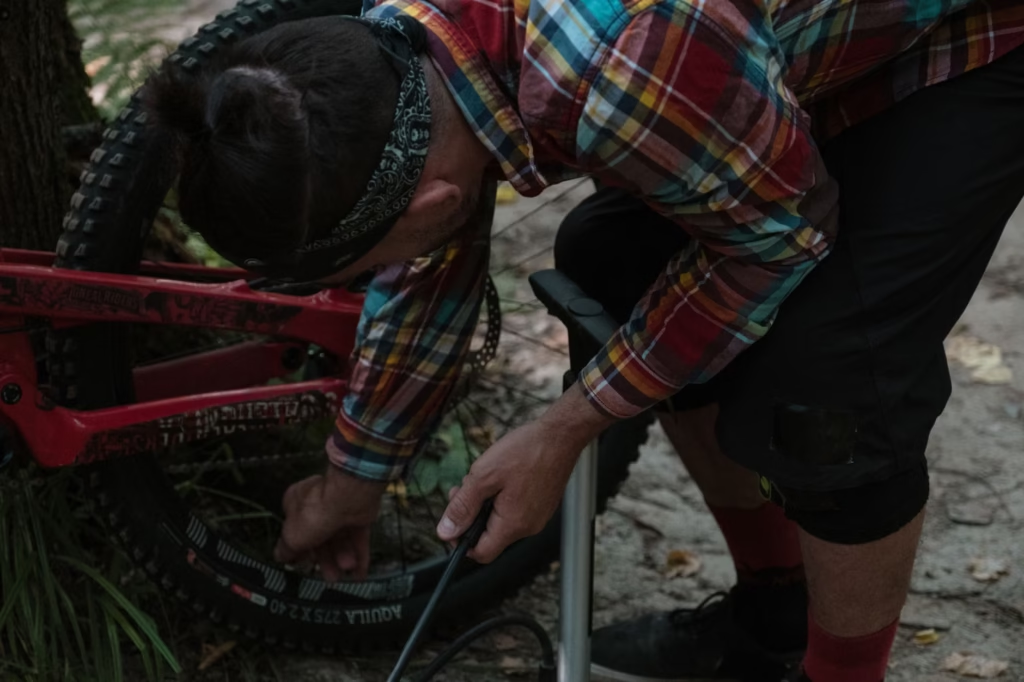
Most riders underestimate how much a small pressure change alters ride feel. Schwalbe says bicycle tires lose pressure continuously, monthly checks are a minimum, and a loss of 1 bar per month can be normal. It also notes that the right pressure depends largely on rider weight and luggage, and that the thumb test is unreliable. In plain English: your bike can feel slow even when the tires still look fine. (schwalbe.com)
Surface matters too. On smooth pavement, higher pressure generally lowers rolling resistance, but Schwalbe also notes that off-road and on rough surfaces lower pressure can roll better because the tire conforms to the ground instead of bouncing and hanging up. It also points out that wider tires can roll well at the same pressure because they deform differently. That is why a setup that felt fast on clean pavement can feel awkward on chipseal, gravel, or a wet greenway the next day. (schwalbe.com)
Consider a commuter on 38 mm tires who set them at 60 psi a month ago and never looked again. If pressure falls by about 1 bar, that is roughly 14.5 psi, leaving the tire near 45 psi before any extra load from a backpack or groceries. Nothing is broken, but the bike will usually feel more sluggish on pavement. A pump with a gauge costs far less than a speculative upgrade, and in this case it is the smarter first purchase. (schwalbe.com)
Stay within the tire’s stated minimum and maximum pressure limits. More pressure is not automatically better, and the best-feeling setup depends on the tire, the surface, your weight, and what you are carrying. (schwalbe.com)
Some days are just slower
A bicycle is fighting more than one kind of resistance at once. Schwalbe’s overview specifically separates rolling resistance, gradient resistance, and air resistance. That matters because riders often misread the result. A route with more headwind, slightly more climbing, rougher pavement, or soft gravel can make the same mechanically sound bike feel like it gained ten pounds overnight. The bike did not change; the work required to move it did. (schwalbe.com)
Heat changes the feeling as well. ACSM notes that body temperature during exercise is influenced by environmental changes and physical exertion, and that heart rate rises as the body works to shed heat. In real life, that means a bike that felt normal on a 65-degree morning can feel sticky on an 88-degree afternoon even if your average speed slips only a little. The sensation of “this bike is heavy today” is often your body reporting the conditions. (acsm.org)
A bike can work fine and still waste effort
A dirty chain does not need to be broken to feel bad. Shimano notes that a cleaner chain can improve power transfer and that frequent cleaning and lubrication help the drivetrain last longer and perform better. Park Tool makes the same broader point from the maintenance side: cleaning and lubrication are routine performance work, not just cosmetic work. If your drivetrain sounds dry, gritty, or louder than usual, assume efficiency has slipped before you assume the whole bike is slow. (bike.shimano.com)
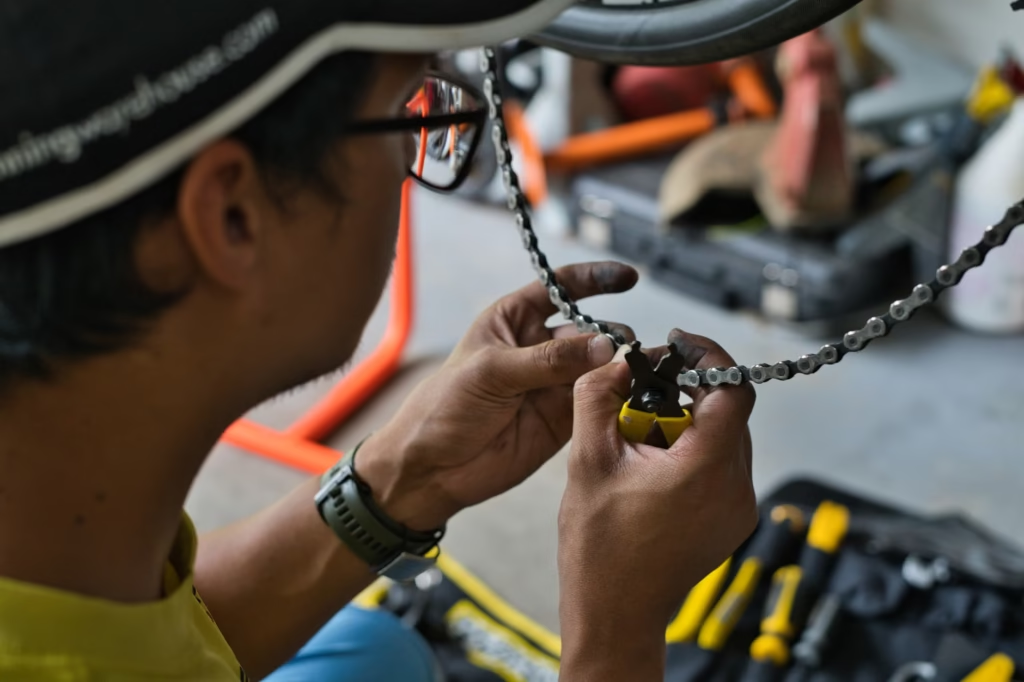
Here is a realistic money example. Say a rider on a 24-pound hybrid carries a 9-pound backpack and a 3-pound lock, has not checked pressure in five weeks, and hears a faint dry-chain hiss on each pedal stroke. The bike may feel heavy enough to trigger shopping thoughts, but the first round of spending should be boring: air, chain lube, and a gauge. Even a hypothetical $40 to $60 cleanup beats sinking several hundred dollars into parts before you know whether the heaviness is mechanical, environmental, or just accumulated friction. (schwalbe.com)
Technique changes the feel more than riders expect
Riders also create heaviness by how they pedal. There is no one perfect cadence for every rider or every ride. Research indexed in PubMed suggests the most economical cadence changes with workload, and another study found that very high cadence at submaximal intensities can be metabolically inefficient. The practical takeaway is simple: if the bike feels like it is bogging down, shift sooner and look for a comfortable middle cadence instead of muscling a big gear or flailing a tiny one. (pubmed.ncbi.nlm.nih.gov)
Fit and body state are part of the equation
Fit sits in the uncomfortable middle ground between “nothing is wrong” and “something is broken.” A 2022 systematic review found strong evidence that saddle height should be configured using dynamic knee-angle measurements, and that changes in saddle height influence limb kinematics. The same review also suggests that very small changes, less than about 4 percent of leg length, may have only trivial to small effects on efficiency. That is a useful reminder: not every millimeter is a crisis, but a clearly off position can make a good bike feel stubborn. (pubmed.ncbi.nlm.nih.gov)
The last category is you. Sleep deprivation and physical fatigue can raise perceived effort during exercise even when major physiological measures do not change much, and newer work still links sleep loss with higher perceived fatigue and effort. Add heat, dehydration, or residual leg soreness, and a perfectly normal bike can feel terrible. If yesterday was leg day, the work trip was exhausting, or you slept five hours, do not let one bad ride talk you into a purchase. (pubmed.ncbi.nlm.nih.gov)
What to do before you spend money
- Spin both wheels and listen. If you hear rhythmic rub or the wheel will not spin freely, reseat the wheel and check for brake rub before doing anything else. Park Tool notes that even slight disc rub is common and can also come from an improperly seated wheel. (parktool.com)
- Measure tire pressure with a gauge, not your thumb. Reset it within the tire’s allowed range based on the tire sidewall, your weight, and what you are carrying. (schwalbe.com)
- Look at what changed today: route, wind, temperature, surface, backpack, groceries, or clothes. If several variables changed, retest on a more normal ride before blaming the bike. (schwalbe.com)
- Clean and lube the chain if it is dry, noisy, or visibly dirty. Match wet or dry lube to your climate rather than using whatever bottle has been sitting in the garage. (bike.shimano.com)
- On your next ride, downshift one gear earlier than usual on small rises and hold a comfortable cadence for ten minutes. If the heaviness eases, your issue may be technique rather than equipment. (pubmed.ncbi.nlm.nih.gov)
- If the bike only feels bad after 20 to 30 minutes, review sleep, heat, hydration, and soreness before you review catalogs. (pubmed.ncbi.nlm.nih.gov)
- If the same heaviness shows up on three similar rides after these checks, then price a shop inspection or fit session instead of random parts. A diagnosis-first spend is usually the cheaper spend.
Common mistakes that turn a small problem into a shopping spree
- Using the squeeze test instead of a gauge. Tires can feel firm by hand and still be well off the pressure you wanted. (schwalbe.com)
- Comparing a calm, cool ride to a windy, hot, rough-surface ride as if they were equivalent. They are not. (schwalbe.com)
- Changing several things at once, like pressure, tires, saddle height, and shoes, then not knowing what actually helped.
- Treating any chain that still shifts as “fine.” A dirty chain can still function while feeling inefficient. (bike.shimano.com)
- Grinding a pride gear. Many riders would rather push too hard than shift early, then blame the bike.
- Buying lighter parts before ruling out the free and cheap fixes.
When “nothing is wrong” stops being true
At some point, the title no longer applies. If a wheel rubs constantly, a rotor is visibly bent, pressure will not hold, the chain skips under load, or the bike has play in the hubs, bottom bracket, or headset, you are no longer dealing with normal ride feel. Park Tool’s brake guidance specifically notes that pad and rotor rub can come from alignment issues or wheel seating, and a bent rotor will usually announce itself with rhythmic rub or visible lateral wobble. (parktool.com)
The same goes for your body. Persistent knee pain, numb hands, saddle pain that keeps returning, or a position that only feels powerful for a few minutes can justify a proper fit review. The evidence on saddle height and cycling kinematics is a good reminder that fit is not vanity; it is part comfort, part efficiency, and part injury prevention. If the HEAVY Audit keeps pointing to the Y and V categories, a fit assessment is a more rational spend than another upgrade. (pubmed.ncbi.nlm.nih.gov)
How to verify that you actually fixed it
Do not trust a single ride. Verify the fix like you would test a budget: same inputs, one change at a time.
- Pick a repeat route of 20 to 40 minutes.
- Keep bag weight, tire pressure, and clothing as similar as you reasonably can.
- Rate the ride from 1 to 10 for perceived heaviness, and note weather, sleep, and whether you cleaned the chain.
- Change one variable at a time: pressure first, then chain, then gearing, then fit.
- If the bike feels better on two of three comparable rides, keep the change. If not, move to the next HEAVY category or book an inspection.

Bottom line
Most “heavy bike” problems are not buying problems. They are diagnosis problems. Start with air, chain condition, route conditions, gear choice, and rider state. If the simple checks solve it, you saved money and learned something useful about your setup. If they do not, you now have a better case for paying for the right help instead of paying for the wrong parts. (schwalbe.com)
Frequently Asked Questions
Can a bike really feel heavy just from being a little low on pressure?
Yes. Schwalbe says pressure loss over time is normal and that hand-checking is unreliable. On pavement, even a moderate drop can change rolling feel before the tire looks flat, especially if you are also carrying extra weight. (schwalbe.com)
Why does my bike feel slow only on certain days?
Because the bike is only one part of the system. Air resistance, surface, gradient, temperature, and your own recovery can all change from ride to ride without any mechanical failure. (schwalbe.com)
Do wider tires always feel slower?
Not necessarily. Schwalbe notes that at the same pressure, wider tires can roll well because they deform differently, and lower pressure can actually help on rough surfaces. The right answer depends on the surface, the tire, and the load. (schwalbe.com)
Is a dirty chain enough to notice on a normal ride?
Often, yes. Even when it still shifts, a dry or gritty chain can feel noisier and less smooth. Shimano specifically says frequent cleaning and lubrication help drivetrains perform better and last longer. (bike.shimano.com)
When is it worth paying for a shop inspection or bike fit?
Pay for help when the issue repeats after the low-cost checks, or when you have constant brake rub, pressure that will not hold, visible rotor or wheel issues, skipping under load, or recurring pain and numbness. That is when diagnosis beats guessing. (parktool.com)
References
- Schwalbe: Tire Pressure Bike Tires – https://www.schwalbe.com/en/technology-faq/tire-pressure/
- Schwalbe: Rolling Resistance of Bicycle Tires – https://www.schwalbe.com/en/technology-faq/rolling-resistance/
- Shimano: A clean chain is a fast chain – https://bike.shimano.com/en-NZ/stories/article/a-clean-chain.html
- Park Tool: Hydraulic Disc Brake Alignment – https://www.parktool.com/en-us/blog/repair-help/hydraulic-disc-brake-alignment
- Park Tool: Disc Brake Rotor Removal & Installation – https://www.parktool.com/en-us/blog/repair-help/disc-brake-rotor-removal-installation
- Park Tool: The Park Tool Guide to Bicycle Lubricants and Compounds – https://www.parktool.com/en-int/blog/repair-help/the-park-tool-guide-to-bicycle-lubricants-and-compounds
- PubMed: Methods to determine saddle height in cycling and implications of changes in saddle height in performance andinj – https://pubmed.ncbi.nlm.nih.gov/34706617/
- PubMed: Sleep Deprivation: Cytokine and Neuroendocrine Effects on Perception of Effort – https://pubmed.ncbi.nlm.nih.gov/31764462/
- PubMed: Sleep deprivation, physical fatigue, and the perception of exercise intensity – https://pubmed.ncbi.nlm.nih.gov/4068965/
- PubMed: The Impact of Cycling Cadence on Respiratory and Hemodynamic Responses to Exercise – https://pubmed.ncbi.nlm.nih.gov/30817718/
- PubMed: The most economical cadence increases with increasing workload – https://pubmed.ncbi.nlm.nih.gov/15232702/
- ACSM: Exercising in Hot and Cold Environments – https://www.acsm.org/docs/default-source/files-for-resource-library/exercising-hot-cold-environments.pdf