
Rush hour is not just regular cycling with more cars. The whole street behaves differently: turn queues get longer, buses stop more often, pedestrians cross late, and a painted bike lane can stop being helpful the moment it narrows beside parked cars or feeds into a turning lane. For a new urban cyclist, the goal is not to keep up with traffic. It is to be visible, predictable, and ready for the places where conflicts happen fast. NHTSA recommends choosing routes with less traffic and slower speeds when possible, which is exactly the right mindset for a first peak-time ride. (nhtsa.gov)
Do one low-stress practice ride first
If your first real commute is at 8:15 a.m. on a Tuesday, the smart move is to ride the exact route once before then, ideally in daylight and outside peak traffic. That test ride is not about speed. It is about noticing where the bike lane disappears, where drivers stack up to turn, where a bus stop forces movement, and where the road surface or drainage grates will matter. NHTSA also advises checking basic equipment such as brakes, tires, and visibility gear before riding in traffic. (nhtsa.gov)
- Ride the exact route once outside rush hour.
- Mark the spots where parked cars, delivery vehicles, or turning traffic squeeze your space.
- Decide in advance whether each pinch point calls for slowing down, merging left, or simply getting off and using the crosswalk.
- Pick a backup street that feels calmer, even if it adds a few minutes.
- Set up the bike before the stressful ride: brakes, tire pressure, lights, and how your bag sits all matter more when traffic is busy.
The real pressure points are intersections and parked cars
Most beginners worry about going straight in traffic. The harder problem is what happens when someone else turns across that straight path. Federal MUTCD guidance does not normally place a through bicycle lane to the right of a right-turn-only lane unless bicycle signal indications control that movement, and the same manual says bicycle boxes may be used to increase the visibility of stopped bikes at signalized intersections where turning conflicts exist. In plain English, lane markings near intersections deserve extra attention, because that is where expectations change quickly. (mutcd.fhwa.dot.gov)
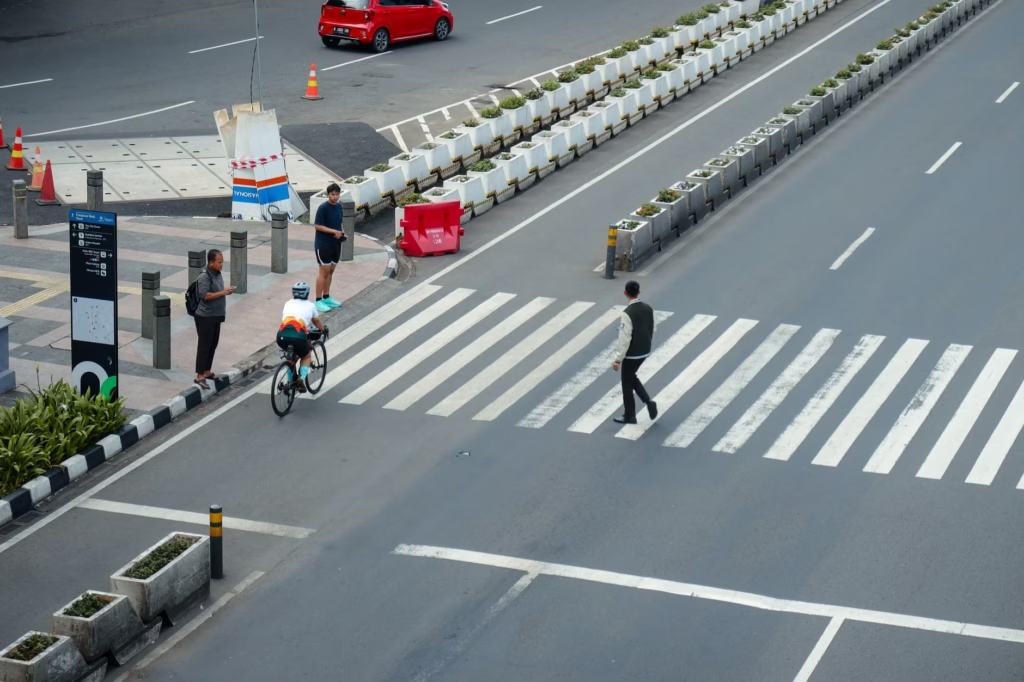
Parked cars create the other classic rush-hour trap. New riders often hug the curb because it feels polite, but that can put them in the door zone, where an opening car door leaves almost no reaction time. The current MUTCD says shared-lane markings can be used to help bicyclists position themselves away from opening doors and to show road users that bicycles may occupy the travel lane. So if a striped bike lane runs tight against parked cars, a steady line a little farther left is often safer than weaving along the edge. (mutcd.fhwa.dot.gov)
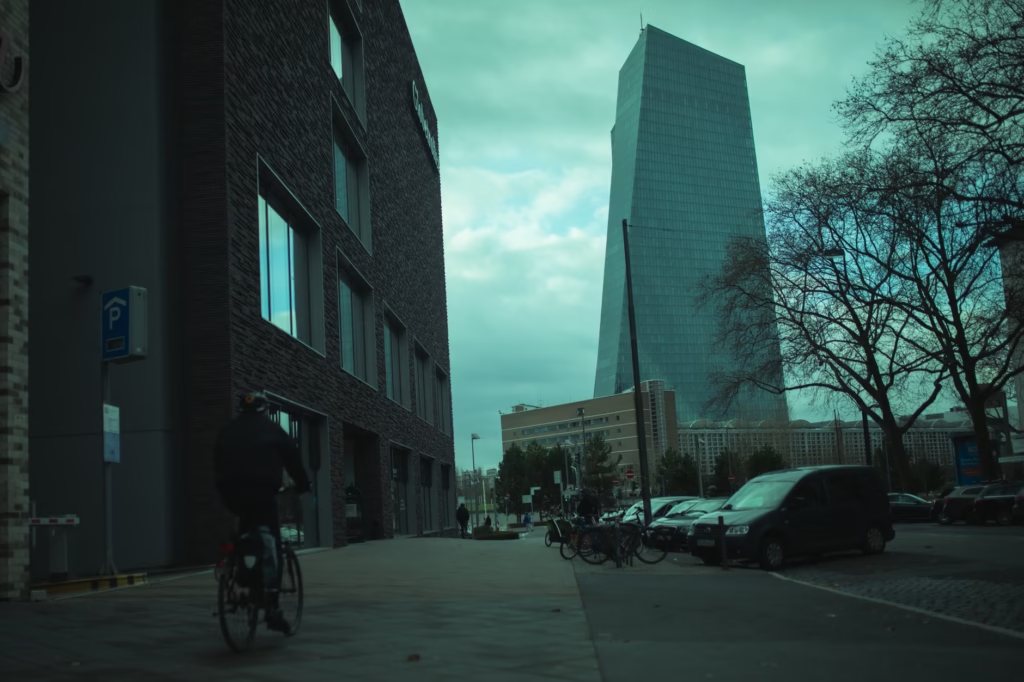
A simple hypothetical example: imagine a bike lane beside parked cars that narrows toward a busy light where drivers are queued to turn right. The worst move is often to sprint up the inside of that queue and hope everyone keeps seeing you. A better choice may be to slow down, let the turning line clear, or merge earlier into a more visible position if the street and your confidence allow it. If neither option feels manageable yet, dismounting and crossing in stages is still a legitimate traffic decision, not a failure.
Ride predictably, even when traffic feels impatient
Many new cyclists make dangerous “polite” choices: squeezing to the extreme edge, waving cars through when the scene is unclear, or swerving around a stopped bus at the last second. NHTSA’s core advice is simpler than that. Ride with the flow of traffic, obey signs and signals, avoid distractions, and look ahead for hazards. The safer habit is to make one clear move at a time: glance back, signal, shift position early, then hold a steady line so other road users can predict what happens next. (nhtsa.gov)
Visibility matters too, but in a practical way. NHTSA recommends bright clothing in the day and reflective gear, a white front light, red rear light, and reflectors when riding at night or in poor visibility. CDC also notes that properly fitted bicycle helmets reduce the risk of head and brain injuries in a crash. Evening rush hour, rain, tree cover, and tunnels can all make a commute feel darker than the clock suggests, so the useful question is not whether it is technically night yet, but whether drivers can read you early. (nhtsa.gov)
Traffic rules vary by state and city. Sidewalk riding, signal rules, turn positioning, and e-bike rules are not uniform, and NHTSA specifically notes that sidewalk-riding legality should be checked locally. If a local rule changes how a street works, follow the local rule. (nhtsa.gov)
The main thing to know before a first rush-hour ride is that the challenge is judgment, not toughness. A slightly longer route, an earlier merge, or a short walk across one bad intersection can make the whole trip safer and calmer. If the street stops making sense, slow down and simplify the problem. That is how new riders become competent city riders.
References
- National Highway Traffic Safety Administration – Bicycle Safety – https://www.nhtsa.gov/road-safety/bicycle-safety
- National Highway Traffic Safety Administration – Learn to Bike Safely – https://www.nhtsa.gov/bicycle-safety/learn-bike-safely
- Centers for Disease Control and Prevention – Bicycle Safety – https://www.cdc.gov/pedestrian-bike-safety/about/bicycle-safety.html
- Federal Highway Administration – MUTCD 11th Edition, Part 9 – https://mutcd.fhwa.dot.gov/pdfs/11th_Edition/part9.pdf