
Many city riders assume the answer to a tense commute is better gear: a brighter front light, a louder bell, wider tires, a mirror, maybe even a camera. Sometimes those things help. But the mistake that makes every ride feel more dangerous than it should is usually cheaper and more basic: choosing a route the way a driver would, by shortest time instead of lowest exposure. NHTSA’s current bicycle safety page lists 1,103 bicyclists killed in traffic crashes in 2024, and the CDC says bicyclists are treated in emergency departments about 120,000 times a year for nonfatal crash-related injuries. (nhtsa.gov)
That does not mean city cycling is doomed. It means the street you choose matters more than many riders realize. The CDC says most bicyclist deaths occur in urban areas, and about 59% occur away from intersections, where higher speeds may be a factor. A route can look efficient on a map and still expose you to fast overtaking traffic, disappearing bike lanes, driveway conflicts, and bus-stop churn for miles at a time. (cdc.gov)
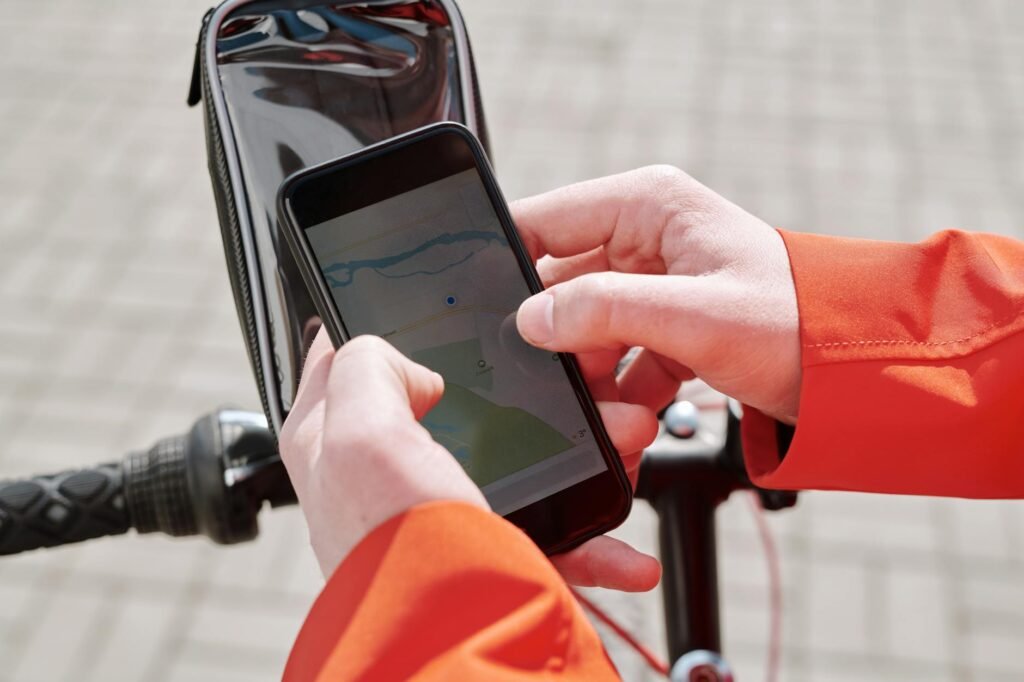
- The biggest mistake is choosing the fastest route instead of the lowest-stress route.
- NHTSA advises riders to choose routes with less traffic and slower speeds, and notes that the safest route may be in a bike lane or on a bike path. (nhtsa.gov)
- Sidewalk riding can feel safer, but NHTSA warns drivers often do not expect moving bicycle traffic there at driveways and turns. (nhtsa.gov)
- FHWA says bicycle facilities can reduce conflicts with motor vehicles, and separated lanes provide additional safety benefits. (highways.fhwa.dot.gov)
- Use the SPACE Route Audit in this article before you spend more money on accessories.
Informational only: local rules on sidewalk riding, lane use, and e-bike operation vary by state and city. NHTSA specifically tells riders to check local law before relying on sidewalk riding as a through-route. (nhtsa.gov)
The real mistake is choosing a bike route like a driving route
By optimizing their time optimally, drivers drive their vehicle through a lot of lane drag (friction) when they drive for only a minute. In contrast, cyclists should optimize for conflict exposure, including the total time they ride side by side with faster-moving vehicles, the number of right-turns they make in conjunction with other vehicles, the frequency with which their lane disappears, and whether they have any room to evade collisions if something goes wrong during their ride. A route that saves 4 minutes but causes you to spend twice the time next to impatient drivers is an ineffective route in every way. It creates a concentrated level of anxiety/stress in your physical body.
NHTSA’s guidance points in exactly this direction: plan your route around less traffic and slower speeds, and recognize that the safest route may be away from traffic, in a bike lane, or on a bike path. FHWA adds that many people are uncomfortable riding because of fear of overtaking crashes, and that bicycle facilities can mitigate or prevent conflicts between bicyclists and motor vehicles. (nhtsa.gov)
The highest return on an investment and upgrade you can receive as a rider will come from making your riding posture safer. This upgrade is an inexpensive upgrade for most riders. By making this upgrade, it should keep you from experiencing an endless cycle of buying gear as you continually try to find the correct gear for the riding style for your riding ability.
Try the SPACE Route Audit before your next ride
Each segment of your route (every half mile) will be analyzed using this very simple tool (SPACE). The five categories are Speed gap, Protection, Access Points, Crossings and Escape Room. Each category will be given a rating of 0 to 2. This is not a model used for engineering purposes; it is an audit tool designed for the practical function of the rider in order to quickly answer one question: Is this route too much for me to do too often?
| Factor | 0 points | 1 point | 2 points |
|---|---|---|---|
| Speed gap | Calm street, path, or clearly slower motor traffic | Moderate traffic or occasional close passes | Fast arterial traffic or repeated high-speed passing |
| Protection | Protected lane, trail, or naturally calm street | Paint-only lane or shoulder that mostly works | No usable space, disappearing lane, or repeated pinch points |
| Access points | Few driveways, buses, loading zones, or parking conflicts | Some parking turnover or driveway churn | Frequent driveways, buses, loading activity, or double-parking |
| Crossings | Simple signals and few turning conflicts | Some multi-lane crossings or awkward signal timing | Multiple major intersections, slip lanes, or right-hook exposure |
| Escape room | Good sightlines and room to move around hazards | Occasional squeeze points | Curb-hugging, bridge funnels, grates, or nowhere to recover |
-0 through 3 indicates the segment most likely can be used for everyday travel
-4 through 6 indicates that segment could potentially work depending on timing and level of confidence
-7 and above should be the trigger to re-design that segment.
A bad ½ mile can ruin a good commute. Any segment scoring a 2 for both Crossings and Escape room should be looked at very carefully if the rest of the route is easy.
A realistic comparison: five extra minutes can buy a calmer commute
Example composite commuter, Jordan, rides 6.2 miles each way to work. There are two possible routes for him/his commute; Route A (direct) takes 28 minutes on a “good” day; has 2.1 miles adjacent to the road with speed limits between 35 (51.4 km/h) and 40 mph (64 km/h); passes through 11 major intersections; contains 1 bridge approach with no shoulder to ride on; and has a designated bike lane that disappears next to where large trucks load/unload from the street. Alternatively, Route B (slower) takes 33 minutes; runs along parallel side streets with very low traffic volume; contains a short section of greenway and most of the congested area is along a dedicated bike path; adds several turns; reduces the number of intersections from 11 down to 4; and reduces exposure to high-stress areas by approximately 0.6 miles.
| Route | Time | Miles beside 35+ mph traffic | Major intersections | Typical SPACE result | Best use |
|---|---|---|---|---|---|
| A: direct arterial | 28 minutes | 2.1 | 11 | Mostly 7 to 9 | Occasional backup, not a good daily default |
| B: calmer parallel route | 33 minutes | 0.6 | 4 | Mostly 2 to 4 | Better daily commute option |
Over a five-day week, Jordan spends 50 extra minutes on Route B. That sounds like a sacrifice until you look at what those minutes buy: far less time beside faster traffic, fewer right-turn conflict points, and a ride that feels predictable instead of reactive. It also reduces the temptation to solve a route problem with wallet problems: an $80 light, a $40 mirror, a $60 bell, and a $35 reflective vest still will not fix a corridor that keeps pinning you against the curb. Route choice is often the cheaper, smarter first move.
The 10-minute Route Reset
- Map your current route and mark the exact places where you feel rushed, squeezed, or surprised. Be specific: right-turn lane, bridge funnel, disappearing bike lane, bus stop, loading zone, or driveway cluster.
- Find one parallel alternative within one or two blocks. NHTSA recommends routes with less traffic and slower speeds, and notes that the safest route may be a bike lane or bike path. (nhtsa.gov)
- Pre-decide your position before each major intersection. NHTSA says riders should be where they are expected to be seen, minimize blind spots, and look over the shoulder before changing lane position or turning. (nhtsa.gov)
- Treat sidewalks as backup connectors, not default high-speed lanes. NHTSA warns that drivers often do not expect moving bicycle traffic on sidewalks, especially near driveways and turns. (nhtsa.gov)
- If right turns are your main stress point, slow down before the conflict zone and make your position obvious instead of trying to squeeze through late. NHTSA’s driver guidance specifically highlights the danger of right-turn conflicts. (nhtsa.gov)
- Only after the route improves should you buy gear to solve the remaining problem: lights for visibility, better tires for rough pavement, a mirror for awareness, or rain gear for consistency.
(The order in which you purchase these three items is important.) Even though you will still need to have a functional bike, decent lights, and a properly fitted helmet, they won’t perform their best if your route fights you every 1/4 mile. The first priority should always be to make your route as safe as possible. Then you can purchase the items you need to help you navigate those remaining dangers.
When a better route still is not enough
Some corridors are bad enough that smart route planning alone will not fully solve the problem. Bridge approaches, tunnel gaps, industrial truck streets, school-dropoff congestion, and dark winter commutes can overwhelm an otherwise sensible plan. NHTSA’s Bikeability Checklist flags heavy or fast-moving traffic, disappearing bike lanes, no space on bridges or in tunnels, and poorly lighted roadways as common bikeability problems. Its own improvement guidance includes picking another route for now, documenting the issue for local engineers or public works, and participating in planning meetings. (nhtsa.gov)
- Use transit for one ugly segment rather than forcing a daily bridge or tunnel gamble.
- Shift your departure by 10 to 15 minutes if one school zone or delivery corridor changes the whole feel of the ride.
- Split the route by direction. Morning traffic and evening traffic often create different stress points.
- If a gap forces sidewalk use, slow to pedestrian pace at driveways and crossings, and verify legality first. (nhtsa.gov)
- If the only bike lane runs flush against faster traffic, search for a calmer parallel street. FHWA says separated lanes provide additional safety benefits and are recommended on higher-volume, higher-speed roads such as arterials. (highways.fhwa.dot.gov)
Common mistakes that bring the stress back
- Buying accessories before fixing route geometry.
- Treating any painted curb lane as automatically comfortable. FHWA notes that separated lanes offer additional safety benefits, especially on faster roads. (highways.fhwa.dot.gov)
- Riding too close to the curb to seem polite, which removes your escape room.
- Using the sidewalk as a fast bypass through driveways and turns. NHTSA says drivers often do not expect moving bicycle traffic there. (nhtsa.gov)
- Trying to save 20 seconds by squeezing past a right-turn queue instead of resetting behind it. NHTSA specifically warns about right-turn conflict risks. (nhtsa.gov)
- Assuming a route that works at 7 a.m. will feel the same at 5:30 p.m. or after dark.
How to pressure-test the advice on your own streets
Do not judge a route by city marketing copy or one lucky ride. NHTSA says crash data needs context, including exposure and local conditions, and notes that near-miss observations can reveal risky patterns before a crash happens. The agency also says on-site field review matters before choosing countermeasures. (nhtsa.gov)
- Ride your current route and your candidate route at the actual time you commute, twice each.
- Count close passes, forced merges, hard braking moments, right-turn surprises, and places where you feel you have nowhere to go. Near misses matter. (nhtsa.gov)
- Run the NHTSA Bikeability Checklist on both routes. It asks whether you had a safe place to ride, how intersections worked, how drivers behaved, and whether the route was easy to use. (nhtsa.gov)
- Take photos of the exact trouble spots. The checklist’s improvement guidance points riders toward sharing specific documented problems with local transportation engineers or public works. (nhtsa.gov)
- If the new route still creates three or more genuine “I had nowhere to go” moments in one week, it is not your default route yet.

Bottom line
The city-cycling mistake that makes every ride feel more dangerous than it should is not weak nerves or cheap gear. It is choosing the route that looks efficient for a car instead of the one that reduces exposure for a bike. NHTSA’s guidance points riders toward less traffic, slower speeds, predictable positioning, and away from default sidewalk riding, while FHWA underscores that better bicycle facilities improve comfort and safety. Start there. Then spend money only on the problems the new route does not solve. (nhtsa.gov)
FAQ
Is the sidewalk usually safer than the street?
Not automatically. NHTSA says drivers often do not expect moving bicycle traffic on sidewalks and may miss riders at driveways or turns. If you must use a sidewalk, slow down, watch for pedestrians, and check local law first. (nhtsa.gov)
How much extra time is a safer route worth?
A three-to-seven-minute detour of an arterial road or a congested overpass can be a reasonable solution for daily riders. You need to have a consistently livable number. So if you have an excellent theoretical route but never use it, it is not a good choice.
Should I spend money on gear before I change my route?
Usually no. Start with a bike that works, basic visibility, and a helmet that fits, but do not expect gear to fix a bad corridor. NHTSA says riders should plan routes with less traffic and slower speeds, and the CDC says helmets reduce head and brain injury risk in a crash. (nhtsa.gov)
Is a painted bike lane enough for a daily commute?
Sometimes, but context matters. FHWA says separated lanes provide additional safety benefits and are recommended on higher-speed, higher-volume roads such as arterials. If a painted lane still leaves you next to fast traffic, buses, or loading activity, look for a calmer parallel street. (highways.fhwa.dot.gov)
How do I know whether the route is the problem or I just need more practice?
Use the SPACE score and the NHTSA Bikeability Checklist together. If the route still includes heavy or fast-moving traffic, disappearing lanes, bridge or tunnel squeeze points, poor lighting, or repeated close passes after multiple test rides, the route is carrying too much of the risk for your current use. (nhtsa.gov)
References
- NHTSA Bicycle Safety – https://www.nhtsa.gov/road-safety/bicycle-safety
- CDC Bicycle Safety – https://www.cdc.gov/pedestrian-bike-safety/about/bicycle-safety.html
- FHWA Bicycle Lanes – https://highways.fhwa.dot.gov/safety/proven-safety-countermeasures/bicycle-lanes
- NHTSA Bikeability Checklist – https://www.nhtsa.gov/document/bikeability-checklist
- NHTSA Countermeasures That Work: Bicycle Safety Data/Surveillance – https://www.nhtsa.gov/book/countermeasures-that-work/bicycle-safety/data-surveillance