
TL;DR
- The easiest bike to steal is often the one locked the same casual way every day: same rack, same shortcut, same weak setup. NYPD specifically advises riders not to use the same rack day after day and to lock the frame, not just a wheel. (nyc.gov)
- In city parking, a cable lock should be a helper, not the main defense. Bike Index says cable locks should not be the primary lock in a city, and NYCDOT recommends a U-lock and/or heavy chain, noting that more than one lock helps prevent theft. (bikeindex.org)
- A good lock can fail if the anchor fails. Check that the rack is fixed, not removable, and not something the bike can simply be lifted over. (nyc.gov)
- Secure the frame, rear wheel, and quick-release parts. NYCDOT tells riders to lock wheels to the frame and secure quick-release parts, while Bike Index recommends a U-lock through the rear wheel and triangle and securing both wheels. (nyc.gov)
- Treat bike security as a money decision, not just a convenience decision. Standard homeowners and renters policies often cover bicycles as personal property, but usually minus your deductible, so a preventable theft can still leave you paying a lot yourself. (iii.org)
Most city bike thefts do not start with a thief beating a perfect setup. They start with a weekday shortcut: a cable lock because the stop feels brief, a U-lock through only the front wheel, a rack that looks solid but is easy to defeat, or a common-area bike room that feels secure enough to skip a real lock. Those are not dramatic mistakes. They are routine mistakes, which is why they can get expensive. (nyc.gov)
And a stolen commuter bike is rarely just the bike. It can also mean replacing lights, racks, bags, and the lock itself, plus paying for whatever transportation fills the gap. Insurance may soften the blow, but III says standard homeowners and renters coverage typically reimburses stolen bikes as personal property minus your deductible, and it recommends keeping receipts and adding the bike to your home inventory. In other words, a bad lock-up can still become a mostly out-of-pocket problem. (iii.org)
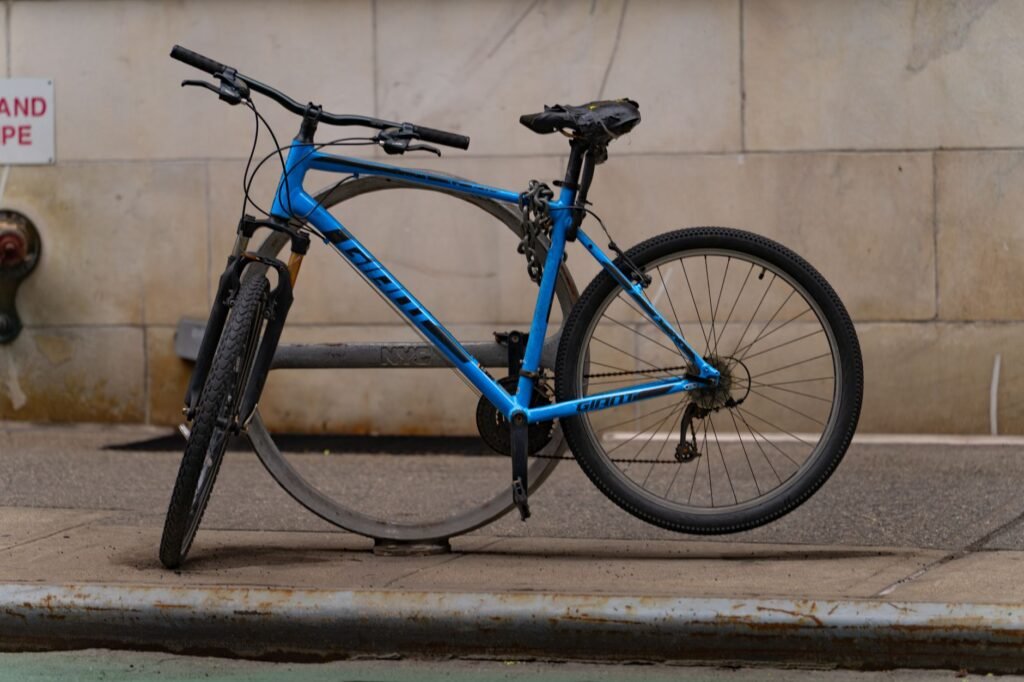
The small locking mistakes that matter most
The lock, in of itself, is only as good as its weakest link. Often, that link lies within what the rider hastily added to the initial assembly or the components of the lock itself, and not with the actual manufacturer name stamped on the body of the lock.
- Locking only the front wheel. NYPD warns that if you lock only a wheel, the thief can leave the wheel behind and take the rest of the bike. If your normal setup lets that happen, it is not a real lock-up. (nyc.gov)
- Using a cable lock as the primary lock in a city. Bike Index says cable locks should not be the main lock for city use, and NYCDOT points riders toward a U-lock and/or heavy chain instead. (bikeindex.org)
- Locking to the wrong object. A rack that is loose, thin, removable, or short enough to lift the bike over defeats the whole effort before the thief even touches your lock. (nyc.gov)
- Leaving too much empty space inside the U-lock. III advises filling as much of the open space as possible so a thief has less room to attack the lock with tools. (iii.org)
- Letting the lock sit close to the ground or positioning it carelessly. III says not to place the U-lock close to the ground and recommends the keyway face downward, both to make attacks harder. (iii.org)
- Ignoring quick-release parts or assuming cameras and foot traffic will save you. NYCDOT says to secure quick-release parts, and Bike Index warns that busy areas and cameras are not reliable substitutes for a better lock-up. (nyc.gov)
Use the FRAME Lock Score before you walk away
Here is a quick audit tool you can use in under 10 seconds. I call it the FRAME Lock Score. It is not an industry standard. It is an editorial score built from police, insurer, DOT, and nonprofit anti-theft guidance. Give yourself 0 to 2 points in each category. As a rule of thumb, 8 to 10 points is a solid city stop, 6 to 7 is short-stop territory, and 5 or less means relock before you walk away. (nyc.gov)
- F = Fixed anchor. 0 points if the bike could be lifted over it or the object could be removed. 1 point if the anchor seems solid but you did not check it. 2 points if you tugged it and it is clearly fixed and tall enough. (nyc.gov)
- R = Rear wheel plus frame. 0 points if only a wheel is locked. 1 point if the frame is locked but a wheel is easy to remove. 2 points if the U-lock captures the frame and rear wheel or rear triangle in a way that protects the bike body first. (nyc.gov)
- A = Air gap minimized. 0 points if there is lots of spare room inside the lock. 1 point if the fit is decent. 2 points if the shackle is tight, off the ground, and awkward for tools. (iii.org)
- M = Moveable parts secured. 0 points if the front wheel, seat, or other quick-release parts are exposed. 1 point if one vulnerable part is protected. 2 points if removable parts are secured with a second lock, cable, or security hardware. (nyc.gov)
- E = Exposure matched to the stop. 0 points if the setup is weak for the time you will be gone. 1 point if it is probably fine for a short stop. 2 points if the setup matches the duration, bike value, and neighborhood reality. NYCDOT says more than one lock helps prevent theft, and NYPD advises varying location instead of using the same rack every day. (nyc.gov)
| Parking situation | Minimum setup | What goes wrong if you under-lock | My rule of thumb |
|---|---|---|---|
| Coffee stop under 15 minutes | One tight U-lock through frame and rear wheel to a fixed rack; secure front quick-release if you can | A lazy wheel-only lock turns into a full-bike theft or a missing front wheel | Use only if your FRAME score is 8 or higher |
| Errands, gym, or grocery stop for 20 to 90 minutes | U-lock plus a secondary cable, chain, or folding lock for the front wheel and seat | The bike stays out long enough for part theft or a more patient attack | If the bike costs more than your deductible, upgrade |
| Workday parking for 6 to 10 hours | Two independent locks and a rack you have actually checked | Predictable routine plus long exposure time can make you easier to target | This is the minimum for an outside commuter setup |
| Overnight outdoors | Avoid if possible; use indoor storage, a real locker, or a cheaper outside bike | Time defeats even strong setups | Rethink storage, not just lock brand |
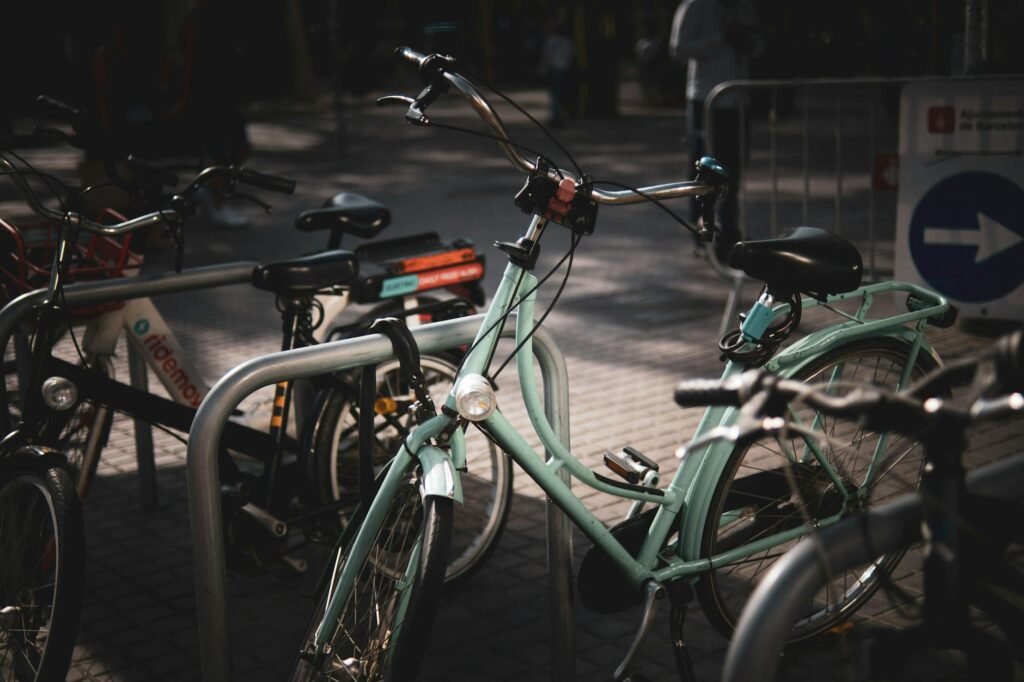
The math: why a cheap lock often becomes the expensive choice
Suppose Jasmine commutes on a $950 hybrid. She has $120 in lights and a phone mount, a $70 rear rack, and a $25 cable lock because it is light and easy to carry. She locks only the front wheel outside work for eight hours. The bike body disappears, the wheel stays. Her replacement tab is now roughly $1,140 before tax. If her renters policy has a $500 deductible, the loss still hurts, and III notes that receipts and a home inventory make claims easier. (iii.org)
Compare that with a $75 U-lock, a $45 secondary lock, and maybe $25 to $40 for securing quick-release parts. Even a $150 security setup is cheaper than replacing a midrange commuter bike once. The goal is not to buy the most extreme lock on the market. The goal is to spend in proportion to what a theft would actually cost your household, including deductible pain, downtime, and replacement shopping.
A 60-second lock-up reset
- Check the anchor first. Grab the rack and tug it. If it moves, is short enough for a lift-over, or looks removable, find another spot. (nyc.gov)
- Lock the bike body, not just a part. Your first priority is the frame, ideally with the rear wheel secured at the same time. Do not walk away from a wheel-only lock-up. (nyc.gov)
- Make the lock awkward to attack. Fill the shackle as much as possible, keep it off the ground, and keep the keyway facing down. (iii.org)
- Secure the front wheel and other removable parts. Quick-release hardware is convenient for you and for thieves, so add a second lock, cable, or security hardware where needed. (nyc.gov)
- Match the setup to the stop. A quick coffee run is different from an eight-hour workday. For longer stops, use two locks and do not rely on a busy street or visible camera. (nyc.gov)
- If you commute to the same place every day, break the pattern when you can. NYPD advises not locking to the same rack day after day. (nyc.gov)
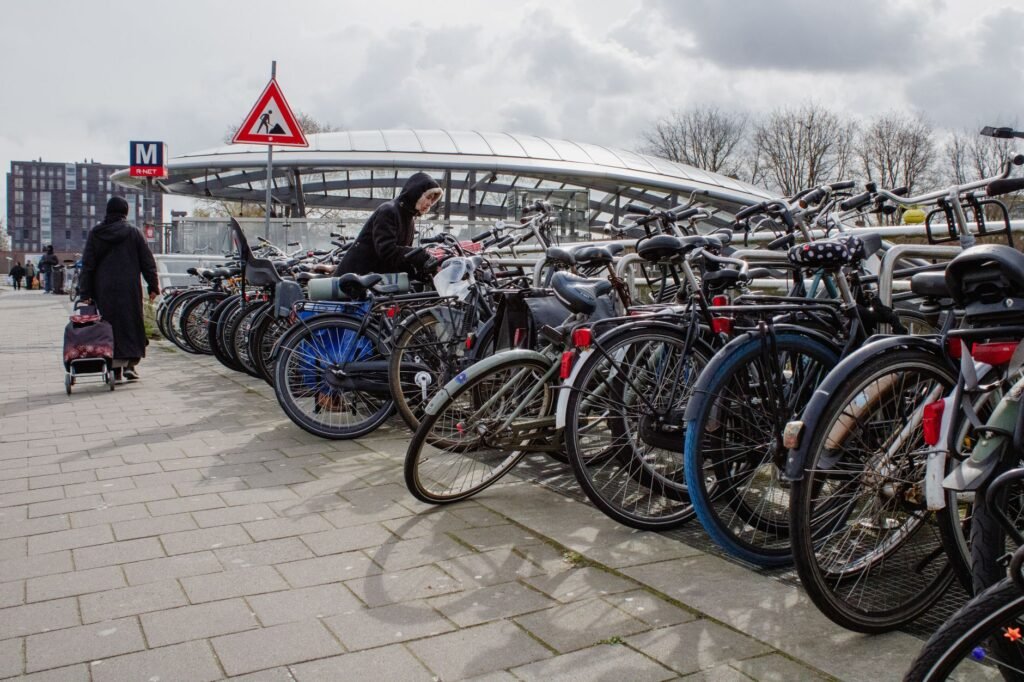
Common mistakes commuters make without realizing it
- They buy a decent lock and then use it lazily. A strong U-lock does not rescue a bad wheel-only lock-up. (nyc.gov)
- They assume a busy block is safer than it is. Bike Index warns that heavy foot traffic is not dependable protection. (bikeindex.org)
- They trust cameras more than technique. Bike Index says cameras are rarely much help after the bike is gone. (bikeindex.org)
- They treat the apartment garage, stairwell, dorm, or bike cage as secure enough by itself. III and Bike Index both warn against that assumption. (iii.org)
- They think the front wheel matters more than the frame because it is easier to reach with the lock. For theft prevention, the frame has to be part of the setup. (nyc.gov)
When better locking still is not enough
Some situations are simply bad bets. Overnight outdoor parking, shared garages, apartment bike rooms, storerooms, and fenced cages give thieves more time and privacy. III says to lock the bike even in a garage, stairwell, or dormitory. Bike Index says many bicycles are stolen from garages and storerooms and warns that supposedly secure bike cages can still be compromised. (iii.org)
If this is your daily reality, do not solve it with lock optimism alone. Better backup options are indoor home storage, an employer-approved indoor room, a rentable locker, or a less expensive outside commuter bike while the nicer bike stays indoors. Also document ownership like you expect a claim: serial number, photos, receipt, and a component list. Registration with a service such as Bike Index or a local police program does not stop theft, but it can improve recovery and proof of ownership. (iii.org)
Insurance coverage, deductibles, exclusions, and proof requirements vary by policy and by state. This article is general information, not legal or insurance advice. If a bike theft claim would materially affect your finances, review your policy and ask your insurer or a licensed agent how bicycles, accessories, and e-bikes are covered before you need to file a claim. (iii.org)
How to pressure-test your setup this week
- From 10 feet away, take one photo of your bike normally parked. If it doesn’t look clear that the bike frame is secured in some way to a stationary object, your setup might not be very strong or obvious, as you assumed.
- Pretend the front wheel comes off in 3 seconds. Could the thief still leave with the frame and rear wheel? If yes, redo the lock-up. (nyc.gov)
- Look for unused space. If your lock leaves room for leverage or sits against the ground, tighten the setup. (iii.org)
- Run your FRAME score at the rack where you park most often. If you keep scoring 6 or 7, the problem is usually the anchor or the duration, not just the lock brand.
- Open your phone right now and save the serial number, receipt, and two clear photos of the bike. III recommends keeping receipts and adding the bike to your inventory, while police and registries use serial information to help recovery. (iii.org)
Bottom line
The biggest bike security mistake is usually not buying the wrong brand of lock. It is treating locking as a casual habit instead of a system. If the frame is not secured, the anchor can be defeated, the quick-release parts are exposed, or the setup is too weak for the time you will be gone, the bike is easier to steal than most riders realize. A slightly better routine and a slightly stronger setup can prevent a replacement bill that insurance may only partly absorb. (nyc.gov)
Is one U-lock enough for city parking?
Sometimes for a short, lower-risk stop, but often not for a long workday. Bike Index says two U-locks, or a U-lock plus one heavy-duty cable, are the minimum in large cities, and NYCDOT says more than one lock helps prevent theft. (bikeindex.org)
Should I lock the front wheel or the rear wheel first?
Your first priority is the frame. A strong city setup usually protects the frame and rear wheel together, then uses a second method for the front wheel if it is removable. NYPD specifically warns against wheel-only lock-ups. (nyc.gov)
Are cable locks ever enough on their own?
For city use, treat them as secondary protection, not the main lock. Bike Index says cable locks should not be used as the primary means of locking a bike in a city. (bikeindex.org)
What if my apartment bike room or garage feels secure?
Still lock the bike to something fixed. III says to lock bikes even in garages, stairwells, and dorms, and Bike Index notes that many bikes are stolen from garages, storerooms, and supposedly secure bike cages. (iii.org)
Will renters or homeowners insurance cover a stolen bike?
Often yes, under the personal property section of standard policies, but typically minus your deductible. III also says expensive bikes may warrant an additional endorsement, so check your specific policy before you assume you are fully covered. (iii.org)
What should I record today in case the bike is stolen tomorrow?
Save the serial number, purchase receipt, current photos, and a list of major components and accessories. III says receipts and a home inventory help with claims, and police and bike registries use serial information to help identify recovered bikes. (iii.org)
References
- NYPD Bicycle Theft Prevention – https://www.nyc.gov/html/nypd/downloads/pdf/crime_prevention/biketheftprevention.pdf
- NYC DOT Bike Smart Brochure – https://www.nyc.gov/html/dot/downloads/pdf/dot_bikesmart_brochure.pdf
- Insurance Information Institute: Bicycle Safety and Insurance – https://www.iii.org/article/bicycle-safety-and-insurance
- Bike Index: Protect Your Bike – https://bikeindex.org/protect_your_bike
- Bike Index: 5 Tips to Prevent Your Bike From Getting Stolen – https://bikeindex.org/news/its-not-always-simple—how-to-prevent-your-bike-from-getting-stolen
- NYPD Property Protection Services – https://www.nyc.gov/site/nypd/services/law-enforcement/property-protection.page
- Bike Index Mission and Registration Information – https://bikeindex.org/?page=Mission