
Most city-bike problems are boring before they become expensive: a tire that has been slowly losing pressure, a chain that has gone dry, a brake that has started rubbing, or a light that was never charged. NHTSA’s pre-ride guidance focuses on air, brakes, and chain because those are the items most likely to turn an ordinary commute into a frustrating walk, a missed meeting, or a repair you could have handled earlier. REI’s maintenance guidance makes the same basic point from the drivetrain side: dirt and poor lubrication hurt performance and shorten component life. (nhtsa.gov)
TL;DR
- Use the CURB Check: Casing, Under braking, Running gear, Bolts and battery, then a short roll test. It takes only a few minutes and catches most daily ride annoyances early. (nhtsa.gov)
- Check tire pressure before rides, but do not copy a random PSI from the internet. NHTSA points riders to the tire sidewall, and SRAM notes that rider weight, bike weight, tire width, surface, and conditions all affect the right starting pressure. (nhtsa.gov)
- Keep the chain clean, use a bike-specific lubricant, and wipe off the excess. REI notes that extra lube attracts dirt, and dirt speeds wear. (rei.com)
- Inspect disc pads monthly, or sooner in dirty conditions. SRAM says to replace disc pads when backing plate plus pad material is 3 mm or less. (support.sram.com)
- Check chain wear monthly if you ride often. Park Tool’s wear gauges use 0.5%, 0.75%, and 1.0% thresholds because that is where most manufacturers suggest replacement. (parktool.com)
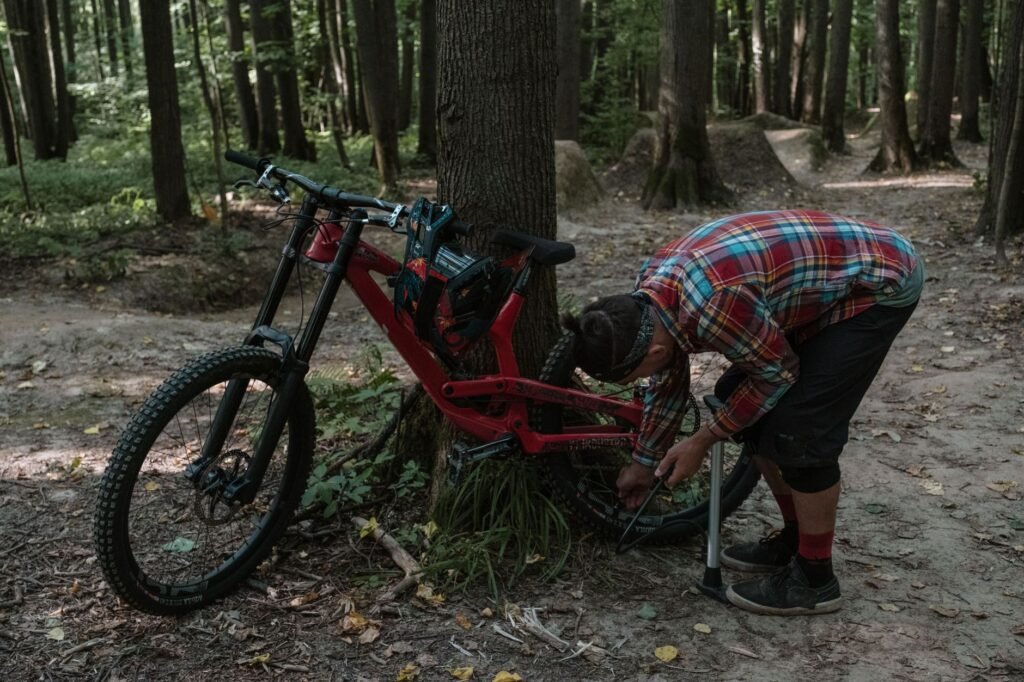
The CURB Check: a city-rider reset you can actually stick with
The reason many home maintenance plans fail is not laziness. It is mismatch. A city commuter usually does not need a full workshop session to prevent weekday nonsense. The useful routine is smaller: Casing, Under braking, Running gear, Bolts and battery, then a short roll test. That mirrors NHTSA’s air-brakes-chain pre-ride check, adds the urban reality of lights and rattly accessories, and creates a simple stoplight rule: green means ride, yellow means fix before leaving, red means do not ride. (nhtsa.gov)
| Signal | What you check | Category | Do this now | What you avoid |
|---|---|---|---|---|
| Tire feels a little soft or you see embedded glass | Use a gauge, compare with your logged pressure, inspect cuts and tread, and pull out visible debris. NHTSA says to check sidewall pressure guidance; SRAM says pressure depends on setup and total system weight. (nhtsa.gov) | Yellow | Pump it now. If the tire loses pressure again on the next ride, inspect more closely or replace the tube or tire. | Pinch flats, vague handling, slow rolling |
| Sidewall cut, bulge, or badly worn tread | NHTSA says damaged or worn tires should be replaced. (nhtsa.gov) | Red | Do not ride until the tire is replaced. | Blowout, repeat flats, emergency walk |
| Brake rub or weak lever feel | Spin the wheel, squeeze both levers, and confirm the brake stops the bike and does not rub. Inspect pads monthly; SRAM says replace disc pads at 3 mm total thickness or less. (nhtsa.gov) | Yellow if it is light rub only; red if braking is weak or pads are at the limit | Reseat the wheel or correct minor rub. If braking is weak, stop and service it. | Noise, drag, rotor wear, unsafe stopping |
| Chain squeak, dry look, or rough shifting | REI says dirt and lack of lubrication increase wear. Clean lightly, add bike-specific lube, and wipe off excess. (rei.com) | Yellow | Wipe, lube, shift through the gears, and test again. | Squeaks, skipped shifts, faster drivetrain wear |
| Persistent skip under load or chain wear at 0.5% or 0.75% | Park Tool says most manufacturers suggest replacement at these wear points, and REI notes worn chains can cause skipping and extra wear on cogs. (parktool.com) | Red for replacement planning, even if the bike still moves | Replace the chain before it starts wearing out the rest of the drivetrain. | Bigger parts bill |
| Loose rack, fender, wheel-retention lever, or dead light battery | NHTSA says quick-release levers should be tight and riders should use a white front light and red rear light when visibility is poor. (nhtsa.gov) | Yellow; red at night if lights are out | Tighten it or recharge it before the ride. | Rattles, wheel issues, visibility problems |
Think of yellow as the ten-minute-fix zone. A soft tire, dirty chain, rubbing rotor, low rear-light battery, or loose fender stay should not be saved for later if later means tomorrow morning. Red is different: a cut sidewall, weak braking, a wheel that is not secured, or a chain already at replacement threshold and skipping. That is backup-transit territory, not a one-more-ride situation. (nhtsa.gov)
How to fit the routine into a normal week
The trick is to separate daily prevention from weekly cleanup. Before each ride, you want the fast version. Once or twice a week, you want the version that resets the bike and keeps the fast version easy. Monthly, you want the checks that stop a cheap consumable from turning into a larger replacement. That sounds like more than it is; in practice, it is a rhythm, not a project. (nhtsa.gov)
- Before rolling out, do the 90-second version: look at both tires, squeeze both brakes, turn the pedals backward a few revolutions, switch the lights on, and do a short test roll. NHTSA’s pre-ride check explicitly recommends an air-brakes-chain check and a brief test ride. (nhtsa.gov)
- Once a week, top off tire pressure with a gauge. SRAM’s pressure guidance depends on system weight, tire size, and conditions, so write down the front and rear numbers that work for your commute instead of guessing each time. (sram.com)
- After wet or gritty rides, wipe the chain, add a small amount of bike-specific lube, then wipe off the excess so it does not turn into grime bait. REI specifically warns that over-lubing attracts dirt. (rei.com)
- Once a month, inspect pads, tire tread, sidewalls, and chain wear. If you use a chain checker, plan replacement as soon as the tool shows the recommended wear point for your drivetrain. (support.sram.com)
- Every few months, tighten rack, fender, and accessory bolts, confirm wheel retention is solid, and replace consumables before failure rather than after it. This is where city bikes earn their keep: boring preventive maintenance beats unpredictable downtime. (nhtsa.gov)
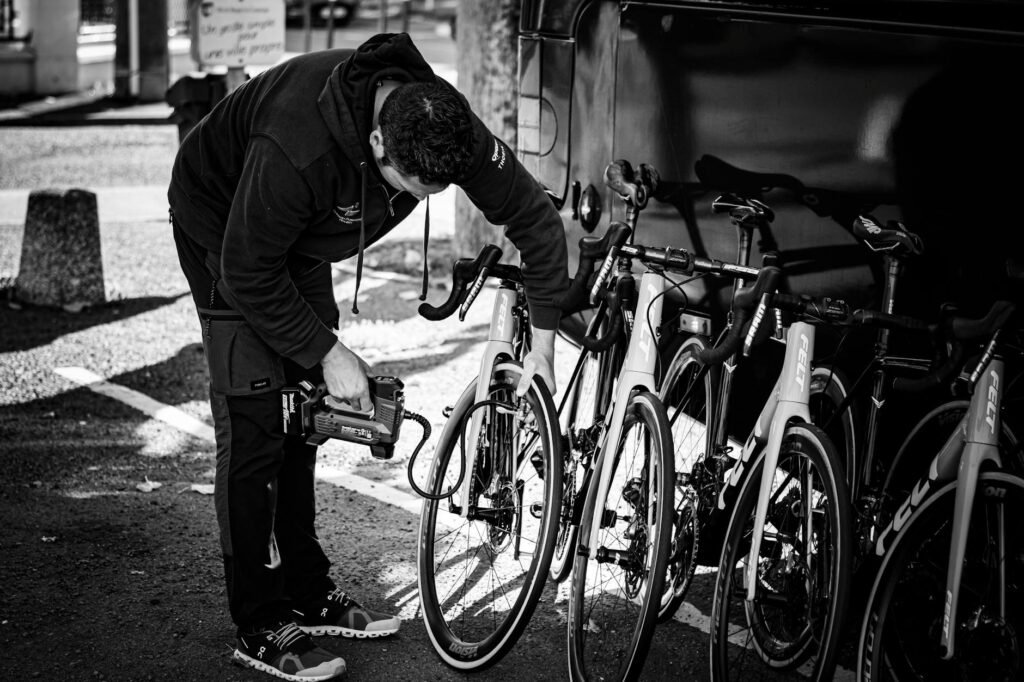
A realistic commuter example, with actual numbers
Say Jordan rides 8 miles round trip, four days a week, with one extra grocery run on the weekend. That is not a race-bike schedule. It is ordinary city use. Under the CURB system, Jordan’s most common yellow flags are soft tires on Monday, a noisy chain after rainy rides, and a rear light that needs charging before the late ride home. None of those requires a shop if they are caught at home. (nhtsa.gov)
As of May 23, 2026, one example starter kit at REI totaled about $75.08 on sale: a floor pump at $52.39, dry chain lube at $9.79, a patch kit at $3.95, and a common 700c tube at $8.95. That is not nothing, but it is a predictable upfront cost that covers the most common city-bike interruptions. (rei.com)
Now look at the neglect path. The same rider who ignores chain wear until the bike starts skipping under load may end up buying both a chain and a cassette instead of just the chain. On May 23, 2026, the REI pages viewed for this article listed a Shimano 9-speed chain at $45 and a 9-speed cassette at $42. REI also notes that service pricing varies by location, so parts are only part of the bill. The personal-finance point is simple: the routine does not make maintenance free. It helps keep spending smaller, scheduled, and less disruptive. (rei.com)
Five mistakes that keep city bikes noisy, slow and irritating
- Lubing the chain without wiping off the extra. REI warns that excess lubricant attracts dirt, which means you can make the drivetrain grimier and wear it faster while thinking you are helping. (rei.com)
- Using someone else’s PSI. NHTSA says to check the tire sidewall, and SRAM adds that rider weight, bike weight, tire width, surface, and weather all affect the right starting pressure. Your number is specific to your setup. (nhtsa.gov)
- Treating brake rub as fine for now for weeks. NHTSA’s pre-ride sheet says the brakes should not rub while the wheel is spinning. A tiny rub may be a quick fix; a habit of ignoring it turns drag into wear. (nhtsa.gov)
- Waiting for skipping before thinking about the chain. REI notes worn chains can skip and add wear to cogs, and Park Tool’s thresholds exist so you can replace sooner than that. (rei.com)
- Remembering lights only after sunset. NHTSA says to use a white front light and red rear light and reflectors at night or when visibility is poor. Build charging into the routine instead of treating it as an afterthought. (nhtsa.gov)
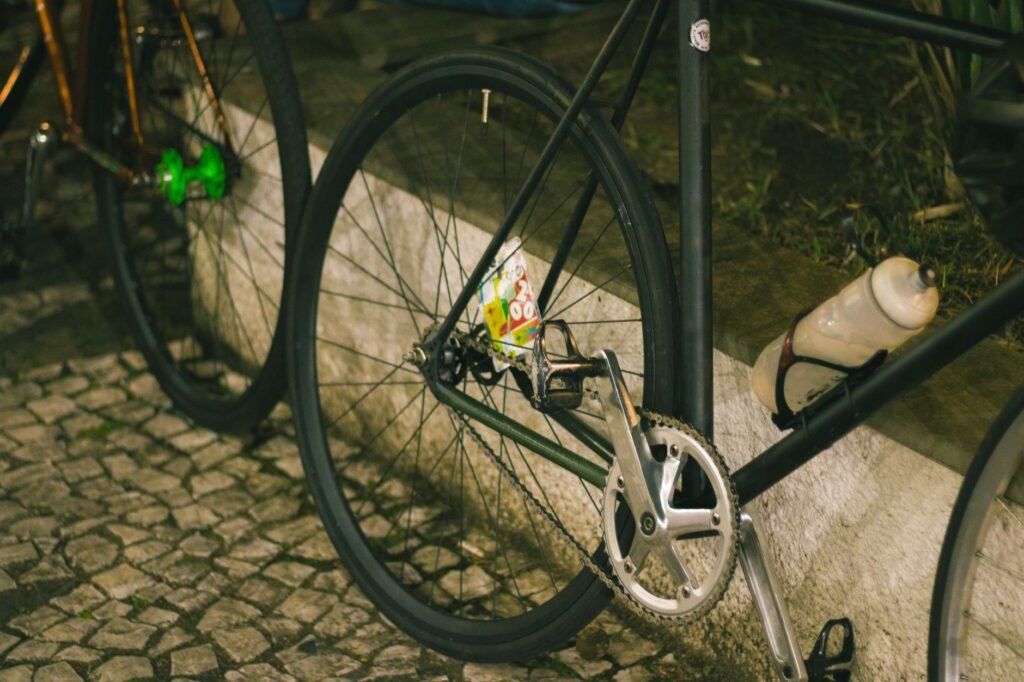
When the quick routine is not enough
The CURB Check is designed for prevention, not denial. If you see a sidewall cut or bulge, a wheel that is not secured, brake cables that look damaged or loose, brakes that do not stop the bike properly, disc pads at or below the maker’s wear limit, or a chain that skips even after cleaning and lubrication, the answer is not more optimism. Park the bike and fix the problem, or book a shop visit. (nhtsa.gov)
How to verify that the routine is actually working
The easiest audit is a two-week annoyance log. Count flats, chain squeaks, brake-rub events, missed-light moments, and mid-ride stops for adjustments. If the number is not dropping after you adopt the routine, one of three things is usually true: your pressure baseline is off, a worn part needs replacement rather than adjustment, or the bike needs a more complete tune than a home reset can provide. (sram.com)
- Write down your preferred front and rear tire pressure and recheck after two or three rides. If the bike feels harsh or vague, revisit the number instead of guessing. (sram.com)
- Note the date of each chain lube. If squeaks return unusually fast, inspect the chain more closely for dirt buildup or wear. (rei.com)
- Spin both wheels after each weekly check. If one slows immediately, inspect for brake rub before the next ride. (nhtsa.gov)
- Set a monthly reminder for pad and chain inspection. These are two of the consumables most likely to turn annoying into expensive if you wait too long. (support.sram.com)
Bottom line
For most city riders, the best maintenance routine is not a deep clean or a fantasy tool wall. It is a repeatable pre-ride filter and a short weekly reset. Check tires with intention, keep the chain clean and lightly lubed, test brakes before you leave, and stay ahead of lights, pads, and chain wear. That small routine can prevent a surprising share of the flats, squeaks, rubs, skipped shifts, and last-minute headaches that make bike commuting feel harder than it should. (nhtsa.gov)
How often should I pump my city bike tires?
Check them before every ride, even if that only means a quick gauge reading or comparison with your logged pressure. NHTSA says to inspect pressure before rides, and SRAM notes that the right pressure depends on weight, tire size, and riding conditions, so a fixed interval is less useful than a quick regular check. (nhtsa.gov)
Do I need a chain checker, or can I just listen for noise?
Noise helps, but a wear checker is better for planning. REI notes worn chains can skip and wear cogs, and Park Tool’s checker is built around 0.5%, 0.75%, and 1.0% wear points because that is where most manufacturers suggest replacement. If you do not want another tool, ask a shop to check it at regular service intervals. (rei.com)
Is dry lube fine for city commuting?
If your commute is mostly dry, a dry lube is a sensible choice. REI recommends using a bike-specific drivetrain lube, and the dry-lube product page reviewed for this article describes it as made for dry-weather riding. The practical rule is to match the lube to your conditions and wipe off excess after application. (rei.com)
How do I know brake rub is a quick fix versus a shop job?
If the wheel is secure and the brake still works well, a light rub may be a home adjustment issue. But if braking is weak, the lever feel is poor, or the pads are at the wear limit, stop riding until it is fixed. NHTSA says brakes should stop the bike and should not rub, and SRAM says to replace disc pads when total pad-plus-backing thickness is 3 mm or less. (nhtsa.gov)
What if I still get flats after doing this routine?
Then move from maintenance to diagnosis. NHTSA says to inspect tires for cuts, nicks, and worn tread, and pressure should be checked against the tire and your setup. If flats keep happening, the problem is likely deeper than a quick top-off and deserves a closer tire, tube, or rim inspection. (nhtsa.gov)
References
- NHTSA: Pre-Ride Safety Check – https://www.nhtsa.gov/document/bike-safety-pre-ride-bicycle-safety-check
- NHTSA: Bicycle Safety – https://www.nhtsa.gov/road-safety/bicycle-safety
- REI Expert Advice: Bike Chain Cleaning and Maintenance – https://www.rei.com/learn/expert-advice/bike-chain.html?msockid=0f49aade28d166851431bc9229176704
- SRAM: How to Calculate Tire Pressure – https://www.sram.com/en/zipp/learn/how-to-calculate-tire-pressure
- SRAM Support: When should my SRAM brake pads be replaced? – https://support.sram.com/hc/en-us/articles/5927458875931-When-should-my-SRAM-brake-pads-be-replaced
- Park Tool: CC-4.2 Chain Checker – https://www.parktool.com/en-us/product/chain-checker-cc-4-2
- REI Bike Shops: Repair, Maintenance & Tune-Ups – https://www.rei.com/stores/bike-shop?msockid=095fcf7074496b6e1d44d91c75fb6acc
- REI: Topeak JoeBlow Sport III Bike Floor Pump – https://www.rei.com/product/132166/topeak-joeblow-sport-iii-bike-floor-pump
- REI: Muc-Off Dry Lube Chain Lubricant – 4 fl. oz. – https://www.rei.com/product/135421/muc-off-dry-lube-chain-lubricant-4-fl-oz
- REI: REI Co-op Patch Kit – https://www.rei.com/product/189218/rei-co-op-patch-kit
- REI: Bike Tubes for Road Bikes & Mountain Bikes – https://www.rei.com/c/bike-tubes?msockid=30cde7ad31736a5d1df3f0af30b16b19
- REI: Shimano XT HG93 9-Speed Chain – https://www.rei.com/product/704734/shimano-xt-hg93-9-speed-chain