
Most intersection trouble for cyclists is not caused by one dramatic mistake. It usually comes from several ordinary things happening at once: a driver scanning for cars instead of bikes, a turn lane opening earlier than expected, a signal changing just as someone decides to squeeze through, or a rider entering the conflict zone a little faster than the situation really allows. FHWA’s intersection guidance treats the area approaching the intersection as part of the safety problem, not just the box in the middle, because visibility, lane alignment, and turning conflicts are already developing before anyone reaches the stop line. (highways.dot.gov)
That matters because cyclists are often vulnerable in ways that are easy to underestimate. A rider can be legally continuing straight and still be in exactly the place a turning driver failed to check. A rider can choose the calm-looking sidewalk approach and become less expected at the driveway or cross street. A rider can also be fully visible to a driver who still misjudges bike speed. The challenge at intersections is not only knowing the rules. It is managing expectation failures. (nhtsa.gov)
Why intersections create a different kind of risk
Intersection anxiety is not irrational, but it helps to frame it accurately. NHTSA says 1,103 bicyclists were killed in traffic crashes in 2024, and its Countermeasures That Work guide notes that a majority of bicyclist fatalities in 2021 occurred at non-intersection locations. So intersections are not the whole bicycling safety picture. They are, however, where yielding, turning, merging, and signal timing pile up in one short space, which is why they generate a distinct set of recurring conflicts. (nhtsa.gov)
FHWA crash-typing research helps explain those conflicts. In one widely used federal summary of bicycle-motor vehicle crashes, 57 percent fell into crossing-path events and 36 percent into parallel-path events. Among the most common individual problems were motorists failing to yield to bicyclists, bicyclists failing to yield at intersections, and motorists turning or merging into a bicyclist’s path. In plain English, that is the territory of right hooks, left crosses, late merges, and rushed judgment. (fhwa.dot.gov)
The hidden hazards start before the stop line
One of the biggest mistakes riders make is treating the painted crosswalk or stop bar as the beginning of the decision. FHWA’s guidance instead focuses on the intersection’s functional area: the approach where turn lanes begin, sightlines change, queueing starts, and drivers begin choosing gaps. If a cyclist waits until the last moment to read the situation, the safest lane position or easiest exit may already be gone. (highways.dot.gov)
When a bike lane turns into a merge zone
A painted bike lane does not erase the turning conflict between a through rider and a right-turning driver. FHWA guidance specifically discusses managing right-turn-only lanes and carrying bicycle space into the intersection approach, and NHTSA warns drivers turning right on red to look to the right and behind for bicyclists approaching from the rear. For riders, the practical lesson is that a dotted bike lane, a fresh turn pocket, or a car edging right should be read as a live merge zone, not a protected corridor. That is the moment to reduce speed, improve visibility, and stop assuming the green signal settles everything. (highways.dot.gov)
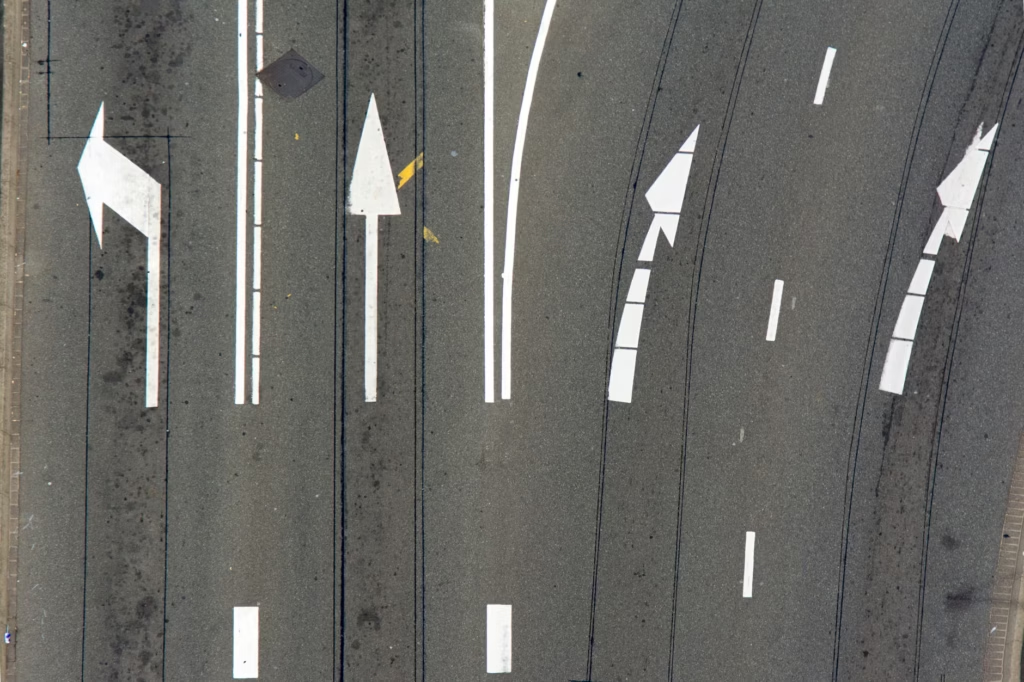
The left-cross problem is mostly about speed judgment
The classic left-cross happens when an oncoming driver turns left across a cyclist’s path after misjudging speed, distance, or both. FHWA crash summaries list motorist failure to yield and turning into the bicyclist’s path among common crash patterns, and NHTSA tells drivers not to underestimate a bicyclist’s speed at intersections or driveways. A rider cannot control that judgment error, but can make it harder to commit by entering more deliberately, covering the brakes, and watching the vehicle’s wheels and angle instead of trusting a turn signal or a quick glance through the windshield. (fhwa.dot.gov)
Sidewalk and sidepath approaches can make you less expected
Riding on the sidewalk can feel calmer between intersections and more dangerous at them. NHTSA explicitly advises riders to avoid or minimize sidewalk riding because drivers do not expect fast-moving bicycle traffic there when backing out or turning, and because sidewalks sometimes end suddenly. That does not mean sidepaths or shared-use paths are automatically bad. Many are part of good networks. It means every driveway and every cross street has to be treated as a new yield decision, usually at a much slower approach speed than the open path suggests. (nhtsa.gov)
Big vehicles change the rules near the corner
Large vehicles deserve their own category because they change what counts as an acceptable risk. FMCSA warns that trucks and buses have substantial blind spots and make wide right turns, and it specifically tells bicyclists not to ride between a turning large vehicle and the curb. If a truck or bus is stopped at the intersection and might turn right, the safer default is usually to wait behind it, even if filtering forward feels faster. If you cannot see the driver well, assume the driver may not be able to see you well either. (fmcsa.dot.gov)
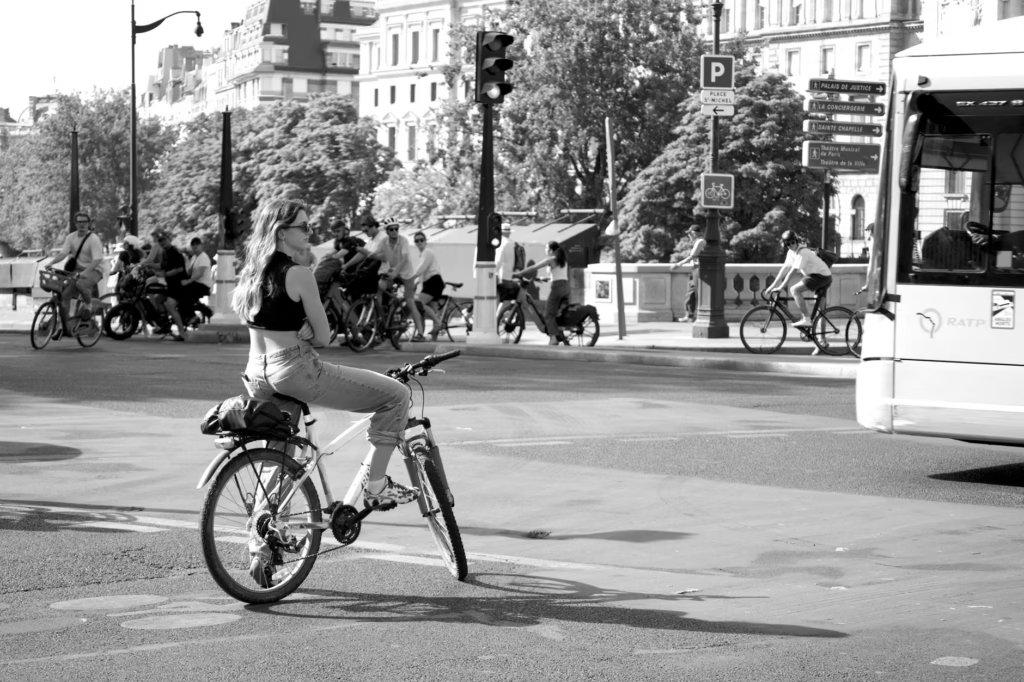
Warning
Never squeeze up the right side of a truck or bus at an intersection. Wide turns and blind spots make that one of the worst places for a cyclist to be. (fmcsa.dot.gov)
Use the Intersection Reset before every crossing
No rider can prevent every bad move by someone else, but a repeatable routine makes surprises smaller. A useful way to handle intersections is what this article calls the Intersection Reset: a short check a few seconds before every crossing. It is not an official federal checklist, but it follows the same themes that official guidance keeps emphasizing: predictable riding, deliberate lane position, lower speed when conflicts rise, and avoiding blind spots. (nhtsa.gov)
- Reset your speed. Enter slowly enough that a hard stop is still available without panic braking. Fast entry buys very little at an intersection and takes away decision time.
- Reset your position. Approach in the lane position that matches where you are going, not the position that merely feels polite. FHWA guidance summarizes this as approaching the intersection in the rightmost lane that provides for the intended movement, with lane position affected by usable width and speed. (highways.dot.gov)
- Reset your assumptions. Look first for the three turning threats: right hook, left cross, and right-on-red from the cross street. Assume a driver may miss you until the vehicle’s speed, wheels, and path show otherwise. (nhtsa.gov)
- Reset your exit. Know where you can stop, drift back, or abandon the crossing if the scene changes. The best escape route is usually chosen before you enter the conflict zone, not after.
Hypothetical example: A commuter in a curbside bike lane reaches a green light beside a short queue of right-turning cars. The risky instinct is to sprint past before the turn develops. The lower-stress move is often to ease off, avoid moving into the front-right blind area of the turning queue, and cross only when the through path is obviously open. That costs a few seconds, but it removes one of the most common turning conflicts from the equation. (nhtsa.gov)
Match your tactic to the intersection in front of you
Different intersections call for different defaults. The table below is not law. It is a conservative decision guide for common U.S. street situations.
| Situation | What is easy to miss | Safer default response | When to change plan |
|---|---|---|---|
| Bike lane beside a right-turn pocket or dotted merge area | The lane marking stays visible, but the conflict has changed from parallel travel to turn-and-merge. (highways.dot.gov) | Slow, hold a visible line, and do not pass a turning vehicle on the right unless the design clearly separates the movements. | If a truck, bus, or dual right-turn lane is involved, back off and wait. (fmcsa.dot.gov) |
| Oncoming driver waiting to turn left across you | A driver may see the bike yet still misjudge its speed or decide to go late. (fhwa.dot.gov) | Cover the brakes and enter only at a speed that preserves a stop. | If the vehicle begins creeping or rotating, assume the turn is coming and yield space. |
| Sidewalk or sidepath crossing a driveway or side street | Drivers turning or backing often scan the roadway, not the sidewalk approach. (nhtsa.gov) | Slow sharply, make the crossing decision fresh, and be ready to stop. | If sightlines are blocked, near-walking speed or dismounting may be the better call. |
| Multilane unsignalized crossing | One driver can yield while the next lane remains a live threat; FHWA describes multilane bicycle and pedestrian crossings as a multi-threat condition. (highways.dot.gov) | Treat each lane as a separate decision and avoid trusting a single gap or a wave-through. | If speeds are high or there is no refuge, use a signalized crossing or a different route. |
| Truck or bus at the corner | Wide turns and blind spots make the right side of the vehicle especially dangerous. (fmcsa.dot.gov) | Stay behind the vehicle, not beside it. | If you are already beside the cab, fall back rather than racing forward. |
| Bike box, turn box, or bicycle signal is present | Special markings and signals change where you should wait and how the movement is controlled. (highways.dot.gov) | Use the marked box or bicycle signal as intended instead of improvising. | If markings are unclear or damaged, default to the standard traffic control and the safest visible position. |
The common thread is that the safest move is usually the one that removes ambiguity, even if it is not the fastest. Intersections punish rushed positioning far more often than they punish a brief delay.
Making left turns without forcing the issue
Left turns deserve their own strategy because they tempt riders into late lane changes under pressure. FHWA’s bicycle guidance says cyclists should approach in the lane that provides for their intended movement and notes that riders have several options for turning left. In practice, that usually means choosing early between a vehicular left turn and a two-stage left turn. The first is direct but demands comfort merging across traffic. The second is slower but often calmer on wide or fast roads. Protected-intersection guidance also notes that two-stage left turns can reduce the stress of merging across several traffic lanes, though they may add delay. (highways.dot.gov)
- Use a vehicular left turn when traffic speeds are moderate, lane changes can be made early, and you can hold a steady line without sprinting.
- Use a two-stage left turn when the road is wide, fast, or multilane, or when a direct merge would force a rushed move.
- Where a marked two-stage bicycle turn box or queue area exists, use it. The current MUTCD includes specific guidance for two-stage bicycle turn boxes. (highways.dot.gov)
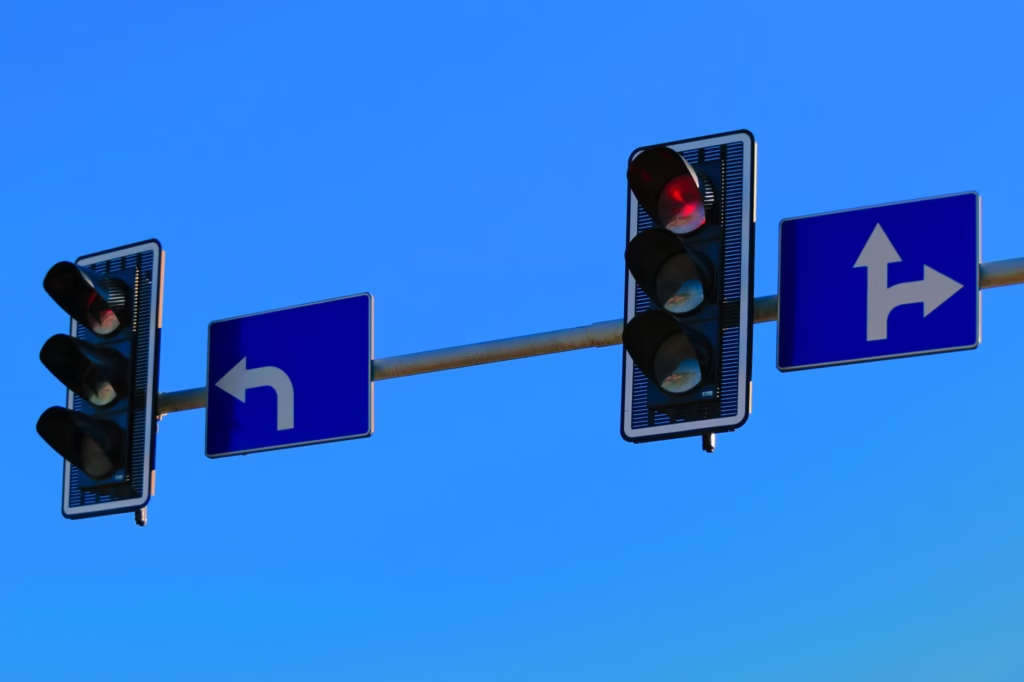
The mistakes that quietly raise intersection risk
Most intersection errors by cyclists are not dramatic. They are small shortcuts that feel efficient until the context changes.
- Carrying midblock speed into a corner where several drivers are simultaneously deciding whether to turn.
- Hugging the curb even when that puts the bike in a squeeze zone or hidden blind spot. FHWA guidance ties lane position to intended movement and usable width, not courtesy alone. (highways.dot.gov)
- Trusting a turn signal more than the vehicle’s actual path.
- Assuming paint equals protection. A bike lane can still cross a turn path. (highways.dot.gov)
- Passing a bus or truck on the right near the corner. (fmcsa.dot.gov)
- Letting one yielding driver at a multilane crossing make the decision for the next lane too. (highways.dot.gov)
- Rushing a stale green instead of asking whether the intersection ahead is actually clear.
Being legally right still matters, but at intersections clarity is often what prevents the crash. NHTSA repeatedly emphasizes predictable riding and minimizing blind spots, which is why small position changes and small speed reductions can do so much defensive work. (nhtsa.gov)
Better design helps, but it does not remove the need to read conflict
Good street design can reduce the number and severity of these conflicts. FHWA’s Safe System material starts from the idea that people make mistakes and are physically vulnerable in crashes, and newer federal resources describe tools meant to reduce conflict and improve visibility, including protected intersection features, bicycle movement phases, bike boxes, and two-stage turn boxes. FHWA says protected intersections can improve visibility and shorten bicycle crossings, while the MUTCD says a bicycle box may be used at signalized intersections to increase the visibility of stopped bicycles. (highways.dot.gov)
Those treatments help, but they do not make every rider decision easy. Protected designs can add delay for some left turns, special markings only work when road users understand and obey them, and many U.S. intersections still mix turning cars and through bikes in the same space. The useful mindset is not “I have paint, so I am safe,” but “What conflict has this design reduced, and what conflict still remains?” (highways.dot.gov)
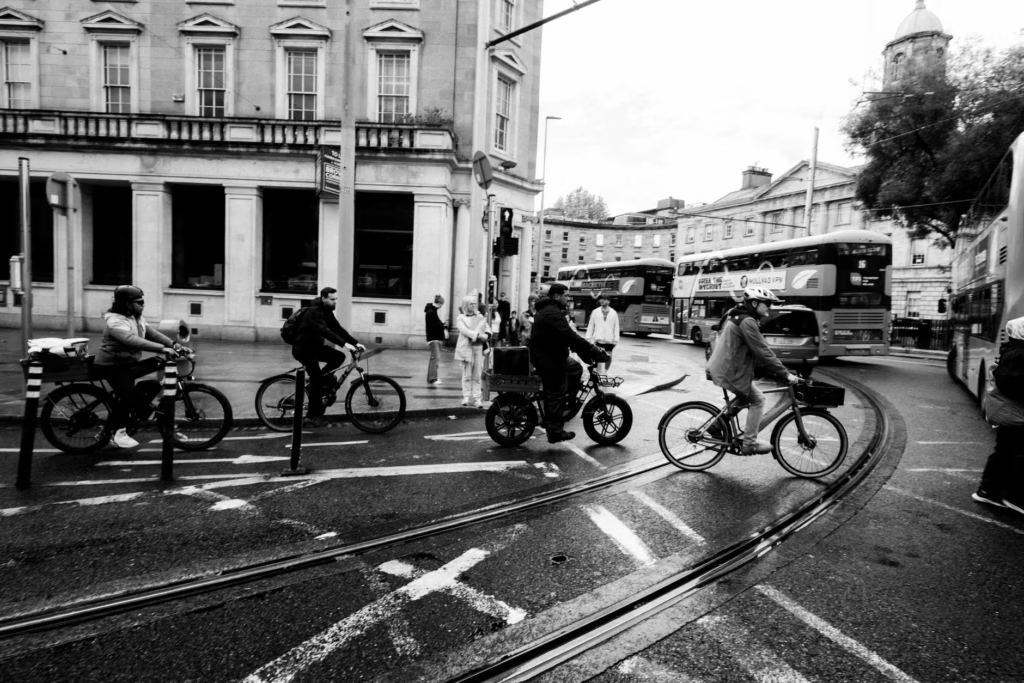
A calmer, safer way to ride intersections
The biggest hidden challenge at intersections is that the problem is rarely singular. Visibility, speed judgment, turning geometry, signal timing, and lane position all stack together. The practical answer is to notice the stack sooner: reset before every crossing, choose the lane position that matches the movement, and treat ambiguity as a cue to slow down rather than squeeze through. That habit will not make every intersection pleasant, but it will make more of them manageable.
Is the sidewalk usually safer through intersections?
Usually not. NHTSA advises riders to avoid or minimize sidewalk riding because drivers turning or backing often do not expect fast-moving bicycle traffic there, and sidewalks can end abruptly. On a shared path or sidepath, the same principle applies: the crossing itself still needs a slow, separate yield decision. (nhtsa.gov)
When should a cyclist take the lane before an intersection?
When that lane position is necessary to match the intended movement, stay visible, or avoid being squeezed by a turn lane or narrow usable width. FHWA guidance summarizes the principle as approaching the intersection in the rightmost lane that provides for the rider’s movement, not automatically hugging the curb. Local lane-use rules can vary, so confirm state and city law too. (highways.dot.gov)
What if traffic is too fast for a standard left turn?
Use the lower-stress option. FHWA guidance recognizes that bicyclists have several ways to turn left, and a two-stage left turn is often the better choice on fast or multilane roads because it avoids a late cross-lane merge. Where a marked turn box exists, use it as directed. (highways.dot.gov)
Are bike boxes and bicycle signals worth paying attention to?
Yes. The MUTCD says a bicycle box may be used to increase the visibility of stopped bicycles at signalized intersections, and bicycle signal indications have specific meanings that control when a bicyclist may enter an intersection for a given movement. If those treatments are present, they change the safest default response. (highways.dot.gov)
What is the single safest rule around trucks and buses at corners?
Do not move up the right side of a large vehicle that may turn right. FMCSA specifically warns that trucks and buses have large blind spots and make wide turns, and advises bicyclists to avoid riding between the vehicle and the curb. Waiting behind a truck is almost always better than gambling on its turn path. (fmcsa.dot.gov)
References
- NHTSA Bicycle Safety – https://www.nhtsa.gov/road-safety/bicycle-safety
- NHTSA Countermeasures That Work: Bicycle Safety – https://www.nhtsa.gov/book/countermeasures-that-work/bicycle-safety
- FHWA Improving Intersections for Pedestrians and Bicyclists: Informational Guide – https://highways.dot.gov/sites/fhwa.dot.gov/files/2022-06/fhwasa22017.pdf
- FHWA Technical Summary: Pedestrian and Bicycle Crash Types of the Early 1990s – https://www.fhwa.dot.gov/publications/research/safety/pedbike/95163.cfm
- FMCSA Tips for Bicyclists and Pedestrians – https://www.fmcsa.dot.gov/ourroads/tips-bicyclists-and-pedestrians
- FHWA Protected Intersections – https://highways.dot.gov/sites/fhwa.dot.gov/files/FHWA-HRT-24-090.pdf
- FHWA MUTCD 11th Edition – Part 9 – https://highways.dot.gov/media/111836
- FHWA MUTCD 11th Edition – Part 4 – https://highways.dot.gov/media/111811