
When a driver honks, buzzes a pass, or starts yelling, the most useful goal is not to prove who was right. It is to get home unhurt. That framing matters because the physical imbalance is real: NHTSA notes that when a crash involves a vehicle and a bike, the cyclist is the road user most likely to be injured, and NHTSA’s current bicycle safety page lists 1,103 bicyclists killed in traffic crashes in 2024. CDC also says most bicyclist deaths occur in urban areas. (nhtsa.gov)
That does not mean the burden should fall on riders alone. USDOT’s Safe System approach explicitly treats pedestrians and bicyclists as vulnerable road users and says state and local agencies have a responsibility to improve the safety of the network around them. But in the moment of conflict, the rider controls only a few things: line choice, speed, body language, where to exit, and when to call for help. Those choices can keep a bad encounter from turning into a crash or an assault. (transportation.gov)
TL;DR
- Use an exit-first mindset: stabilize the bike, stay predictable, create space, and document later.
- Do not answer anger with eye contact, gestures, or lane games; official driver guidance commonly advises getting out of the aggressive driver’s way, avoiding eye contact, and refusing to react. (dmv.ca.gov)
- If a driver follows you, corners you, or uses the vehicle as a weapon, treat it as an emergency and call 911 when safe. (nhtsa.gov)
- Choose routes and positions that maximize predictability and separation when possible; NHTSA recommends routes with less traffic and slower speeds, and FHWA points to separated bike lanes as a way to reduce conflicts. (nhtsa.gov)
Treat aggression early, before it turns into something worse
Not every bad move is aggressive driving. NHTSA says not every moving violation qualifies, but behavior that encroaches on others’ safe space, such as driving much faster than surrounding traffic, following too closely, making unsafe lane changes, or running red lights, can indicate aggressive driving. NHTSA also distinguishes that from road rage, which involves intentional assault with a vehicle or weapon. (nhtsa.gov)
For cyclists, that distinction matters because the response changes. A driver who is impatient, tailgating, or leaning on the horn is a space problem first: the aim is to reduce contact and uncertainty. A driver who is swerving at you, blocking your path, chasing you after a turn, or getting out of the car to threaten you is not just being rude. At that point, the encounter is much closer to the intentional-assault side of the line, and the priority shifts from de-escalation to escape and emergency reporting. (nhtsa.gov)
NHTSA’s explanation of aggressive driving is also useful because it reminds riders not to personalize every incident. Traffic congestion, running late, and the emotional detachment some people feel inside a car all contribute to aggressive behavior. None of that excuses it, but it does explain why arguing with the driver rarely improves the situation. A rider is trying to interrupt a bad chain of events, not win a character debate at 18 miles per hour. (nhtsa.gov)
Use the Exit-First Sequence
A practical rule for city riding is this: when a driver becomes aggressive, do the thing that ends the interaction with the least uncertainty. That is the Exit-First Sequence. It is not about surrendering road rights. It is about recognizing that a moving argument beside a multi-thousand-pound vehicle is a bad place to make a point.
- Stabilize the bike. Hold a straight, readable line and avoid sudden swerves into gutters, door zones, grates, or parked cars just because someone behind is impatient. NHTSA advises cyclists to travel with traffic, ride predictably, and signal before changing lane position or turning. (nhtsa.gov)
- De-engage. Do not turn the encounter into eye contact, gestures, or a shouting match if you can avoid it. Official driver guidance advises making every attempt to get out of the aggressive driver’s way, putting pride aside, avoiding eye contact, and ignoring gestures. (dmv.ca.gov)
- Create separation. If it is safe, let the driver go. If it is not yet safe, continue predictably until there is a better place to yield, turn off, or stop near other people. NHTSA advises giving speeding and aggressive drivers plenty of space and steering out of the way safely when possible. (nhtsa.gov)
- Document after you are safe. Plate, vehicle description, location, direction of travel, and time matter more than a perfect comeback. California DMV guidance likewise emphasizes reporting with a vehicle description, license number, location, and direction of travel. (dmv.ca.gov)
What to do in the first 10 seconds
The first decision is whether this is annoyance or immediate danger. Horns, revving, or a single angry yell can still be dangerous because they distract and pressure a rider into a mistake. But weaving toward you, repeated close passes, blocking your path, or following you after a turn are stronger signals that the encounter may escalate beyond ordinary bad driving. NHTSA’s examples of aggressive behavior center on the kinds of actions that invade others’ safe space. (nhtsa.gov)
Physically, the job is simple even if it does not feel simple: loosen the death grip on the bars, keep your eyes forward, protect your balance, and look for the next safe place rather than the driver’s face. NHTSA’s bicycle guidance stresses staying focused and alert, assuming others may not see you, and looking ahead for hazards. A rider staring sideways at a yelling window is giving up the one advantage that still matters, which is time to react. (nhtsa.gov)
If communication is necessary, keep it boring. A hand signal for a turn, a brief point toward a red light, or a short verbal warning to prevent contact is different from arguing. The purpose should be clarity or conspicuity, not correction. Once the rider starts trying to teach, shame, or punish the driver, the interaction usually stops being tactical and starts becoming personal.
| Driver behavior | Main risk | Best calm response | Avoid |
|---|---|---|---|
| Close pass, engine rev, or hard honk from behind | A panic swerve into the curb, parked cars, or debris | Hold a straight line, keep control, and only yield when there is real room to do it safely. (nhtsa.gov) | Snapping toward the gutter or making a sudden brake move |
| Yelling from the window or gesturing at you | Losing focus and drifting out of position | Keep your eyes ahead, do not answer, and continue predictably until the vehicle is gone. (dmv.ca.gov) | Arguing through the window or matching the emotion |
| Tailgating on a narrow city street | Pressure to squeeze into an unsafe gap | Maintain control and yield only at a place that is actually wide enough and visible enough. (nhtsa.gov) | Diving into the door zone to satisfy the driver quickly |
| Turning conflict near an intersection | Getting hooked or crossed by a driver who misjudges you | Reduce speed, watch blind spots, and avoid lingering beside a turning vehicle. (nhtsa.gov) | Accelerating beside the same vehicle to prove right of way |
| Driver keeps following after a turn or stop | Stalking, intimidation, or assault risk | Do not go home; head to a busy public place and call 911 when safe. (nhtsa.gov) | Leading the driver to your home, job, or usual route |
| Vehicle blocks, bumps, or deliberately threatens you | Immediate crash or assault risk | Treat it as an emergency, get away from the vehicle, and call 911. (nhtsa.gov) | Continuing the argument in the roadway |
The pattern in that table is worth noticing. A calm response is not passive. It is active risk management. It preserves control of the bike, buys time, and moves the conflict away from a moving lane and toward distance, witnesses, or authorities.
A realistic example on a narrow city street
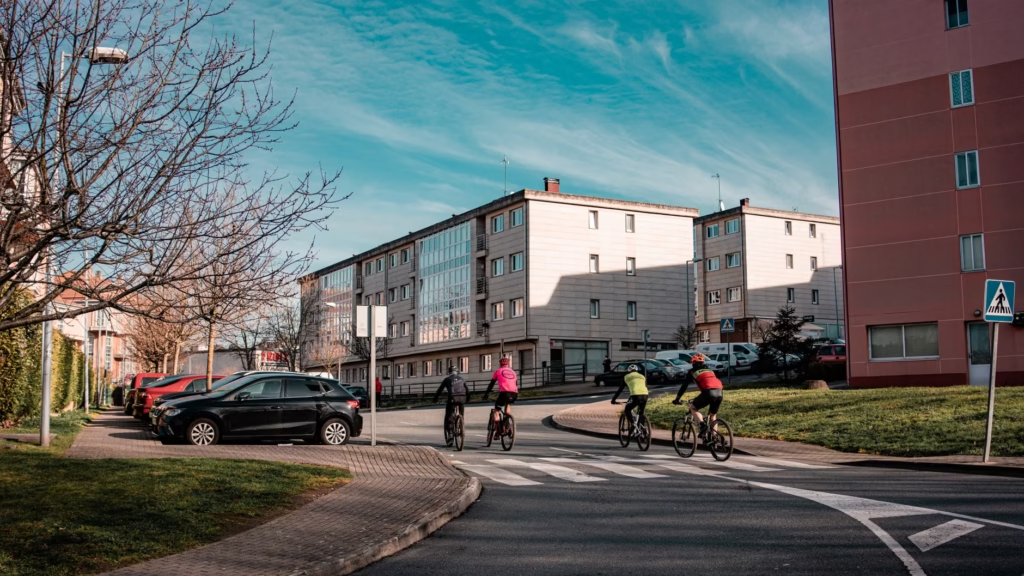
Consider a hypothetical example. A rider is climbing a narrow commercial street lined with parked cars. A van driver begins honking from behind and then pulls close enough that the cyclist can hear the engine rev. There is no safe gap to the right without cutting into a door zone. Instead of squeezing over immediately, the rider holds a straight line, keeps pedaling to the next major corner, signals right, and turns into a gas station with a storefront and other people nearby. The van driver speeds away.
That response can feel unsatisfying because it does not punish the driver. But it does three useful things. It avoids a panic move into a roadside hazard, it ends the moving confrontation, and it relocates the rider to a public place where documenting the incident is easier. That logic closely matches official guidance to ride predictably, minimize blind spots, create space around aggressive drivers, and get out of their way rather than challenge them. (nhtsa.gov)
What usually makes the encounter worse
- Trying to teach the driver a lesson in real time. Correcting someone who is already angry often makes the interaction more personal, not safer.
- Answering with gestures, sarcasm, or a stare-down. Official guidance to drivers specifically warns against gestures, eye contact, and pride-based responses. (dmv.ca.gov)
- Automatically jumping onto the sidewalk. NHTSA advises avoiding or minimizing sidewalk riding because drivers often do not expect fast-moving bike traffic there, especially at driveways and turns, and local legality varies. (nhtsa.gov)
- Squeezing too far right too soon. A rider who abandons a stable line to appease a tailgater can end up in debris, drains, or the door zone instead of in a genuinely safer position. NHTSA’s guidance favors predictability and signaling before lane-position changes. (nhtsa.gov)
- Pulling up beside the same driver at the next red light to continue the argument. Even if the rider is right, the stop creates a new face-to-face opportunity for escalation.
- Riding distracted. NHTSA says no texting, listening to music, or doing anything else that takes your eyes, ears, or mind off the road and traffic. In tense traffic, missing one cue can matter. (nhtsa.gov)
One subtle mistake deserves extra attention: confusing assertive with provocative. Assertive riding means being visible, predictable, and deliberate. Provocative riding means making the interaction about winning, humiliating, or delaying the other person. NHTSA’s bicycle guidance is much closer to the first idea. It emphasizes being where you are expected to be seen, traveling with traffic, signaling, and minimizing blind spots. (nhtsa.gov)
Prevention starts before the bad interaction
No rider can eliminate aggressive driving, and infrastructure matters a great deal. CDC says several roadway engineering measures, including bike lanes, can improve safety for bicyclists, and lower speed limits can increase reaction time for both drivers and cyclists. FHWA adds that separated bike lanes can mitigate or prevent interactions and conflicts between bikes and motor vehicles, while USDOT’s broader guidance places safer speeds and safer roads at the center of the Safe System approach. (cdc.gov)
- Favor low-speed streets, calmer parallel routes, and separated facilities when the tradeoff in time is modest. NHTSA recommends routes with less traffic and slower speeds, and FHWA points to separated lanes as a way to reduce conflicts. (nhtsa.gov)
- Avoid hanging in blind spots next to turning vehicles, especially at intersections and driveways. NHTSA advises minimizing blind spots and notes that drivers often fail to look for bicyclists when turning or backing. (nhtsa.gov)
- Use lights, reflectors, and visible clothing when visibility is poor. NHTSA recommends a white front light, a red rear light, and reflectors at night or when visibility is poor. (nhtsa.gov)
- Signal lane changes and turns early, and look over your shoulder before moving. Predictability lowers surprise for everyone around you. (nhtsa.gov)
- Keep your attention available. If traffic around you is tense, skip headphones, texts, and anything else that reduces your ability to hear an engine surge or notice a fast approach. (nhtsa.gov)
- If the same corridor keeps producing near misses, report the street problem, not just the individual driver. USDOT’s safety framework puts real responsibility on state and local agencies to improve road conditions for vulnerable road users. (transportation.gov)
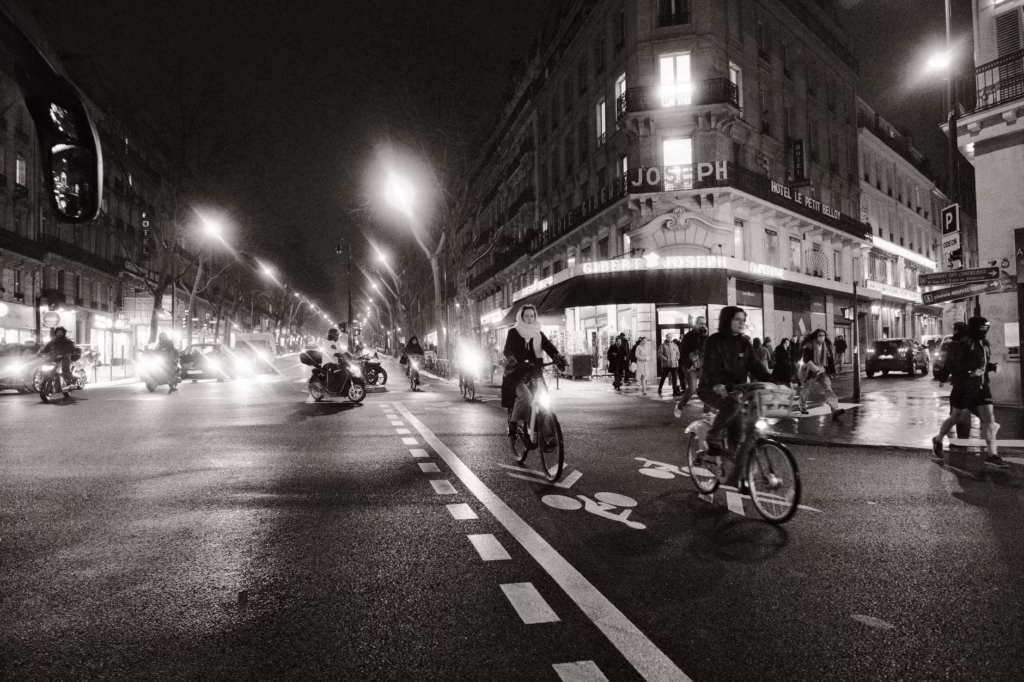
Choosing a calmer route is not admitting that aggressive driving is acceptable. It is a tactical choice while cities, transportation agencies, and enforcement systems catch up to the safety needs of people who bike. (transportation.gov)
After the incident: report, document, reset
- Get to a safe, public spot first. Then check yourself, your bike, and anyone else involved for injury or immediate danger.
- If you need immediate assistance, call 911. 911.gov says an emergency is any situation that requires immediate assistance from police, fire, or ambulance, and advises callers to be ready with their location, phone number, the nature of the emergency, and relevant descriptions. (911.gov)
- If it is not an emergency, write down the plate, vehicle description, time, exact location, direction of travel, and what happened while the details are fresh. Official driver guidance also emphasizes those details when reporting aggressive drivers. (dmv.ca.gov)
- Save photos or video only after you are fully stopped and safe. The record is useful only if getting it does not create a second hazard.
- Use your local non-emergency reporting route, crash-report procedure, or online portal where appropriate. State and local rules differ, so it is worth knowing the process before you need it.
There is also a mental piece here. An aggressive-driver encounter can leave a rider shaky, furious, embarrassed, or all three. If possible, pause before continuing. Take a few breaths, drink some water, and decide whether you are actually ready to merge back into traffic. A rider who is still flooded with adrenaline is more likely to miss the next hazard.
Limits, exceptions, and the hard cases
No script works every time. A rider carrying a child, using a cargo bike, descending quickly, riding at night, or traveling on a high-speed arterial has fewer options than someone on a calm side street in daylight. CDC also notes that more than one-third of bicyclist deaths involve alcohol for the motor vehicle driver and/or bicyclist, which means some encounters involve impaired judgment from the start. In those situations, creating distance early matters even more. (cdc.gov)
If a driver gets out of the vehicle to confront you, blocks your path on purpose, tries to bump you, or keeps following you, stop thinking about etiquette. Think escape, witnesses, 911, and medical care if needed. NHTSA distinguishes aggressive driving from road rage precisely because intentional assault is a different category of danger. (nhtsa.gov)
The safest win is ending the interaction
Urban cyclists do not owe aggressive drivers submission, but they also do not benefit from turning a moving conflict into a duel. The useful habit is simple: stay legible, refuse the emotional bait, create separation, and report serious threats once safe. It is not dramatic, and it is not always satisfying. It is effective because it keeps the real objective in view: finishing the ride without giving a dangerous person another chance to control it.
FAQ
Should a cyclist hold position if a driver is already acting aggressive?
Lane-position rules vary by state and city, so this is not a one-size-fits-all legal answer. As a practical safety rule, do not make a sudden unsafe move just to reward impatience. Hold a predictable line, signal any change, and take space or yield when a truly safer opportunity appears. NHTSA’s guidance favors predictability and signaling before changing lane position. (nhtsa.gov)
Is it ever worth yelling back?
Usually not. A short shout to prevent immediate contact is different from arguing, but once the exchange becomes personal, the odds of escalation go up. Official driver guidance advises avoiding eye contact, ignoring gestures, and not challenging the aggressive driver. (dmv.ca.gov)
When should I call 911 instead of waiting to report later?
Call 911 when there is immediate danger or an immediate need for police, fire, or medical help. That includes injury, a crash scene that is not secure, a driver following or harassing you in a way that feels threatening, or a vehicle being used as a weapon. NHTSA specifically advises calling police if a driver is following or harassing you, and 911.gov defines emergencies as situations requiring immediate assistance. (nhtsa.gov)
Is the sidewalk a good escape route?
Not by default. NHTSA advises avoiding or minimizing sidewalk riding because drivers often do not expect moving bike traffic there, especially at driveways and turns, and sidewalk riding is not legal everywhere. In some moments it may still be the least-bad option, but it should be treated as a context-specific escape move, not an automatic fix. (nhtsa.gov)
Do quieter routes and protected lanes really make a difference?
Yes, route choice can materially change exposure. NHTSA recommends routes with less traffic and slower speeds, CDC says bike lanes can improve safety and lower speed limits can improve reaction time, and FHWA says separated bike lanes can mitigate or prevent conflicts between bicyclists and motor vehicles. (nhtsa.gov)
What if the same street keeps producing aggressive-driver encounters?
That is often a corridor problem, not just a people problem. Repeated close passes, speeding, and intimidation may point to street design that keeps mixing bikes with fast or frustrated traffic. USDOT’s Safe System approach puts responsibility on state and local agencies to improve safety for vulnerable road users, so repeated problems are worth reporting to transportation departments, 311 systems, or local advocacy groups. (transportation.gov)
References
- NHTSA: Bicycle Safety – https://www.nhtsa.gov/road-safety/bicycle-safety
- CDC: Bicycle Safety – https://www.cdc.gov/pedestrian-bike-safety/about/bicycle-safety.html
- NHTSA: Speeding and Aggressive Driving Prevention – https://www.nhtsa.gov/risky-driving/speeding
- NHTSA: Aggressive Driving and Other Laws – https://www.nhtsa.gov/book/countermeasures-that-work/speeding-and-speed-management/countermeasures/unproven-further-evaluation/aggressive
- 911.gov: Calling 911 – https://www.911.gov/calling-911/
- FHWA: Separated Bike Lanes – Making Roads Safer for Bicyclists – https://www.fhwa.dot.gov/innovation/innovator/issue101/page_02.html
- USDOT: Improving Safety for Walking, Biking, and Rolling – https://www.transportation.gov/pedestrian-bicycle-safety
- California DMV: Section 2, Driving Safely – https://www.dmv.ca.gov/portal/handbook/commercial-driver-handbook/section-2-driving-safely/