
On a busy city street, the safest place to ride is usually not glued to the curb. It is a straight, readable line far enough from parked cars, gutters, and turning traffic that drivers can recognize you as traffic and pass only when there is actual room. NHTSA advises cyclists to ride with traffic, minimize blind spots, and signal before changing position or turning. Oregon’s current bicyclist manual adds that on a narrow lane, moving closer to the center can discourage drivers from trying to squeeze by within the same lane. (nhtsa.gov)
That usually means choosing position for visibility first and politeness second. Riding at the extreme edge may feel courteous, but it can leave no escape space for potholes or debris, hide you from drivers waiting to turn, and encourage close passes. Oregon specifically warns that riding too close to the curb or edge can be dangerous, and shared-lane markings typically indicate a line in the center or just right of center rather than the gutter. (oregon.gov)
Ride where drivers can read your movement
Next to parked cars, move left more than instinct may tell you. NYC DOT advises staying at least 3 feet from parked cars, and both NYC and Oregon guidance warn against weaving in and out of parking spaces because it makes your movement harder to predict and forces abrupt merges back into traffic. A steady line outside the door zone is usually safer than repeatedly ducking toward the curb. (nyc.gov)
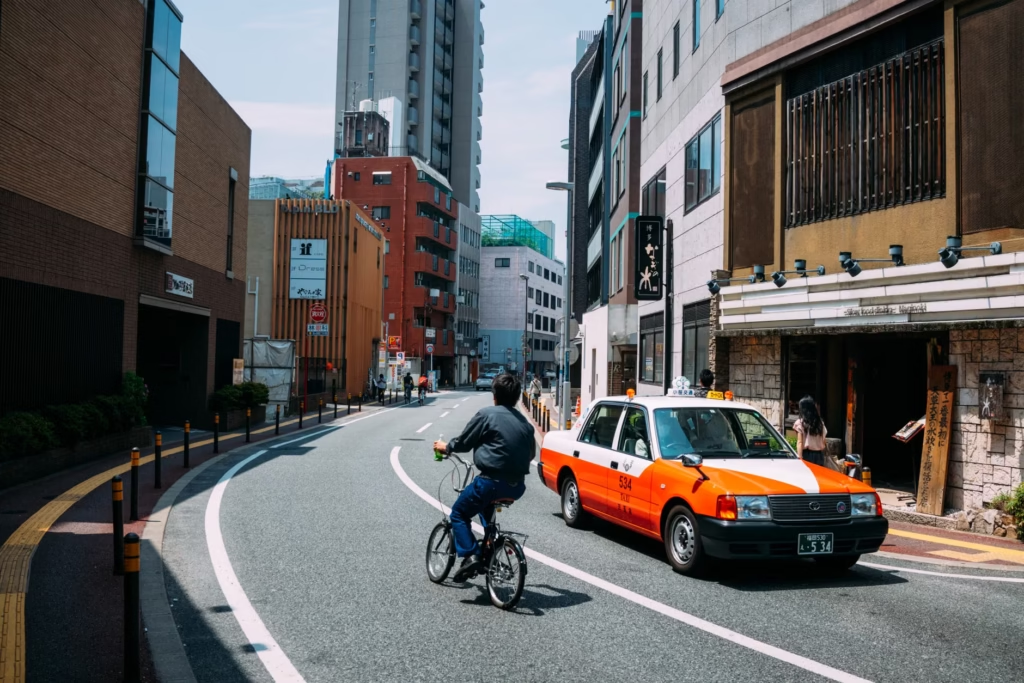
A bike lane does not remove the need to choose position. If the lane is clear and separated from parked cars, staying in it may be the lowest-conflict option. If it is blocked, pinched, or about to feed into turning traffic, the safer move is to look, signal, and merge early rather than waiting until the last second. NHTSA emphasizes signaling and shoulder checks before changing lane position, and Oregon allows riders to leave a bike lane to avoid hazards, parked cars, narrow-lane conflicts, left turns, and right-turn conflicts. (nhtsa.gov)
A useful way to judge your position is to scan for three things before each block or intersection. If any one of them appears, move earlier than feels socially comfortable. A calm, early reposition is easier for drivers to read than a sudden swerve. (nhtsa.gov)
- Can a driver pass without leaving the lane? If not, ride closer to the center or just right of center so the pass happens only when there is real room. Sharrows are often placed to show that kind of position. (oregon.gov)
- Is there a door zone or surface hazard ahead? Parked cars, puddles you cannot see through, broken glass, drainage grates, and rough pavement are reasons to move left early, not to jerk the bike sideways at the last moment. (oregon.gov)
- Is a turn or merge conflict coming? A driveway, dashed bike-lane segment, or right-turn lane means someone may cross your path soon. Pick your spot before the corner, not inside it. (nyc.gov)
The goal is not to take the lane all the time. It is to remove ambiguity when the street geometry becomes unsafe. When the lane opens up, or when there is a calmer parallel street or dedicated facility, a different route may be the smarter safety decision; NHTSA specifically advises choosing routes with less traffic and slower speeds when possible. (nhtsa.gov)
Handle intersections before they handle you
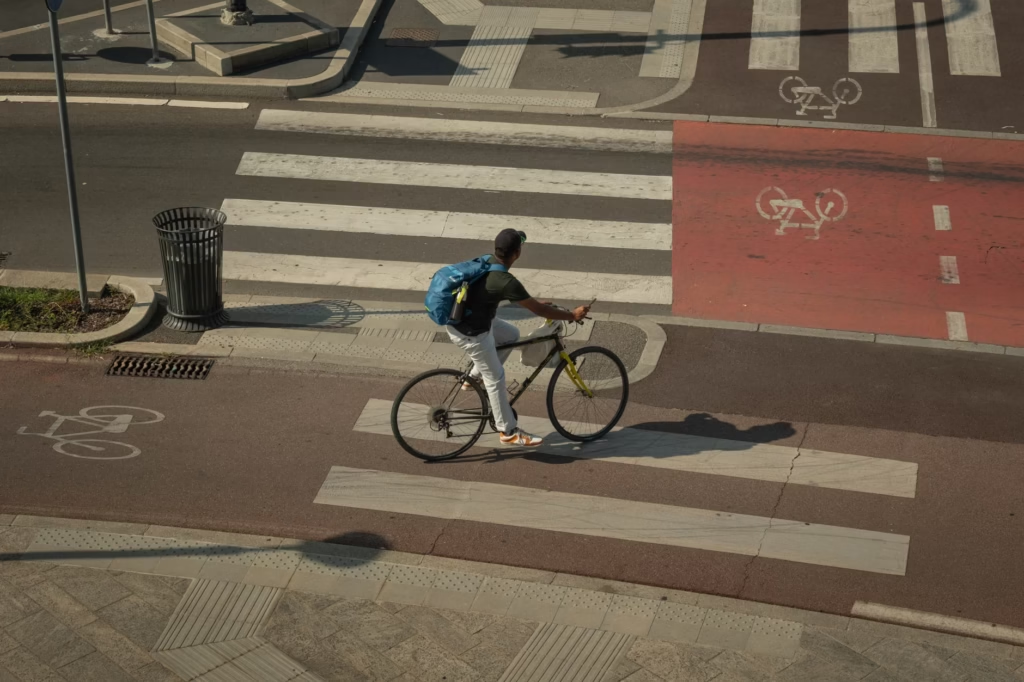
Intersections and driveways are where position matters most. Oregon’s manual says most crashes with motor vehicles happen where paths cross at intersections and driveways, and NYC DOT explains that dashed bike-lane markings and mixing zones indicate places where cars may turn across a cyclist’s path. When you see that kind of conflict zone, stop thinking of the bike lane as protected space. Start reading the vehicles around you: turn signals, wheel angle, speed changes, and the gap you will need. (oregon.gov)
If a car is about to turn right across your path, do not drift up along its outside and hope the driver saw you. NYC tells riders in mixing zones to merge in front of or behind turning cars and to take the full lane as needed rather than hugging the curb. That same logic becomes even more important beside buses and trucks. NYC advises staying well behind a turning truck instead of squeezing between it and parked cars, and Oregon similarly warns that even where passing on the right may be legal, it is wiser to stop behind a large vehicle that may not see you. (nyc.gov)
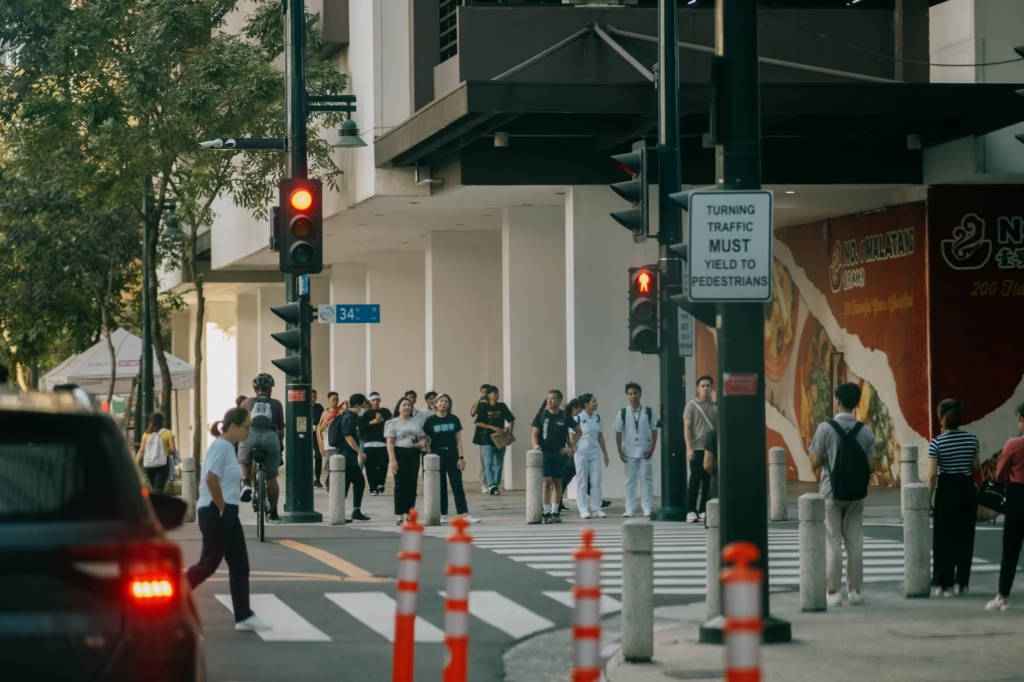
For left turns, the safest position is the one that matches your intended path early. If traffic conditions allow, look over your shoulder, signal, and merge one lane at a time into the appropriate left-turn position. If the street is fast, multilane, or simply beyond your comfort level, Oregon’s manual describes a two-stage left turn as a practical alternative: go straight through, stop, reorient, and cross on the next signal rather than forcing a late diagonal move. (oregon.gov)
Local rules still matter. NHTSA advises riders to check whether sidewalk riding is legal if they must use it, and state manuals spell out when a rider may need to stay in or leave a bike lane. If local law conflicts with general advice, follow the law and choose a slower or less complex route when possible. (nhtsa.gov)
In busy city traffic, the safest position is the one that makes your path obvious before the conflict starts: far enough left to be seen, straight enough to be predictable, and flexible enough to change before a parked car, a right hook, or a squeeze point turns into an emergency. If a street constantly forces last-second decisions, the safer answer may be route choice, not better bravery. (nhtsa.gov)
References
- National Highway Traffic Safety Administration, Bicycle Safety – https://www.nhtsa.gov/road-safety/bicycle-safety
- Oregon Department of Transportation, Oregon Bicyclist Manual: Section 4 – Defensive Riding Strategies – https://www.oregon.gov/odot/DMV/Pages/Online_Bicycle_Manual/Section_4.aspx
- Oregon Department of Transportation, Oregon Bicyclist Manual: Section 5 – Rules of the Road – https://www.oregon.gov/odot/dmv/pages/online_bicycle_manual/section_5.aspx
- New York City Department of Transportation, The Official Guide to Bike Smart NYC – https://www.nyc.gov/html/dot/downloads/pdf/dot_bikesmart_brochure.pdf