
Door zones are dangerous partly because they do not look dramatic. Riders are taught to watch moving traffic, turning cars, and intersections. Parked cars feel predictable by comparison. But on many city streets, the curb lane is not passive space at all. It is a strip of hidden motion where drivers, passengers, delivery workers, and rideshare customers can suddenly swing a door into a rider’s path. Federal data also shows that most bicyclist fatalities occur in urban areas and that a majority happen at non-intersection locations, which is a useful reminder that midblock hazards deserve serious attention too. (nhtsa.gov)
- A painted bike lane is not automatically outside the danger area. On streets with parallel parking, U.S. guidance and bikeway design standards place riders outside the full door swing, not tight against parked cars. (mutcd.fhwa.dot.gov)
- Door zones are overlooked because the threat comes from a stationary object that becomes a moving hazard at the last second, and many low-severity crashes and near misses never show up clearly in police data. (nhtsa.gov)
- High-turnover curb space, including deliveries and pickup-dropoff activity, can make door risk much worse than a quiet residential parking lane. (nacto.org)
- A practical rule for riders is simple: if a fully opened car door could reach your line, you are too far right. (nacto.org)
The hazard is not the parked car. It is the human action beside it.
A door zone is the space a car door can occupy when it opens into the roadway. That sounds obvious, but the consequences are easy to miss when the street itself suggests the opposite. The MUTCD says shared lane markings on streets with parallel parking should be placed at least 11 feet from the curb, specifically to reduce the chance of a bicyclist hitting an open door. NACTO’s urban bikeway guidance similarly calls for a 3-foot parking buffer to accommodate the full door swing and reduce injurious doorings. State rider guidance in places such as Pennsylvania and Wisconsin also tells cyclists to stay roughly 3 to 4 feet away from parked vehicles. The consistent message across these sources is that safe positioning is based on geometry, not on where paint happens to be striped. (mutcd.fhwa.dot.gov)
This is one reason door zones remain so underestimated. A rider can be doing something that feels compliant, even conscientious, by staying inside a narrow bike lane next to parked cars, while still occupying a space that transportation guidance explicitly tries to move cyclists out of. In other words, the visual cue on the pavement can conflict with the actual operating space a cyclist needs. (mutcd.fhwa.dot.gov)
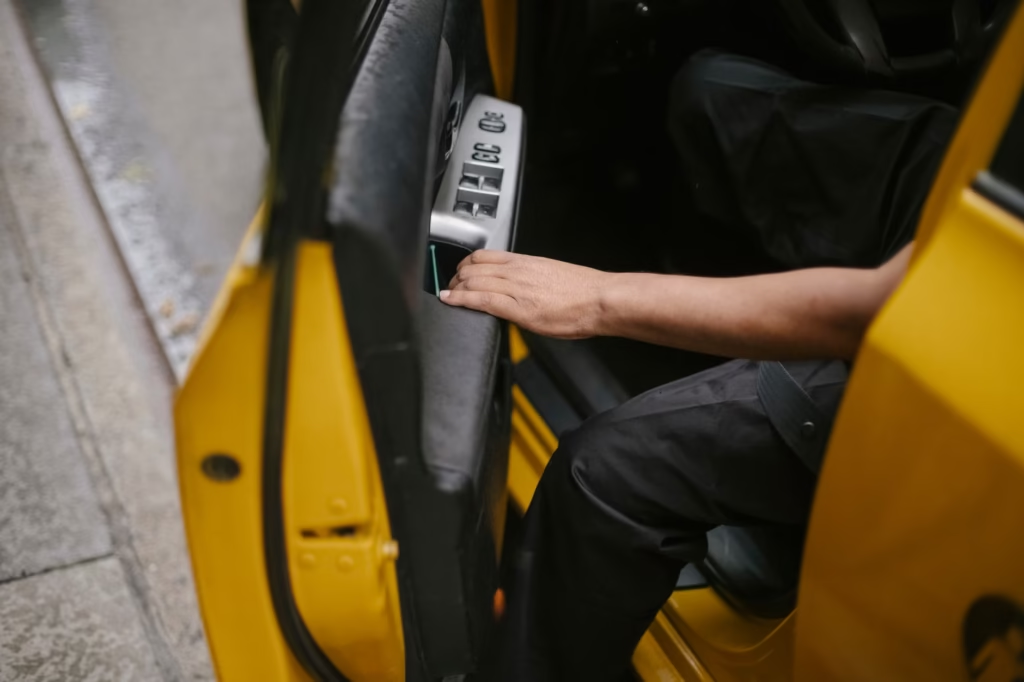
Why door-zone crashes feel smaller than they really are
A dooring is often framed as a low-speed curbside incident, which makes it sound less serious than a turn conflict or an overtaking crash. That framing misses two things. First, cyclists are physically exposed in any roadway crash. NHTSA notes that bicyclists do not have the occupant protection found in passenger vehicles. Second, the first contact is not always the whole event. A rider who strikes or swerves around a suddenly opened door can lose control and enter the adjacent travel lane. That second movement is why door zones deserve more respect than their seemingly ordinary setting suggests. The severity point here is partly an inference from crash mechanics, but it is consistent with how transportation agencies treat doorings in design guidance. (nhtsa.gov)
Consider a hypothetical example. A commuter is descending a moderate city block in a painted lane that runs between parked cars and moving traffic. The rider is not weaving, distracted, or riding recklessly. A passenger in a recently stopped rideshare opens the rear door. The cyclist now has fractions of a second to choose between hard braking, clipping the door, or swerving left into traffic. None of those are good options. That is what makes door zones so nasty: they compress decision time and remove escape space at the exact moment the rider needs both.
The problem is often undercounted before it is solved
Door zones are also overlooked because the data can understate them. NHTSA says bicyclist crashes tend to be underreported, especially when police are not called, and notes that near misses can reveal risky patterns that crash data alone misses. Boston’s 2013 cyclist safety report offers a useful city example of why broader surveillance matters: Boston EMS identified 1,700 confirmed cyclist incidents from 2009 through 2012 and counted 123 bike-versus-vehicle-door incidents, or 7.2% of those EMS encounters. The same report also explains that earlier coding practices and later reporting changes affected what was captured, which is a good illustration of how these crashes can hide inside larger categories or incomplete records. (nhtsa.gov)
That matters because perception follows visibility. If a hazard generates lots of near misses, minor injuries, unreported falls, or crashes coded in inconsistent ways, it can seem less important than hazards that produce cleaner official numbers. Riders still feel it, though. Many people who cycle in cities learn to fear parked cars long before they can explain the problem in engineering language. (nhtsa.gov)
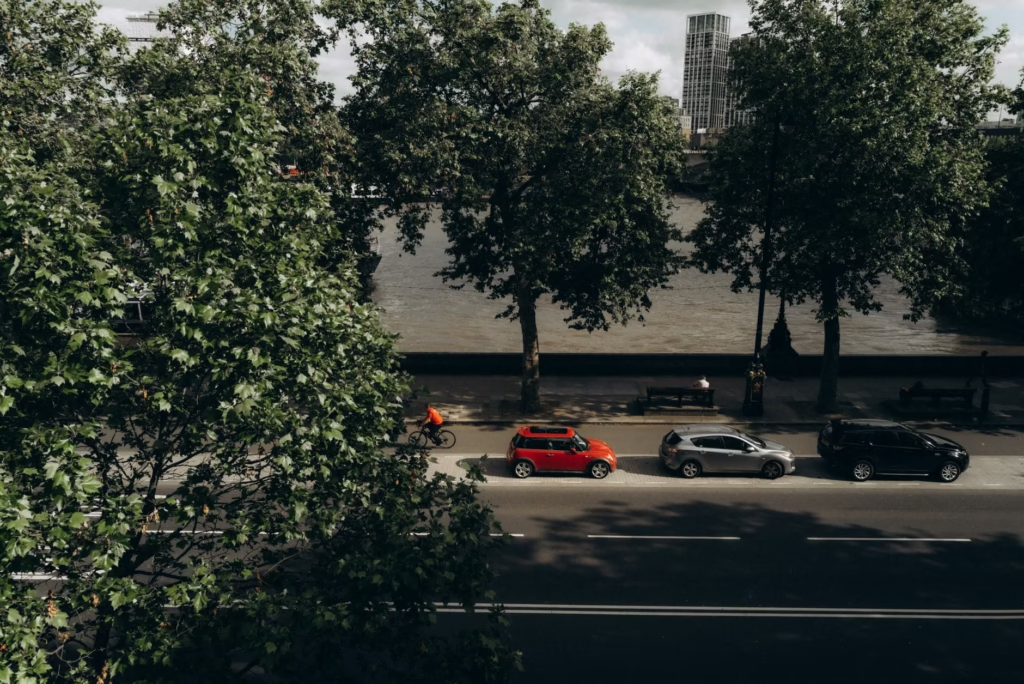
A practical way to read the curb: the Reach, Occupancy, Escape check
Most riders do not need a complicated framework in the moment. They need a quick way to decide whether the curbside space ahead is calm, risky, or actively unstable. A useful method is the Reach, Occupancy, Escape check. It is not an official industry standard. It is a practical editorial tool built from the way agencies describe door-zone geometry, curbside activity, and rider positioning. (nacto.org)
- Reach: Ask whether a fully opened door from the widest parked vehicle on the block could reach your handlebar, shoulder, or front wheel. If the answer is yes, you are still in the door zone. Guidance from NACTO and state rider materials points riders farther left than many painted curbside lanes imply. (nacto.org)
- Occupancy: Look for clues that a person may exit soon. Brake lights, a recently parked car, a driver sitting upright, rideshare pickup activity, people in the back seat, a trunk opening, or a delivery stop all raise the chance that a door will move into your path. High-turnover curbside activity is explicitly treated as a design and management issue in NACTO guidance because it increases conflicts. (nacto.org)
- Escape: Before you reach the risky vehicle, know what space exists to your left and how you would use it. A rider who checks over the shoulder early and establishes a stable line has better options than a rider trapped between parked cars and moving traffic at the last second. This is a practical riding recommendation, but it aligns with federal and design guidance that tries to move cyclists away from door conflicts rather than asking for late evasive maneuvers. (mutcd.fhwa.dot.gov)
| Street condition | Door risk | Safer operating line | Main tradeoff |
|---|---|---|---|
| Painted bike lane tight against parked cars | High | Ride on the left side of the lane or farther left if needed to clear full door swing | Some drivers may try to squeeze by if position changes are hesitant instead of deliberate. (mutcd.fhwa.dot.gov) |
| Quiet residential block with low parking turnover | Moderate | Maintain a steady line outside likely door reach rather than hugging the curb | You gain door clearance but may feel closer to moving traffic. (wisconsindot.gov) |
| Commercial curb with deliveries or rideshare pickup | Very high | Slow down, scan occupied vehicles, and merge earlier | Progress may be slower, but surprise exits are more likely here. (nacto.org) |
| Parking-protected bike lane with a real buffer | Lower door risk | Stay in the rideable bike space and watch for crossings into the lane | Door risk drops, but intersection, driveway, and curb-access conflicts still matter. (nacto.org) |
| Downhill stretch beside parked cars | Elevated | Move farther left sooner and moderate speed before the risky block | Less reaction time means positioning mistakes become harder to fix. (nhtsa.gov) |
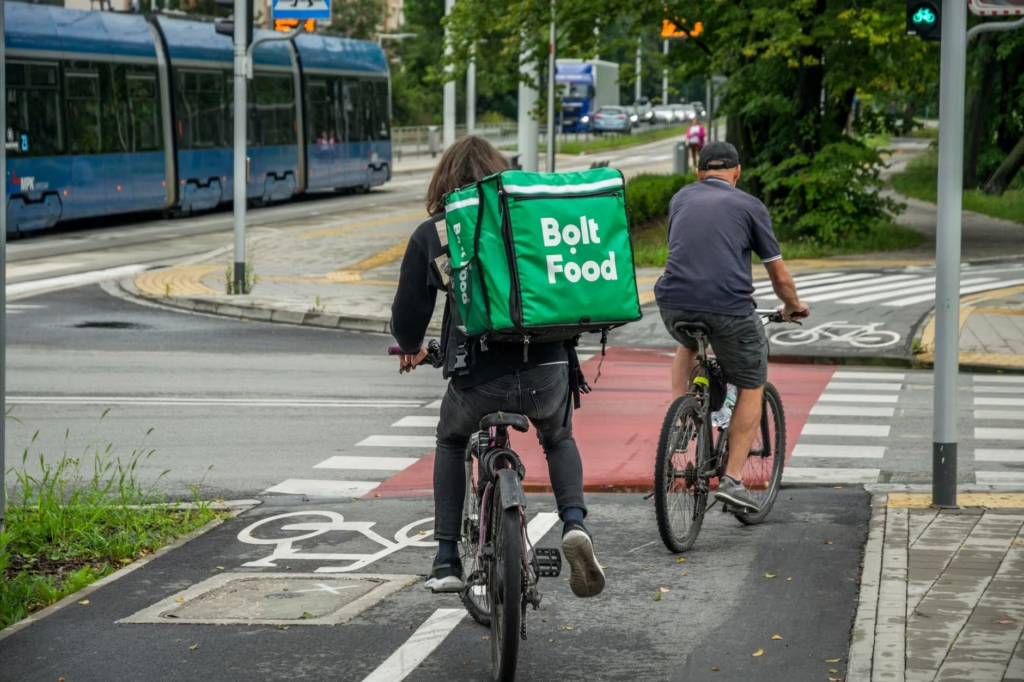
The important takeaway is that the safest line often feels farther left than a novice city rider expects. That is not aggressive riding. It is often the line the street geometry demands. The mistake is treating the bike symbol or white stripe as a command to stay inside a door’s reach. (mutcd.fhwa.dot.gov)
How to ride a door-zone block without turning every parked car into a panic moment
- Look one or two parked vehicles ahead, not just at the car beside you. The useful question is what the block is about to do, not what the last door did.
- Set your position before you reach the risky car. A calm early move left is usually safer than a sudden swerve after a door starts opening.
- On faster approaches or slight descents, scrub speed before the tightest curbside activity. Less speed means more time to brake and less violent contact if something goes wrong.
- Read the parked cars for human cues: interior movement, illuminated brake lights, a rideshare stop, delivery activity, or a rear passenger shifting toward the curb.
- Keep your escape plan to the left by checking behind early. Waiting until the emergency is underway is what creates the feeling of being pinned.
- Do not dive back toward the curb after clearing one vehicle if the next parked car immediately recreates the same hazard.
A bike lane stripe is guidance, not armor. If the marked space places a rider inside full door swing, the safer line is the one that preserves clearance and escape space, subject to local traffic rules and conditions. (mutcd.fhwa.dot.gov)
Why infrastructure matters more than personal vigilance alone
Cyclist skill helps, but door zones are not just a behavior problem. They are a street design and curb-management problem too. NACTO says a 3-foot parking buffer is needed to clear the full door swing in parking-protected or buffered designs. Its guidance on constrained bike lanes also says parking buffers should be 3 feet wide and notes that curbside activity can make conventional painted lanes unusable. FHWA material on shared lane markings likewise recognizes that cyclists need positioning away from parked-car doors rather than right next to them. (nacto.org)
That does not mean every protected lane is perfect. It means the better designs address the actual mechanism of dooring instead of asking every rider to solve it alone in real time. A parking-protected lane with enough buffer can reduce door risk substantially, but the conflicts may shift to crossings, turning movements, driveways, loading zones, and points where people step across the bike space. Good cycling infrastructure manages those conflicts explicitly instead of pretending they do not exist. (nacto.org)
Common mistakes that make door zones worse
- Treating the painted bike lane as the safest part of the street even when it runs inside door reach. (nacto.org)
- Watching only the driver’s seat and forgetting that rear passengers, taxi riders, and rideshare customers can create the same conflict.
- Riding too fast beside parked cars, especially downhill or on an e-bike, where reduced reaction time matters more than confidence.
- Merging left only after a risky car appears occupied, instead of establishing space before the conflict zone.
- Drifting back toward the curb between every parked car, which creates repeated re-entry into danger rather than one stable line.
- Assuming residential-looking blocks are automatically safe even when curb turnover spikes near shops, schools, hotels, or pickup zones. (nacto.org)
Drivers, passengers, and cities all have a role here
Cyclists are not the only people who can reduce door-zone crashes. People exiting vehicles can help by checking for bikes before opening a door, and transportation agencies increasingly promote the Dutch Reach, which uses the far hand to open the door so the body naturally turns and the eyes are more likely to scan for someone approaching. The Metropolitan Transportation Commission promotes this method specifically as a way to prevent doorings. (mtc.ca.gov)
Cities also need better data and better curb design. NHTSA notes that crash, exposure, and contextual data are all necessary for a full picture of bicyclist safety, and that hospital or EMS records can reveal incidents police data misses. Boston’s cyclist safety report is a good local example of why that broader lens matters. If officials only count the cleanly police-coded crashes, they will keep underestimating how much danger is built into routine curbside conditions. (nhtsa.gov)
Door zones are overlooked not because they are rare or trivial, but because they sit at the intersection of bad visual cues, imperfect data, and ordinary city behavior. The next practical step for any rider is simple: stop judging curbside space by paint alone. Judge it by door reach, human activity, and your escape space. That shift in thinking will not eliminate every risk, but it is one of the clearest ways to ride city streets more realistically. (nacto.org)
FAQ
How far from parked cars should a cyclist ride?
Practical rider guidance commonly recommends about 3 to 4 feet of clearance from parked vehicles, but the right answer depends on vehicle size, speed, and whether a full door could still reach the rider’s line. If the door could reach you, move farther left. (pa.gov)
Are protected bike lanes automatically free of door-zone risk?
No. A well-designed parking-protected lane with enough buffer reduces door risk, but it can still have conflicts where people cross the bike space or where driveways and intersections interrupt the design. NACTO calls for a 3-foot parking buffer to clear the full swing of a car door. (nacto.org)
If door zones are so risky, why do some bike lanes still sit next to parking?
Street width, legacy striping, parking demand, and incremental network buildout all play a role. NACTO notes that constrained bike lanes were historically a default treatment in many jurisdictions, while their limitations are now more broadly recognized. (nacto.org)
Does the Dutch Reach actually help?
It is a simple preventive habit, not a complete safety system. But agencies promote it because using the far hand to open the door naturally rotates the torso and encourages a look behind before the door swings into traffic. (mtc.ca.gov)
References
- NHTSA: Bicycle Safety overview – https://www.nhtsa.gov/book/countermeasures-that-work/bicycle-safety
- NHTSA: Bicycle safety data and surveillance – https://www.nhtsa.gov/book/countermeasures-that-work/bicycle-safety/data-surveillance
- FHWA MUTCD Chapter 9C: Shared Lane Marking guidance – https://mutcd.fhwa.dot.gov/htm/2009/part9/part9c.htm
- FHWA: Evaluation of Shared Lane Markings – https://www.fhwa.dot.gov/publications/research/safety/pedbike/10044/index.cfm
- NACTO: Separating Protected Bike Lanes – https://nacto.org/publication/urban-bikeway-design-guide/designing-bikeways-for-all-ages-and-abilities/protected-bike-lanes/separating-protected-bike-lanes/
- NACTO: Constrained Bike Lanes – https://nacto.org/publication/urban-bikeway-design-guide/designing-bikeways-for-all-ages-and-abilities/bikeways-on-low-speed-low-volume-streets/constrained-bike-lanes/
- Boston Cyclist Safety Report 2013: EMS crash analysis – https://www.cityofboston.gov/images_documents/Crash%20Report%202013%20FINAL%20reduced%202_tcm3-38304.pdf
- PennDOT: Bicycle safety and Pennsylvania laws – https://www.pa.gov/agencies/penndot/traveling-in-pa/riding-a-bike/bicycle-safety-and-pennsylvania-laws
- Wisconsin DOT: Rules for riding bicycles on the road – https://wisconsindot.gov/Pages/safety/education/bike/rules.aspx
- Metropolitan Transportation Commission: Prevent doorings with the Dutch Reach – https://mtc.ca.gov/news/prevent-doorings-dutch-reach