
- A bike commute works when it is safe enough, simple enough, and repeatable enough for a normal weekday, not just a sunny weekend ride.
- Score the trip before you buy more gear. Route stress, ugly intersections, parking, and bailout options matter more than shaving one mile off the map.
- Favor lower-stress streets and protected lanes over the shortest line. The calmer route is often the cheaper route because you actually keep using it.
- Build around failure points: rain, flats, theft risk, dark rides home, and the days when work runs late.
- Run a two-week pilot and track time, stress, and backup spending before you call the system finished.
A bike commute only saves money if it survives ordinary life. That means rushed mornings, office clothes, laptop weight, weather swings, and streets that look acceptable on a map but feel awful at 8:15 a.m. The goal is not to become fearless. The goal is to build a system you can repeat without drama.
That is why the right question is not, Can I bike to work? It is, What would make this commute stick for the next three months? NHTSA reports that 1,103 bicyclists were killed in traffic crashes in 2024, and its guidance tells riders to choose routes with less traffic and slower speeds rather than assuming the most direct street is good enough. (nhtsa.gov)
Use the RIDE Test before you commit
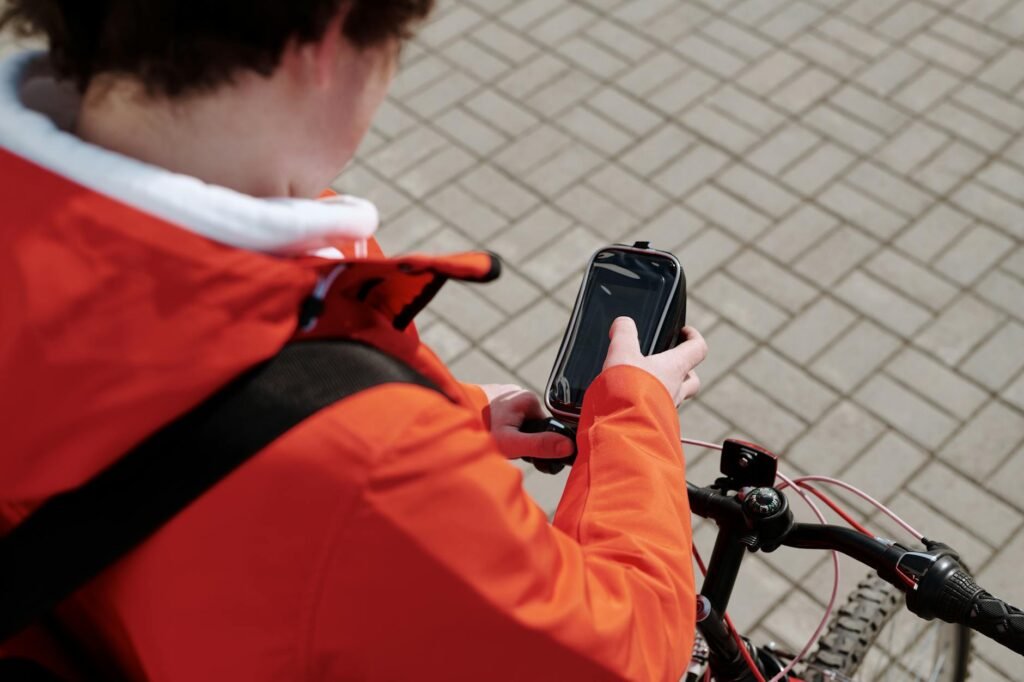
Score the commute before buying accessories or committing to a 5-day-a-week routine. The RIDE test is a quick way to rate your weekday readiness. Give every category a score of 1-5 and be honest. A commute is only considered worthwhile if you can use it on a boring Wednesday and not just when you are motivated to use it.
| Factor | Score 1 | Score 3 | Score 5 |
|---|---|---|---|
| R: Route stress | You are forced onto fast multi-lane streets or door-zone bike lanes for a meaningful part of the trip. | The route has some calm segments, but one or two sections still feel exposed or chaotic. | Most of the ride uses protected lanes, neighborhood streets, slow streets, or paths. |
| I: Intersections | Several major turns, slip lanes, or driveway-heavy crossings feel rushed or confusing. | A few big crossings need attention, but you can approach them predictably. | Most intersections are low-speed, signalized, or easy to read from a distance. |
| D: Destination friction | No secure parking, no clear clothing plan, and no easy landing routine at work. | One part of arrival is solved, but another is still annoying enough to make you skip rides. | Parking, clothes, shoes, and basic cleanup are handled without daily improvisation. |
| E: Escape hatches | A flat, rainstorm, or late meeting leaves you stranded. | You have one backup option, but it is slow, expensive, or awkward. | You have at least one realistic bailout plan for weather, fatigue, darkness, or overtime. |
First, total the score. Four through eight means to repair the route before using it again. A score of nine through thirteen means you could use this route as a leader only once a week. Scores of fourteen through seventeen are usually okay for leading a pack together regularly. Eighteen to twenty means that the route should be very strong. A good rule of thumb is that if a route is seven or eight minutes longer but your score improves by four or more points, you should probably use the longer route in real life, as you are likely to continue using it.
Tip: Do not interpret fear as a character flaw. Treat it as route data. If one segment keeps making you tense, the route still needs work.
Choose the route that lowers traffic stress, not just mileage
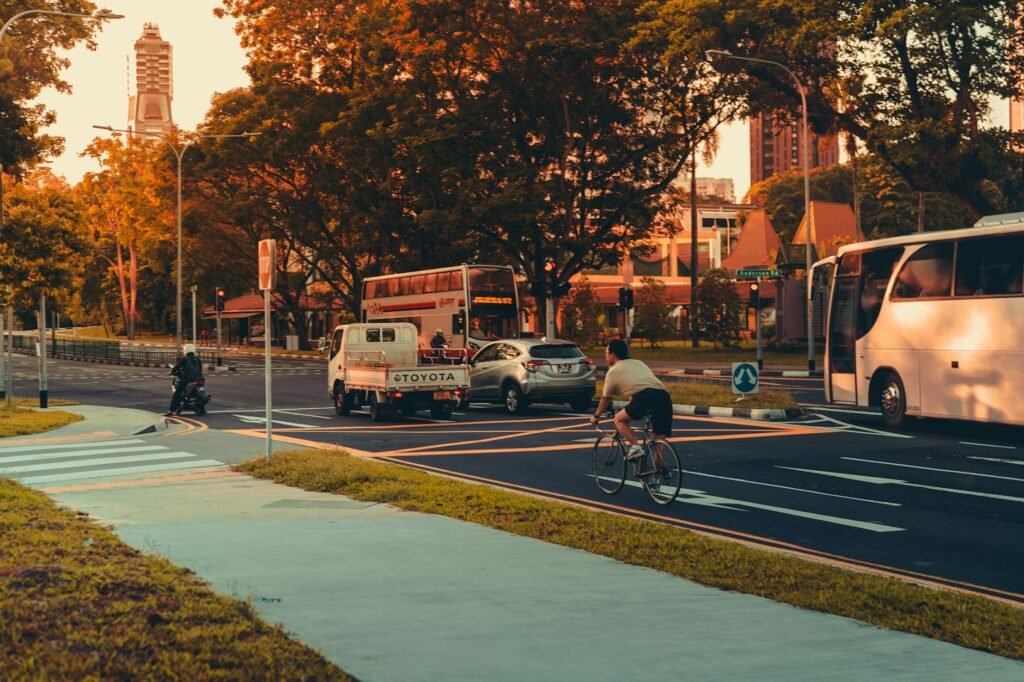
Maps reward straight lines. Commuters should reward separation. NHTSA advises choosing routes with less traffic and slower speeds, and FHWA says separated bike lanes are recommended on higher-speed, higher-volume roads such as arterials. FHWA also notes that many fatal and serious bicyclist crashes happen away from intersections and that nearly one-third occur when motorists overtake bicyclists. (nhtsa.gov)
| Route type | Usually workable for daily commuting? | Why it can work | What should make you reconsider |
|---|---|---|---|
| Protected lane or greenway with a few busy crossings | Yes | Lower overtaking stress and a clearer travel line. | One major intersection that forces rushed merges or blind right turns. |
| Quiet residential grid or slow street | Often | Lower speeds usually matter more than perfect directness. | Frequent cut-through drivers, poor pavement, or confusing crossings. |
| Painted bike lane next to parked cars | Sometimes | Can be fine as a short connector if traffic speed is moderate. | Door zone, buses, trucks, or repeated right-turn conflicts. |
| Multi-lane arterial at 35 mph or more | Usually no for a routine beginner commute | It may be direct, but direct is not the same as sustainable. | You dread one section every morning or feel pressure from overtaking traffic. |
| Sidewalk as the main route | Rarely | Only as a short, legal workaround in a very low-conflict area. | Driveways, turning traffic, pedestrians, or abrupt sidewalk endings. |
One practical reset: stop asking which route is shortest and ask which route lets you hold a steady line without repeated panic braking. The ugly part of many city rides is not the middle mile. It is the turning conflict at intersections and driveways. NHTSA’s cycling skills guide says most car-bike collisions happen there when motorists or bicyclists are turning. If your route includes two or three nasty junctions, that is a design problem, not a bravery problem. (nhtsa.gov)
Buy for reliability first
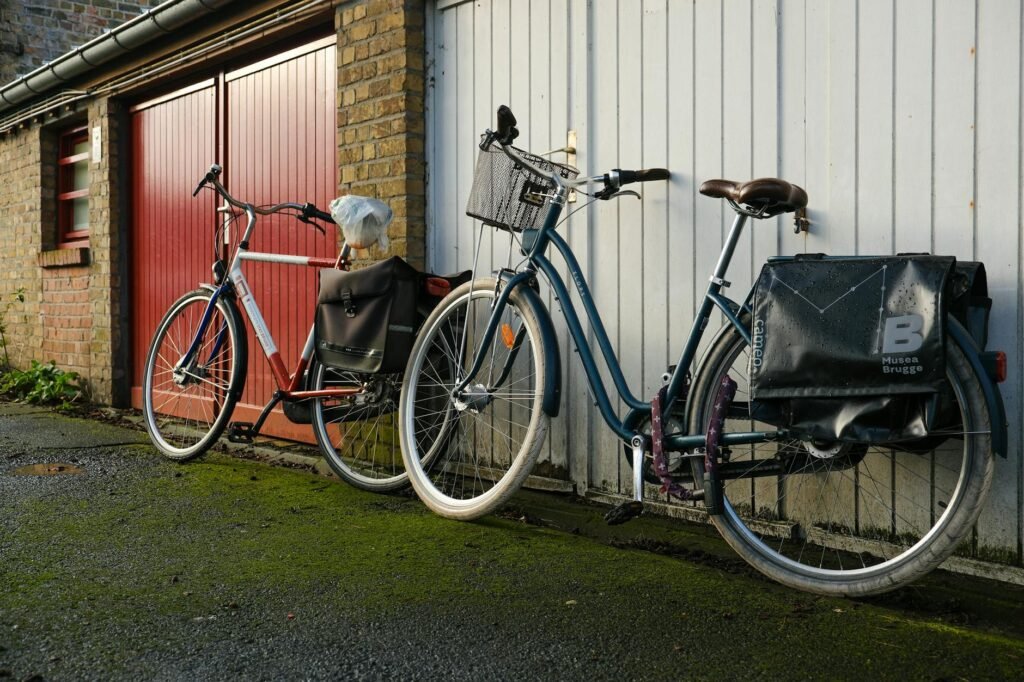
For commuting, reliability beats performance. A bike that fits, works, and stops well is more useful than a faster bike that stays in the hallway because you do not trust it in traffic. NHTSA advises riding a bike that fits you and works properly, using a white front light and red rear visibility gear when visibility is poor, carrying items securely, and riding predictably with traffic. (nhtsa.gov)
- Start with the nonnegotiables: a properly fitted helmet, working brakes, and tires you trust.
- Buy front and rear lights early, then put charging on your calendar instead of relying on memory.
- Solve carry comfort before you solve speed. A rack bag or stable backpack setup is often worth more than a lighter component.
- Match the lock to your parking reality, not your wishful thinking. If work parking is weak, fix that before you spend on other upgrades.
- Keep a flat kit, mini pump, and spare tube on the bike. Small failures should not turn into taxi rides.
- Delay niche upgrades until the route proves itself. If you have not solved parking and route stress, fancy gear will not save the commute.
Consider a realistic example. Jamie works onsite three days a week and lives 6.2 miles from the office. The direct drive route is 24 minutes. The calmer bike route is 31 minutes and scores 15 on the RIDE Test instead of 8. Jamie buys a $110 lock, a $50 light set, $45 fenders, a $70 rack bag, and a $25 spare-tube kit, using an older hybrid that already fits well. Total setup cost is $300. Parking had been $18 a day, or about $216 a month for 12 office days, plus roughly $24 a month in fuel for work trips. Even after setting aside $36 a month for a couple of rain-day train rides, the setup pays back in roughly six weeks. The money matters, but the bigger reason it works is that the calmer route is usable often enough to replace real car days.
Run a two-week pilot, not a heroic launch
NHTSA advises riders to build skills away from traffic first, and both NHTSA and the League of American Bicyclists emphasize riding with the flow of traffic and using predictable movements. A two-week pilot shows you where the system still breaks before you try to make it your identity. (nhtsa.gov)
- Map a primary route and a calmer backup route. Do not depend on a single corridor.
- Ride the route once on a weekend or off-peak morning so you can learn the lane changes, bus stops, potholes, driveway clusters, and railroad tracks without commuter pressure.
- Do one full dress rehearsal with work clothes, laptop, lock, lights, and whatever you plan to carry every day.
- Start with one or two workdays a week. If the system still feels solid after two weeks, then add frequency.
- Write down where time disappears: elevator waits, bike room access, changing clothes, or the one intersection you keep dreading.
- Fix one friction point each week. Most commuting failures are not dramatic. They are boring and solvable.
Reduce arrival friction so the ride survives real workdays
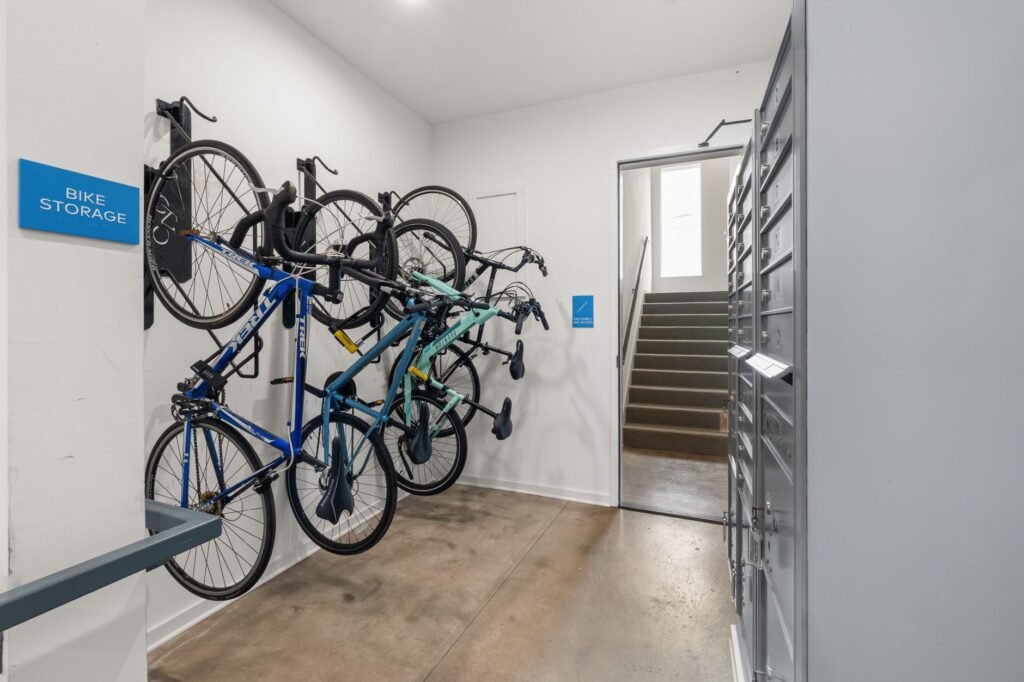
Many people who commute by a bicycle experience failure on arrival rather than during their trip. If you arrive to your destination and you see that the bike rack looks questionable, or your clothing is sweaty from riding, or you cannot find an appropriate shoe to wear to work because you keep them in your backpack, then the system will have an expensive feel in another way. The solution to this issue is a very simple routine when you arrive at work: parking your bicycle securely; bringing a small “office kit”; having a predetermined response for sweaty, wet, and unexpected meetings.
- Leave shoes, belt, and basic toiletries at work if your office setup allows it.
- Keep a backup phone charger, deodorant, and a small towel in a drawer or locker.
- Pack clothes in a compact waterproof pouch instead of carrying them loose in a backpack.
- If theft risk is high, ask about indoor parking or a monitored bike room before assuming the outdoor rack is fine.
- If you arrive too hot, slow the final mile. A calmer finish is usually cheaper than buying more clothing to solve a pacing problem.
What usually makes people quit
- Choosing the fastest car route. The direct arterial may look efficient on a map, but overtaking stress and fast-turning traffic can make the ride mentally expensive enough that you start skipping it. (highways.fhwa.dot.gov)
- Using the sidewalk as the default fix. NHTSA warns that drivers do not expect faster bicycle traffic on sidewalks, especially at driveways and turns, and the agency says to avoid or minimize sidewalk riding. (nhtsa.gov)
- Starting at full frequency. Five days a week is not a plan. It is a stress test.
- Carrying too much on your back. A heavy load turns a manageable ride into a sweaty, resentful one.
- Treating lights like night-only gear. Visibility matters in rain, dusk, winter, and low-contrast conditions, not just after dark. (nhtsa.gov)
- Having no bailout budget. A workable commute should survive the occasional train, bus, or rideshare ride home without feeling like failure.
When the obvious plan still is not the right plan
Sometimes the honest answer is that a full bike commute is not the best first move. If the only direct corridor is a high-speed arterial, if you have a school drop-off in the middle of the trip, or if your job requires surprise same-day site visits, forcing a pure bike plan can backfire. FHWA’s guidance is straightforward: higher-speed, higher-volume roads call for more separation. If your city has not built that yet, design around the gap instead of pretending it is fine. (highways.fhwa.dot.gov)
- Ride to transit and do only the calmer half of the trip.
- Drive or take transit past the worst corridor, then bike the final 2 to 4 miles.
- Protect one or two bike days on your calendar instead of forcing every office day to work the same way.
- Consider an e-bike if the main obstacle is hills, wind, or arriving in work clothes, but check local rules, charging options, and theft risk first.
- If secure parking is the real deal-breaker, solve parking before you spend on more accessories.
The point is not purity. It is replacement. Two dependable bike days a week usually do more for your budget than a grand daily plan that collapses after three anxious rides.
Pressure-test the system every month
After getting started with your bike, you should keep a record of your bike travels as though you would run an audit on all of your household systems. If using a bike for your commute does not save time, money, or pain anymore, it is the time to change it. A bike commute should be adaptable enough to work around seasonal changes in weather, changes in work schedules, and minor repairs.
- Track actual door-to-desk time for 10 rides, not your optimistic memory.
- Count bailout trips and note why they happened: rain, flat, overtime, fatigue, unsafe darkness, or a route segment that still feels hostile.
- Review monthly commute spending: parking avoided, transit used, maintenance, and any ride-hail leaks.
- Put batteries, brake checks, tire pressure, and lock wear on a calendar reminder.
- If one intersection keeps generating close calls, reroute around it. Turning conflicts are a known problem area, and repeated stress is a signal to redesign the trip. (nhtsa.gov)
Bottom line
The city bike commute will help you continue riding your bike indefinitely one time you start doing city hauls by bike. Choose to ride a low-key route to lessen stress; have solid parking and outfit options prior to thinking about purchasing equipment from niche cycling vendors; always have money set aside for when you need to bail or change plans; and continue testing your city commute setup until it becomes boring in the best way possible. Unless you want to give a mixed modal commute a try, it probably won’t work out if you are dependent upon using one road section to bike to your destination but just hate that segment of road!
FAQ
How far is too far for a first city bike commute?
A cutoff does not exist. For beginners, route stress is usually of greater importance than distance. A trip of 3 miles on an unforgiving arterial may be perceived as being more difficult than a trip of 7 miles on safe lanes and streets. When determining if distance is, in fact, a problem for you as a cyclist, first use the RIDE Test to evaluate your route and then attempt to ride that route one day weekly for an entire month and see how it feels compared to the distance you think is the real issue with your route.
Should I ride on the sidewalk if traffic feels aggressive?
Usually not as your default plan. NHTSA says to avoid or minimize sidewalk riding because drivers are not expecting faster bicycle traffic there, especially at driveways and turns. If local law allows sidewalk riding and you use it briefly, slow down and treat every driveway and crossing as a conflict point. (nhtsa.gov)
Do I need special clothes or a shower at work?
Not quite. Many people use typical working clothes together with a slower last mile and a minimal office setup. If you are sweating, you will have to first reduce the weight of your backpack, move more slowly, and keep a new pair of shoes or another shirt at work to prevent you from breaking a sweat on the final mile. Only when those three changes are insufficient for you to stay dry or comfortable, you should consider buying any specialty clothing.
What if the safest route adds 10 minutes?
Don’t be too emotional about it, but take it seriously. If you can use the longer route three times per week because it has a greater sense of calmness than using the shorter route only to get to work once per week, then the longer route will be a better commute on paper; however, adhering to it will determine which is better over time.
Is an e-bike worth it for city commuting?
E-bikes have the ability to make longer rides easier, hills less of a challenge, and allow you to ride in work clothes. They are especially helpful if your primary concerns are time or energy, but they don’t get you any closer to your destination if the biggest challenge in getting there is that you have to ride through a dangerous area or can’t park securely. Check the local rules about the use of e-bikes, how to charge the e-bike, and how likely your e-bike will be stolen before making a purchase.
How much backup budget should I plan?
You will not break your plan with only one hurricane, thunderstorm, or late meeting. A good guideline is two (2) backup trips a month to budget for and have. If you don’t utilize them, terrific; however, if you are using more than two per month, then your route, schedule, or equipment needs adjustment.
References
- NHTSA Bicycle Safety: Bike Safety Tips for Kids and Adults – https://www.nhtsa.gov/road-safety/bicycle-safety
- NHTSA Cycling Skills Clinic Guide – https://www.nhtsa.gov/document/cycling-skills-clinic-guide
- FHWA Bicycle Lanes – https://highways.fhwa.dot.gov/safety/proven-safety-countermeasures/bicycle-lanes
- League of American Bicyclists: Ride Better Tips – https://bikeleague.org/ridesmart/ride-better-tips/