
The bulk of unnecessary spending on e-bikes occurs due to the difference between the actual commutes and the perceived ones. If you want to use your e-bike for your daily 4-mile commute, with some stairs from your apartment to the street, stop and start while driving, and carried (at least) one bag of groceries, the e-bike that you use for this daily commute is very different than an e-bike for a 20-mile trip on the weekend or to take a child to school.
Regularly, urban bike consumers pay for faster speeds, upgraded suspension and batteries, etc. that they don’t use but when they use the bike on a daily basis the majority of their pain points are related to weight, limited storage, parking restrictions and the availability of charging stations. The top priority when purchasing* an urban bicycle should be finding an approximately priced option that suits your unique needs and also ensures that your usual route is as smooth as possible.
*Purchasing can include leasing, borrowing or any form of acquisition.
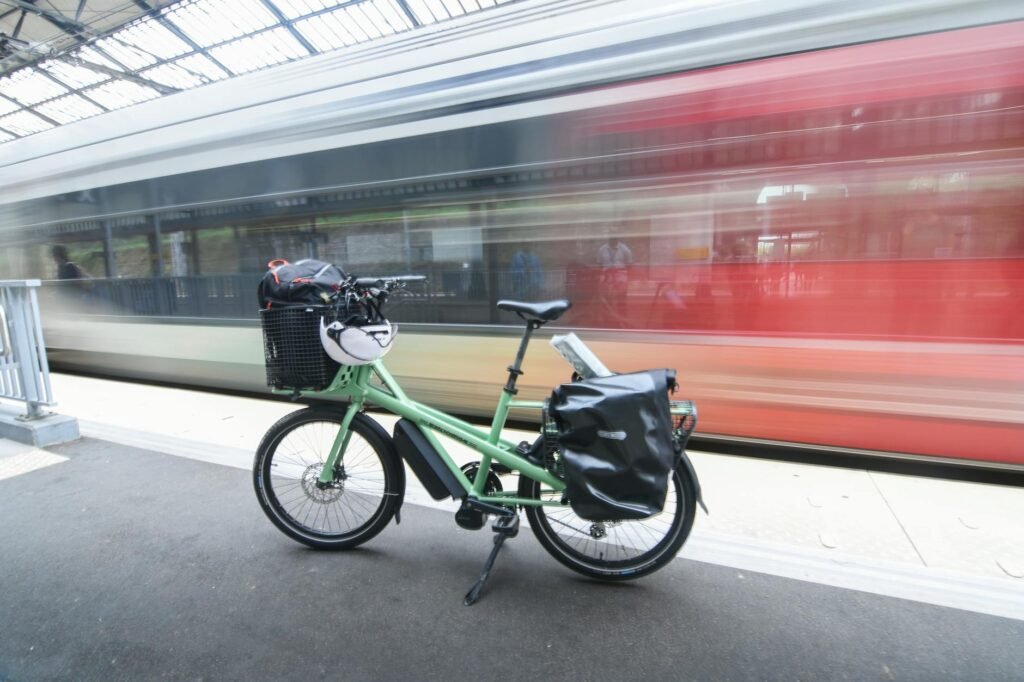
Use the City Need Scorecard before you shop
Before you do any comparisons between classes, motors, or battery size, you will have to first find out exactly how far your commute is. You need to keep it very basic and be honest with yourself. For each of these categories, write down a score anywhere from 0 – 2, where a zero represents low need, one represents medium or average need, and finally two represents high need.
| Category | 0 | 1 | 2 |
|---|---|---|---|
| Distance | Short daily trips | Moderate commute length | Long regular rides where range matters |
| Hills | Mostly flat | Some bridges or moderate climbs | Sustained steep hills |
| Cargo | Light bag or laptop | Regular groceries or work gear | Child seat, heavy cargo, or frequent large loads |
| Stairs and storage | Ground-floor storage | Occasional lifting or tight storage | Daily stairs, train transfers, or awkward storage |
| Parking and rules | Secure parking and simple route access | Some concern about theft or access rules | High theft risk, limited parking, or strict route rules |
A lighter commuting bicycle will usually make more sense than a heavier/faster option if you have low scores on hills, cargo, and distance but high scores on stairs or storage. Conversely, you would likely justify spending extra on stronger components if you have high scores on either hills or cargo. The scorecard does not make the decision for you, but puts your decision in the context of how you actually use the bike on a day-to-day basis vs. what you want to do with it (wish list).

A realistic budget example
Maya, a composite buyer, lives in Chicago. Her commute is 5 miles round trip with mostly flat terrain and one bridge. Maya resides in a walk-up apartment on the second floor, she can charge her electric bicycle at work, takes a laptop and groceries back and forth once per week and uses her electric bicycle to complete those tasks.
To measure the impact of Maya’s commuting distance, hills, cargo, stairs, and parking and rules on her ability to adopt an electric bicycle for commuting, the following scores were calculated: Distance – 1, Hills – 1, Cargo – 1, Stairs – 2, and Parking and Rules – 1.
She compares a 48-pound Class 1 commuter at $1,650 with lights, rack, and fenders against a 72-pound Class 3 bike at $3,100 with suspension and a much larger battery. The expensive bike looks better on paper, but it adds about $1,450 upfront and 24 extra pounds she has to wrestle upstairs every day. For her, the lighter bike plus a strong lock, helmet, and rain gear is the more rational spend.
What actually earns its keep in city riding
City riding is stop-and-go. Unless your commute includes long uninterrupted stretches where higher assisted speed is both legal and genuinely useful, extra top speed often buys less real-world value than buyers expect. Under the common three-class model, Class 1 gives pedal assist to 20 mph, Class 2 adds a throttle to 20 mph, and Class 3 is pedal-assist to 28 mph. That does not mean Class 3 is wrong. It means you should buy it for a specific route, not because it sounds more serious. (calbike.org)
The weight of a bicycle, the ability to attach different accessory items and the ease of charging are generally more important in determining how quickly you will receive a return on your investment than the size of its specifications. A city rider may value having features such as built-in lights, full fenders, a strong rear rack, and a removable battery more than they do having suspension or having a battery that is large enough for recreational riding all day long.
Treat electrical safety as a buying feature, not a footnote. UL says UL 2849 evaluates the electrical drive system, battery system, and charger system together. The CPSC urges consumers to choose micromobility products certified to applicable standards, use only the charger provided or recommended by the manufacturer, and never charge while asleep or away from home. (ul.com)
When paying more is rational
It is obvious that there are a few situations in which extra investment will be justified: continued steep gradients; carrying children or heavy loads; having to deal with badly deteriorating surfaces causing fatigue; and long distances which make adding an extra charge before you complete your trip a major inconvenience. In these cases, the expense of upgrading the bike for improved stopping distance, better load carrying capabilities, the ability to carry loads safely and securely on the bike, and the ability to use the bike to replace some of your car trips could turn out to be less expensive in the long term than continuing to use the bike and making the trip as planned.
What usually does not pay is vague future-proofing. Buying for a maybe-someday use case often leaves you with extra cost and extra weight on every ordinary trip.
Common mistakes that turn a sensible purchase into overkill
- Buying for a fantasy commute instead of your actual one.
- Paying for a larger battery when home or work charging already covers your normal route.
- Ignoring bike weight even though you have stairs, cramped storage, or train transfers.
- Assuming faster is always better in dense traffic with frequent stops.
- Spending the whole budget on the bike and leaving too little for a lock, helmet, lights, rain gear, or setup costs.
- Treating safety certification and charger compatibility as afterthoughts.

If the first plan does not fit your route or your budget
In some cases, purchasing a less expensive option won’t help you achieve your goal; rather, you can find an alternative to purchasing that meets your requirements. A good example of this would be if you have frequent steep inclines, haul around a child and/or large amounts of groceries, and/or do not have the benefit of an available power source, then a heavier-duty commuter or cargo bicycle could be a wiser investment than trying to buy a less expensive bicycle.
If the problem is budget, look at last-year inventory, reputable used bikes sold through a local shop, or a lighter non-electric bike plus transit for bad-weather days. Be cautious about bargain conversion kits or mystery batteries unless the certification, charger compatibility, and service support are crystal clear. (ul.com)
How to pressure-test a bike before you pay
- Test-ride it on terrain that feels like your real commute, not just around the block.
- Lift or roll it through the kind of doorway, hallway, rack, or stair setup you actually deal with.
- Ask how and where the battery charges, how heavy it is to remove, and what replacement costs may look like.
- Check whether the included rack, fenders, and lights match the way you plan to use the bike.
- Confirm local rules for the class you are considering, especially if your route includes paths or trails with access restrictions.
- Ask direct questions about certification, service support, warranty handling, and parts availability.
How to verify the advice after purchase
- Use a 30-Day Reality Check. Track how many assist modes you actually use.
- Note how much battery is left after your ordinary round trip. If you routinely come home with a lot in reserve, your battery is probably sized fine or slightly larger than needed.
- Write down every time the bike feels too heavy: stairs, parking, flats, train transfers, or carrying it through your building.
- Watch trip replacement, not novelty. The right bike should start replacing car or ride-share trips without creating new charging or parking stress.
- If your electric bike has had issues when you received it, you need to be proactive about having the unit fixed within your warranty period. You should try to find another electric bike that meets your needs, is less powerful, and has a much greater range of use than the one you presently have. This alternative is likely to save you money in the long run.
Informational note: This article is general information, not legal advice. E-bike class, path access, helmet rules, and recall status can vary by state, city, and land manager, so verify current local rules and product notices before you buy. (peopleforbikes.org)
Bottom line
The fastest or most expensive e-Bike may not be right for you, when you consider your commute and all the other factors like stairs, cargo, parking spots and what you have to spend on an E-Bike. By choosing based on how much daily friction there will be with the E-Bike versus how far you hope to travel, you are likely to save money, as well as find an E-Bike that converts your bicycle into a true mode of transportation.
FAQ
Is a Class 3 e-bike worth it for a city commute?
A Class 3 can make sense if your route has long uninterrupted stretches where higher assisted speed is useful and legal. For dense downtown riding with frequent lights, a Class 1 or 2 often gives better value. Rules vary by state and local agency, so check before you buy. (calbike.org)
How much battery do I need for a 5-mile commute?
Depending upon your location from work or home to your final destination, either do not need the largest battery available on the market today that is new, your normal usage and then have a backup for winter or a detour because of inclement weather or as the battery gets older and has reduced capacity. If you’re in an upper floor location, purchasing a removable battery may be more important than purchasing one with greater capacity.
Should I buy from a local bike shop or online?
The savings you gain from purchasing online may not compensate for the additional costs of assembly and adjusting your e-bike to fit you, or dealing with warranties should something go wrong. If you’re just starting to ride an e-bike, need help fitting an E-Bike properly, or would like to have one location for all of your e-bike repairs and service, it may be worth your while to visit a local store.
How important is UL 2849?
It is one of the most useful safety questions you can ask. UL says UL 2849 evaluates the e-bike electrical drive train, battery, and charger system together, and the CPSC has urged consumers to use certified micromobility products and manufacturer-approved charging equipment. (ul.com)
What should I check before buying a used e-bike?
Ask for the serial number, original charger, battery age, service records, and proof that the model is not under a recall or safety warning. CPSC keeps recall and product safety warning pages that are worth checking before money changes hands. (cpsc.gov)
References
- 15 U.S. Code § 2085 – Low-speed electric bicycles
- PeopleForBikes: State by State Electric Bike Laws
- CalBike: What Is an E-Bike? A Guide to California E-Bike Classifications.
- CPSC warning on Unit Pack Power e-bike batteries
- UL Solutions: E-Bikes Certification, UL 2849
- CPSC Micromobility Information Center
- CPSC Recalls
- Consumer Reports: Best Electric Bike Buying Guide