
If you lock a $1,000 commuter bike with a cable through only the front wheel, you have not really secured it. You have mostly announced that the bike can be taken quickly. The cheapest way to reduce theft risk is not buying the single biggest lock on the shelf. It is matching four things every time: the lock, the rack, the parts that can be removed, and the length of the stop. Official guidance is remarkably consistent on the basics: use a U-lock as the primary lock, secure the frame and wheels to a real bike rack, and do not treat a cable alone as city protection. (transportation.stanford.edu)
That matters financially because bike theft is rarely just the bike. It can also mean replacing lights, bags, a display, a battery, and sometimes your commute plan for the week. And if you lean on insurance, deductibles and actual-cash-value coverage can still leave a meaningful out-of-pocket loss. (content.naic.org)
TL;DR
- Use a U-lock as your primary lock, not a cable alone, and lock the frame to a real bike rack. (transportation.stanford.edu)
- Treat the rack as part of the security system: tug it, avoid signposts and poles, and skip trees or railings. (nyc.gov)
- For longer city parking, plan for both wheels with a second lock or heavy secondary cable. (bikeindex.org)
- Remove lights, bags, displays, and detachable batteries every time. (utep.edu)
- If the stop is long or overnight, upgrade the parking choice, not just the lock. (nacto.org)
The real goal is friction, not perfection
On a city rack, absolute security is not the standard. Friction is. You want your bike to look slower, louder, and more annoying to steal than the easier option nearby. That usually means a real rack, a primary U-lock, both wheels accounted for, removable accessories off the bike, and no assumption that foot traffic, cameras, garages, or bike rooms will save you. Bike Index warns against relying on cables, crowds, cameras, or storage rooms alone, and Stanford says to lock the bike even inside a cage or room. (bikeindex.org)
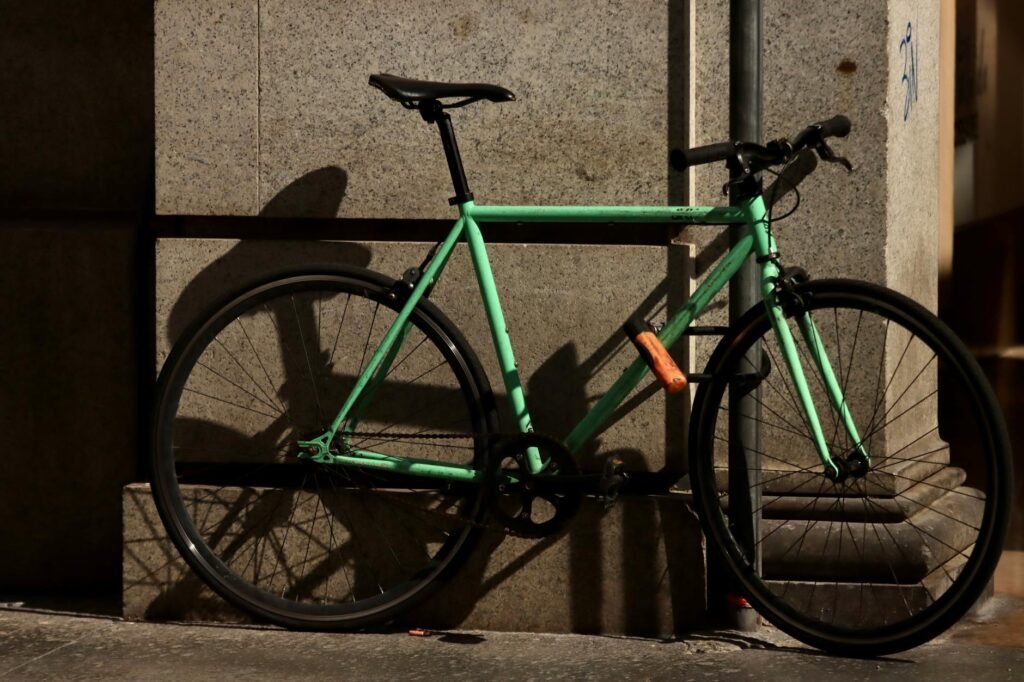
Use the RACK Score before you walk away
Here is the original tool for this article: the RACK Score. Give the spot 0, 1, or 2 points for each line below. For a short errand, 6 points is workable. For a workday, aim for 7 or 8. For overnight storage, a perfect street score is still not enough; switch to indoor or other long-term parking if you can. The point is simple: if the spot fails the test, do not let a decent lock talk you into a bad parking decision. (nacto.org)
| Factor | 0 points | 1 point | 2 points |
|---|---|---|---|
| R – Rack | Tree, railing, weak pole, or signpost/pole you could lift a bike over or that may be removable. (nyc.gov) | Usable object, but awkward or not purpose-built. | Real bike rack or immovable object that lets you capture the frame and at least one wheel. (nyc.gov) |
| A – Anchor and area | Rack wiggles, is hidden, or sits in a dark dead zone far from entrances. (utep.edu) | Visible, but not especially convenient or well lit. | Solid, well-lit, and close enough to normal activity that the bike is not abandoned out of sight. (utep.edu) |
| C – Components | Quick-release front wheel, saddle, lights, display, or detachable battery is left unsecured. (utep.edu) | Some removable parts are protected, some are not. | Both wheels are addressed, and removable accessories or batteries come with you. (utep.edu) |
| K – Keep-time fit | Overnight street parking or all-day parking with a minimal setup. (nacto.org) | A moderate stop with an okay setup. | Parking type matches the stop: short-term rack for an errand, or a more secure long-term option for routine long stays. (nacto.org) |
The Scorecard is deliberately understated. Typically speaking, if I could walk just one extra block to a more neutral rack (they’re everywhere), and to switch my wheel and file my report afterwards with the memory of all the times I told myself that the weak site(s), were probably okay.
Build a lock setup that protects the bike you actually own
Start with the frame, not the wheel. A good city setup is a U-lock through the frame and the rack, with one wheel captured if geometry allows, plus a second lock or heavy secondary cable for the other wheel. If your bike has quick-release parts, treat them like exposed cash: either lock them, swap to theft-resistant hardware, or take the item with you. Stanford and UTEP both stress locking to a bike rack, securing the frame and wheels, and removing easy accessories and batteries. (transportation.stanford.edu)
- Use the rack that lets the lock capture the bike’s frame. If the object only lets you lock a front wheel, keep moving. (transportation.stanford.edu)
- Make the U-lock your primary lock. Cable-only setups are a weak city choice, especially for anything you would hate to replace. (bikeindex.org)
- Secure the second wheel with a second lock or a heavy secondary cable attached to the primary lock. In larger cities, layered locking is often the safer default. (bikeindex.org)
- Remove clip-on lights, bags, displays, and detachable batteries every single time, even for a short stop. (utep.edu)
- If the bike has quick-release axles or a quick-release seatpost, upgrade to theft-resistant skewers or bolt-on hardware. (transportation.stanford.edu)
- Before you leave, tug the rack and the bike. If anything shifts more than it should, redo it. (bikeindex.org)
The best public racks are the ones built for U-lock use. NACTO recommends proven forms such as inverted-U and post-and-ring racks, and it discourages rack designs that work badly with real locks. If you regularly park at the same store, gym, or office and the rack is terrible, that is not your imagination. It is a real security problem. (nacto.org)
A commuter math example
Consider a composite commuter: a $1,200 hybrid locked outside an office three days a week. A solid U-lock costs about $80, a secondary cable or second lock about $35, and theft-resistant skewers about $30. Total security spend: roughly $145. If that bike is stolen, a renter with a $500 deductible and actual-cash-value coverage may recover much less than the price of a comparable replacement. Even replacement-cost coverage still leaves the deductible. On that math, spending $145 to avoid a possible $500 to $1,200 hit is not obsession. It is ordinary loss prevention. Insurance can help, but it is not a substitute for parking discipline. (content.naic.org)
Common mistakes that turn a decent lock into an easy target
- Using a cable as the main lock in a city. Both Stanford and Bike Index warn that cables are easy targets when used alone. (transportation.stanford.edu)
- Locking only a wheel, or locking the frame to something that can be removed or lifted over. (nyc.gov)
- Assuming busy sidewalks or cameras make up for a weak setup. Bike Index specifically warns against both assumptions. (bikeindex.org)
- Leaving quick-release wheels, seats, lights, or a detachable battery on the bike. (utep.edu)
- Treating a garage, cage, or bike room as safe enough to skip the lock. Official guidance says to lock inside those spaces too. (transportation.stanford.edu)
- Leaving a bike outside for an extended period because the rack looks visible from your destination. Long stays call for a more secure parking type, not just optimism. (nyc.gov)
When the first plan still leaves too much risk
There is no honest version of this article that promises a street-parked bike can be made theft-proof. Stanford notes that a knowledgeable thief can still defeat even a U-lock. That is why your backup plan matters. For overnight storage, daily all-day parking, or a high-value e-bike, the smarter move is often to change the storage category: an indoor bike room, a locker, monitored parking, a workplace room, or bringing the bike into your apartment if rules allow. NACTO draws a clear line between short-term parking near entrances and long-term parking, which should emphasize security and weather protection. (transportation.stanford.edu)
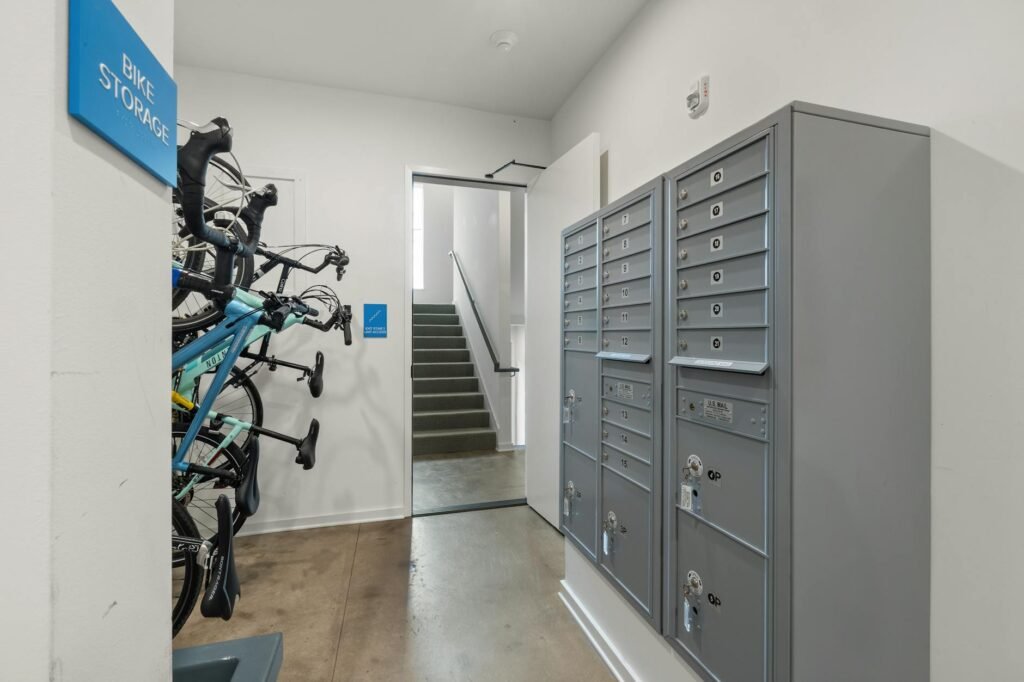
- If your building has a bike room or cage, still lock the frame and wheels once inside. (transportation.stanford.edu)
- If you ride an e-bike, remove the battery and display when practical and do not make a routine of overnight street storage. (utep.edu)
- If a destination has consistently bad racks, consider a lower-value commuter bike for that trip, or use bike share or transit on the highest-risk days.
- A hidden tracker can be a recovery aid, but it is backup, not primary security. (utep.edu)
Do a 30-second walk-away audit
- Look up: can the bike be lifted over the object or slid off the top? If yes, re-park. (nyc.gov)
- Grab the rack and shake it. If it moves, the location failed, not the lock. Find another anchor. (bikeindex.org)
- Check both wheels and the saddle. If any quick-release part can leave faster than the frame, fix that before you walk away. (transportation.stanford.edu)
- Strip the easy stuff: lights, bags, computer, display, battery. (utep.edu)
- Take one clear photo of the locked bike in place, especially if you are leaving it for hours.
- At home, save the serial number, purchase receipt, and photos, and register the bike where a local program or registry is available. Police departments say registration improves the chances of identifying and returning recovered bikes. (police.utexas.edu)
If the bike is stolen, report it quickly and have the serial number, make, model, color, and photos ready. Stanford, UTEP, and UT all emphasize that records and registration make recovery more realistic than memory alone. (transportation.stanford.edu)
Bottom line
The best city bike-lock routine is layered and boring on purpose: a primary U-lock, the right rack, a plan for both wheels, removable parts off the bike, and a parking choice that matches the length of the stop. If you cannot do those things, the cheapest fix is usually changing the parking plan, not gambling that this one time will be fine. That habit often costs less than replacing a bike and hoping insurance closes the gap. (transportation.stanford.edu)
Warning: This article is general information, not legal or insurance advice. Bike theft coverage, deductibles, exclusions, off-premises limits, and replacement-cost rules vary by policy and state. Read your policy and ask your insurer or agent how a stolen bike claim would actually be handled before you rely on coverage. (content.naic.org)
FAQ
Is one U-lock enough for a 10-minute errand?
Sometimes. If the U-lock captures the frame and a real rack, one wheel is also protected, the front wheel is not an exposed quick-release giveaway, and you have removed accessories, it can be enough for a brief stop. In a dense downtown or for a bike with quick-release parts, a second lock or heavy secondary cable is the safer default. (transportation.stanford.edu)
Should I ever lock to a signpost if there is no bike rack?
Usually no. Stanford says to use a bike rack rather than signposts or poles, NYC DOT says to use designated racks where available and to make sure the bike cannot be lifted over the object, and Bike Index warns that signposts may be removable. Walking farther is usually the better trade. (transportation.stanford.edu)
Is bike registration worth it if the bike is not expensive?
Yes. Registration will not prevent theft on its own, but police departments say it helps identify the rightful owner and improves the odds that a recovered bike gets back to you. Save the serial number, photos, make, model, and color whether the bike cost $300 or $3,000. (police.utexas.edu)
Will renters or homeowners insurance cover a stolen bike?
Maybe. NAIC guidance says theft can fall under personal-property coverage, but the details that matter are your deductible, whether settlement is actual cash value or replacement cost, and any policy limits or exclusions. For renters, your landlord’s policy does not cover your belongings. Read the policy before you assume a stolen bike claim will make you whole. (content.naic.org)
Can I leave a bike outside overnight if I use two locks?
That is still a weak plan for many city settings. NACTO treats overnight or several-hours-unmonitored storage as long-term parking that should prioritize better security and weather protection, and Stanford says even bike rooms still require locking. Two locks may reduce risk, but they do not turn curbside parking into good overnight storage. (nacto.org)
References
- NYC Department of Transportation: Bike Smart brochure – https://www.nyc.gov/html/dot/downloads/pdf/dot_bikesmart_brochure.pdf
- Stanford Transportation: Secure Your Bike – https://transportation.stanford.edu/getting-stanford/bike/encouragement/secure-your-bike
- Stanford Transportation: How to Lock Your Bike PDF – https://transportation.stanford.edu/sites/g/files/sbiybj27281/files/media/file/howtolockyourbike.pptx_.pdf
- Bike Index: Protect your bike – https://bikeindex.org/protect_your_bike
- UTEP Police Department: Bike Registration – https://www.utep.edu/police/police-services/bike-registration.html
- University of Texas Police Department: Bicycle Registration – https://police.utexas.edu/services/bicycle_registration
- NAIC: Renting Your Home? Protect Your Belongings with Renters Insurance – https://content.naic.org/article/consumer-insight-renting-your-home-protect-your-belongings-renters-insurance
- NAIC: Homeowners Insurance – https://content.naic.org/consumer/homeowners-insurance.htm
- NACTO: Bike and Scooter Parking – https://nacto.org/publication/urban-bikeway-design-guide/maintenance-and-operations/bike-and-scooter-parking/