
Night riding in the city is rarely a gear problem first. More often, it comes down to route choice, visibility, and predictability. In 2024, 1,103 bicyclists were killed in U.S. traffic crashes. NHTSA says nearly three-quarters of bicyclist deaths occurred in urban areas, and a separate NHTSA safety summary says more than half of bicyclist fatalities happen in dawn, dusk, or nighttime conditions. That is why the smartest budget move usually is not filling an online cart with gadgets. It is fixing the small number of things that most affect whether drivers notice you and whether you avoid the worst conflict points. (nhtsa.gov)
TL;DR
- Choose calmer streets over shorter routes. NHTSA specifically advises routes with less traffic and slower speeds, and says the safest route may be away from traffic altogether. (nhtsa.gov)
- If you buy anything, prioritize a reliable front white light and rear red light before accessory bundles. NHTSA recommends both at night, and CPSC staff research found a rear flashing LED can significantly improve visibility. (nhtsa.gov)
- Keep the reflectors your bike already has. CPSC says bicycles generally must have front, rear, pedal, and wheel or reflective rim or tire elements. (cpsc.gov)
- Avoid treating the sidewalk as the default. NHTSA warns drivers do not expect moving bike traffic on sidewalks, especially at driveways and turns. (nhtsa.gov)
- Use the SIGHT Audit below to decide whether tonight is a ride, reroute, or transit night.
This article is informational, not legal, medical, or engineering advice. Night-riding equipment rules vary by state and city, so check your local requirements. If you do not already own a helmet, make that a higher priority than secondary accessories. The CDC says wearing a bicycle helmet helps reduce the risk of a serious head injury. (cdc.gov)
Start with the risks that actually matter
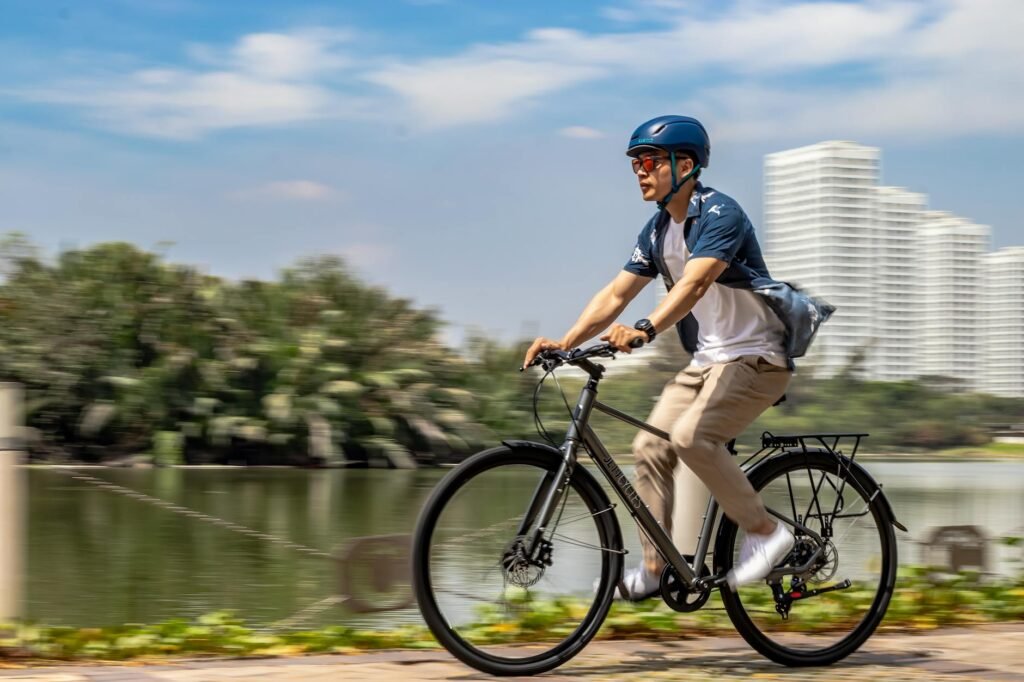
The cheapest safety improvement is usually removing conflict, not adding equipment. City night crashes often cluster around intersections, turns, driveways, lane changes, and the moments when a driver does not expect you to be there. NHTSA tells riders to ride with the flow, obey street signs and signals, minimize blind spots, and choose routes with less traffic and slower speeds. Read that as a spending lesson: do not try to buy your way out of a bad route. (nhtsa.gov)
Night riding makes it tougher to make mistakes while riding – a driver might miss seeing a cyclist for a moment; a delivery truck could block visibility; a dark alley between busy storefronts could cause you to be invisible just when you need to be seen. Streetlights help, but they will never be able to replace how well you see yourself or how predictably you ride in traffic. A budget-conscious rider should look at safety as another expense – repair the highest risk failure points first, then determine if the need to purchase anything still exists.
Use the SIGHT Audit before every new night route
The SIGHT Audit is a quick, simple tool you can complete in less than two minutes, and it will help you determine where each category should be scored (0, 1, or 2) prior to your ride. Scoring 2 indicates the situation has been controlled; scoring 1 indicates the situation requires adjustments tonight; and scoring 0 indicates that you should not solve the situation with positive thinking. If you score a 0, you should reroute, delay, or use a different method of transportation to solve the problem. This audit is intended to help prevent low-cost transportation from being a form of false economy.
| Category | 2 points | 1 point | 0 points |
|---|---|---|---|
| S = See and be seen | White front light, red rear light, and existing reflectors are all working. (nhtsa.gov) | You have only part of that setup, or one item is weak. | You are relying on dark clothing, streetlights, or luck. |
| I = Intersection load | Few complex crossings, clear signals, and you can stay visible and predictable. (nhtsa.gov) | Several busy crossings, but you can slow down and manage them. | Multiple fast, confusing, or poorly lit crossings with heavy turning traffic. |
| G = Gaps in the route | Mostly calmer streets, slower traffic, and minimal driveway or sidewalk conflict. (nhtsa.gov) | One or two uncomfortable blocks. | A major stretch depends on fast traffic, sidewalk riding, or poor sight lines. |
| H = Handling and hardware | Brakes bite, tires are firm, the bike fits, and nothing rattles loose. (nhtsa.gov) | One small maintenance issue, but the bike is still controllable. | Weak brakes, soft tires, chain problems, or a bike that feels unstable. |
| T = Timing and state | You are alert, sober, dry, and not rushing. | You are a little tired or the weather is changing. | You are exhausted, distracted, in heavy rain, or the ride starts with a dead battery. |
If your score is between 8-10, your ride will most likely be manageable; if your score is between 5-7, then you need to make some type of change immediately, which could be to your route, your speed of travel, or your departure time. If your score is less than 5, you should consider public transportation for some portion of your trip, waiting until later to ride, or breaking your trip into a bike plus walk strategy or a bike plus bus strategy. Also remember, SIGHT Audit is not meant to create fear. It is meant to refuse to buy equipment for your bike when the greater problem is the route tonight won’t be conducive to a minimalist type of first-time riding experience.
Spend on visibility, not novelty
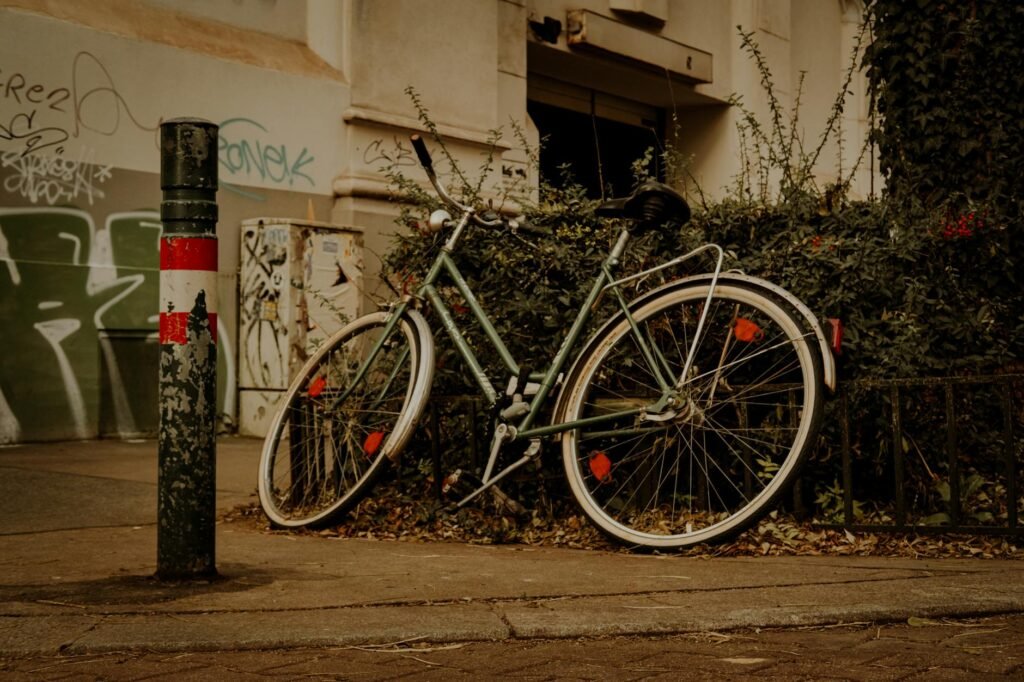
If you already own assorted accessories but lack a reliable front light and rear red light, your priorities are backward. NHTSA recommends a white front light, a red rear light, and reflectors on the bike at night or when visibility is poor. CPSC also says bicycles generally must have front, rear, pedal, and wheel or reflective rim or tire elements, and CPSC staff research found that a rear flashing LED could significantly improve bicycle visibility. That is a strong visibility-per-dollar rule: buy the item that solves the failure mode, not the item that only feels safety-adjacent. (nhtsa.gov)
A bare bones lighting setup can be better than many accessories when it comes to ranking accessories. If you wear reflective clothing when hit with a car’s headlights, it will help to keep you visible; when you wear or carry a light in addition, you will become visible before a vehicle can see you. Keep in mind that existing reflectors on a bike are important, so if you have a bike with a stripped bike for looks, the best use of money is to restore those basic reflectors rather than buying fancy accessories. For riders on a budget, one great accessory and the ability to change your route for free will usually give you a greater benefit than many less expensive accessories.
| If this is the problem | Try the $0 fix first | Low-cost purchase only if still needed | Usually skip for now |
|---|---|---|---|
| The route gets very dark | Shift to a calmer street, leave earlier, or split the trip with transit. | A basic front and rear light set. NHTSA recommends both at night. (nhtsa.gov) | Decorative wheel lights or a second phone mount |
| Drivers miss you from the side | Clean and keep your existing wheel and pedal reflectors. (cpsc.gov) | Reflective tape or ankle bands | Glow gadgets that do not improve your main visibility |
| The bike feels twitchy or slow to stop | Check tire pressure, seat height, and brake function first. (nhtsa.gov) | A tune-up item only after you identify the exact problem | More lights to compensate for a bad bike |
| You keep having close calls at turns | Change the route, slow down earlier, and reduce sidewalk riding. (nhtsa.gov) | Nothing, until the route decision is fixed | Another accessory that does not change your path through traffic |
| You feel overloaded carrying things | Trim what you bring and secure loose items before leaving. (nhtsa.gov) | One simple strap or bag solution if the problem repeats | A large cargo setup for a short urban night ride |
The free changes that do most of the work
- Pick the calmer route, not the shortest one. NHTSA advises riders to choose routes with less traffic and slower speeds, and says the safest route may be away from traffic altogether, in a bike lane or on a bike path. (nhtsa.gov)
- Move your departure time by 10 to 20 minutes if you can. In many city trips, that may be enough to miss the rush of delivery vans, bar traffic, or the heaviest turning volume.
- Ride where drivers expect you to be. NHTSA advises riding with the flow, obeying signs and signals, minimizing blind spots, and signaling before changing position or turning. (nhtsa.gov)
- Do not treat the sidewalk as the default safety plan. NHTSA says cars do not expect moving traffic on sidewalks and may not look for you when backing out of driveways or turning. (nhtsa.gov)
- Slow down before every lighting transition and major intersection. A bright block followed by a dark block can hide you more than it feels like it should.
- Do a 60-second pre-ride check: brakes, tires, chain, laces, lights, and anything loose on the bike. NHTSA says a bike that works matters before anything else. (nhtsa.gov)
- Put the phone away and skip the earbuds. NHTSA explicitly warns against texting, listening to music, or using anything that distracts your eyes, ears, or mind from traffic. (nhtsa.gov)
A realistic budget example
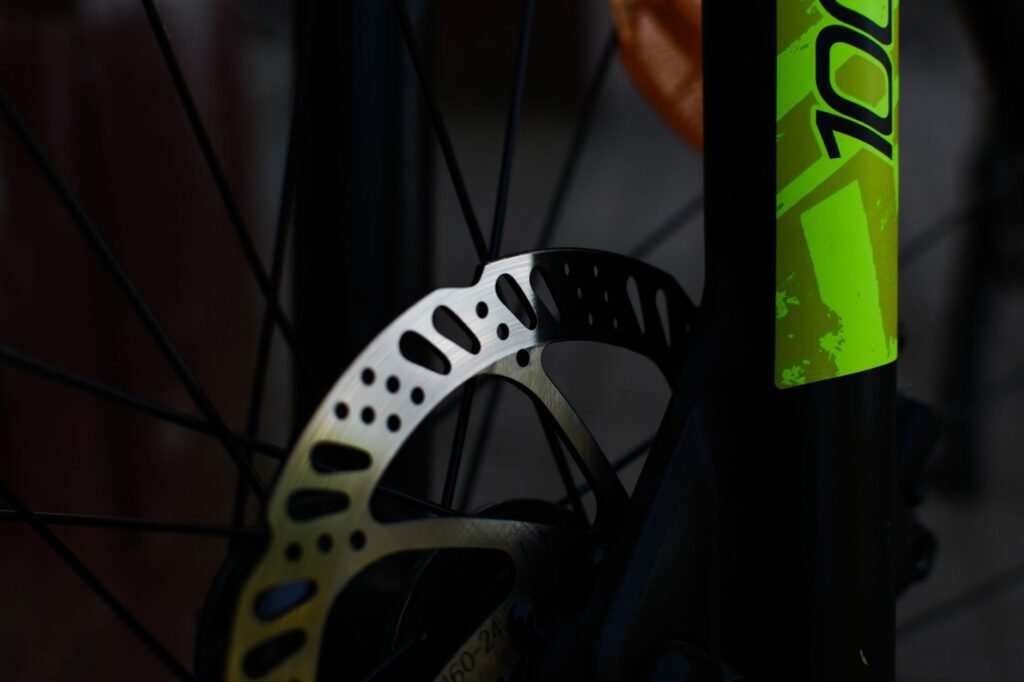
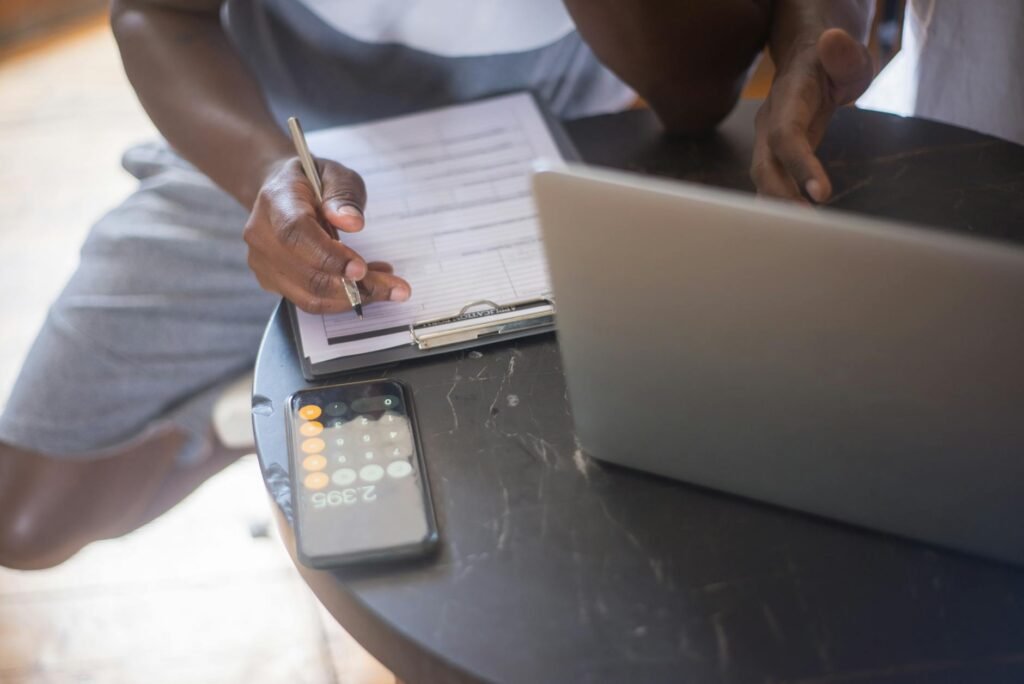
Consider a composite rider, Maya, who bikes 4.1 miles home from work at 9:40 p.m. She already owns a helmet and a backpack. Her first instinct is a common one: open a shopping app and build a $182 cart with a reflective jacket, helmet light, wheel lights, mirror, clip-on turn signals, and a new phone mount. Instead, she runs the SIGHT Audit and realizes the real problem is the route. Her shortest way home uses a fast avenue, two awkward left turns, and a stretch of sidewalk riding past driveways.
She changes to a 4.8-mile route that uses a protected corridor for part of the trip, adds about seven minutes, and lets her leave 15 minutes earlier to miss heavier traffic. She cleans the reflectors already on the bike, checks the brakes, and spends a hypothetical $38 on a basic rechargeable front and rear light set. Her safer version costs $144 less than the accessory cart and addresses the parts of the trip that actually carried the risk.
This particular example illustrates a bigger issue within finance, but the same concept can be applied in regards to biking at night. Biking at night can get expensive when we confuse our inability to find comfort due to a lack of equipment with the real answer being a financial purchase. The actual answer usually has to do more with finding a safe route (building more bike lanes, having a well-lit crosswalk, having a working light, or having self-control not to ride on an ugly part of town).
Common mistakes that waste money or raise risk
- Buying more accessories before fixing the route. A bad corridor stays bad even if you decorate it.
- Assuming streetlights replace bike lights. They do not create the same contrast as your own front and rear lighting. NHTSA still recommends a white front light and red rear light at night. (nhtsa.gov)
- Removing factory reflectors because they look uncool. CPSC says those reflector elements are part of the bicycle safety setup. (cpsc.gov)
- Defaulting to the sidewalk at speed. NHTSA warns that drivers may not expect a moving bicyclist there, especially at driveways and turns. (nhtsa.gov)
- Skipping a brake and tire check because the ride is short. A short trip with weak brakes is still a weak-brake trip. (nhtsa.gov)
- Letting a dead battery become a surprise. If your only light may not make it home, it is not a reliable safety plan.
- Treating fatigue like a minor issue. At night, being tired can erase the benefit of every other good decision.
When the minimalist plan is not enough
A low-buy strategy has limits. If your only route home is a high-speed arterial, an unlit industrial stretch, a series of wide intersections, or a corridor that routinely leaves you squeezed by turning traffic, the answer may not be better budgeting. It may be a different mode for part of the trip. FHWA says the nighttime fatality rate on U.S. roadways is three times higher than the daytime rate, and nighttime visibility is a major safety focus because intersections and pedestrian and bicycle conflicts are such important crash areas. In other words, some environments are bad enough that minimalist riding stops being a smart compromise. (fhwa.dot.gov)
- Bike to the station, then take rail or a bus for the worst segment.
- Ride the trip in reverse during daylight first, so you know which blocks are the real problem after dark.
- Walk one especially bad block instead of forcing a fast merge you do not control.
- Use a rideshare or ask for a pickup on nights when rain, fatigue, or a dead light changes the risk equation.
- If the route is always hostile, consider whether a small recurring transit cost may be cheaper than crash risk, bike repairs, and stress.
How to pressure-test your setup before you rely on it
- Ride the route once in daylight and once at the exact time you would actually return home. Night conditions can change your sight lines more than you expect.
- Do a stop test in a safe, empty area. If the bike feels vague, noisy, or slow to stop, fix that before the next trip. CPSC brake requirements underscore how central stopping performance is to basic bicycle safety. (cpsc.gov)
- Ask a friend to stand at one problem intersection and tell you when they first notice you. This is a cheap way to learn whether your visibility setup works from real driver angles.
- Track two weeks of close calls, hard braking events, and blocks where you felt forced onto the sidewalk. If the count is not improving, reroute again instead of buying another gadget.
- Re-run the SIGHT Audit anytime your work hours, weather, battery reliability, or route changes. Night riding is not a one-time setup.
Bottom line
You do not need a pile of gear to make city night cycling safer. You need to be seen, ride predictably, choose a lower-conflict route, and make sure the bike itself works. NHTSA and CPSC both point back to the same basics: lights, reflectors, functioning brakes, predictable riding, and better route choice. Spend where the risk is real. If a small purchase does not solve the main failure point, it is probably not the right purchase yet. (nhtsa.gov)
FAQ
Do I really need lights if my city streets are well lit?
Yes. NHTSA recommends a white front light, a red rear light, and reflectors on the bike at night or when visibility is poor. Streetlights help the street, but they do not replace bike-specific visibility. (nhtsa.gov)
Is riding on the sidewalk at night safer than riding in the street?
Not automatically. NHTSA says cars do not expect moving bike traffic on sidewalks and may not look for a bicyclist when backing out of driveways or turning. Check local law, slow down if you must use a sidewalk, and do not assume it is the safer default. (nhtsa.gov)
If I can afford only one purchase, what should it be?
If you do not already own a helmet, start there because the CDC says wearing a bicycle helmet helps reduce the risk of a serious head injury. If you already have a helmet, the next best value is usually a reliable front and rear light set, because NHTSA recommends those at night and CPSC research points to real visibility benefits from a rear flashing LED. (cdc.gov)
Can reflective clothing replace lights?
No. Reflective material is useful, but it depends on someone else’s light hitting it. NHTSA still recommends front and rear bike lights at night, and CPSC staff research found a rear flashing LED could significantly improve visibility. (nhtsa.gov)
How do I know whether my older bike is missing basic safety parts?
Start with the basics CPSC lists: a front reflector, a rear red reflector, pedal reflectors, and wheel reflectors or reflective rim or tire elements, plus working brakes. Many older or secondhand bikes are missing some of these because previous owners removed them. (cpsc.gov)
What if the safer route is longer and slower?
For night riding, that is often the right trade. NHTSA advises riders to choose routes with less traffic and slower speeds, and says the safest route may be away from traffic altogether. A trip that takes six more minutes can still be the cheaper choice if it lowers your crash exposure and reduces the urge to keep buying accessories. (nhtsa.gov)
References
- NHTSA: Bicycle Safety – https://www.nhtsa.gov/road-safety/bicycle-safety
- NHTSA: Bicycle Safety research summary – https://www.nhtsa.gov/node/134706
- CPSC: Bicycle FAQs and reflector requirements – https://www.cpsc.gov/FAQ/Bicycles
- CPSC: Bicycle standards and visibility research – https://www.cpsc.gov/Regulations-Laws–Standards/Voluntary-Standards/Bicycles
- FHWA: Nighttime Visibility for Safety – https://www.fhwa.dot.gov/innovation/everydaycounts/edc_7/nighttime_visibility.cfm
- CDC: Preventing concussion and head injury – https://www.cdc.gov/heads-up/prevention/