
TL;DR
- Use the DRIP Score before every wet ride: Downpour, Route, Illumination, and Prep.
- Thunder is an automatic no-go. The National Weather Service says there is no safe place outside when thunderstorms are in the area. (weather.gov)
- In rain, working brakes, reliable lights, sound tires, and dry cargo matter more than premium clothing. (nhtsa.gov)
- Pick the wet-weather route, not the fastest dry-weather route. Slower streets and fewer slick hazards usually beat a shortcut. (nhtsa.gov)
- If your setup is thin, spend first on visibility, brake function, and dry storage before comfort extras. (nhtsa.gov)
A rainy day does not necessarily mean that it will ruin your city cycle commute. The more likely source of problems while commuting to work (and, consequently, ruining your day) is multiple small mistakes. For example, if your rear light was weak, you didn’t service your soft brakes last week, you took a flooded shortcut, the inside of your pack is wet from no liner and you have on work shoes with no way to dry them out after your commute – this is the point in time when your inexpensive to commute to work turns into expensive emergency rideshare service, wet electronics, and replacement clothes; thus, you will pay for a miserable day at least twice.
City riders have even less margin for sloppy prep. NHTSA says nearly three quarters of bicyclist deaths occur in urban areas, and it identifies poor visibility as a major crash factor. Rain does not create those risks from scratch, but it makes ordinary problems harder to see and more expensive to ignore. (nhtsa.gov)
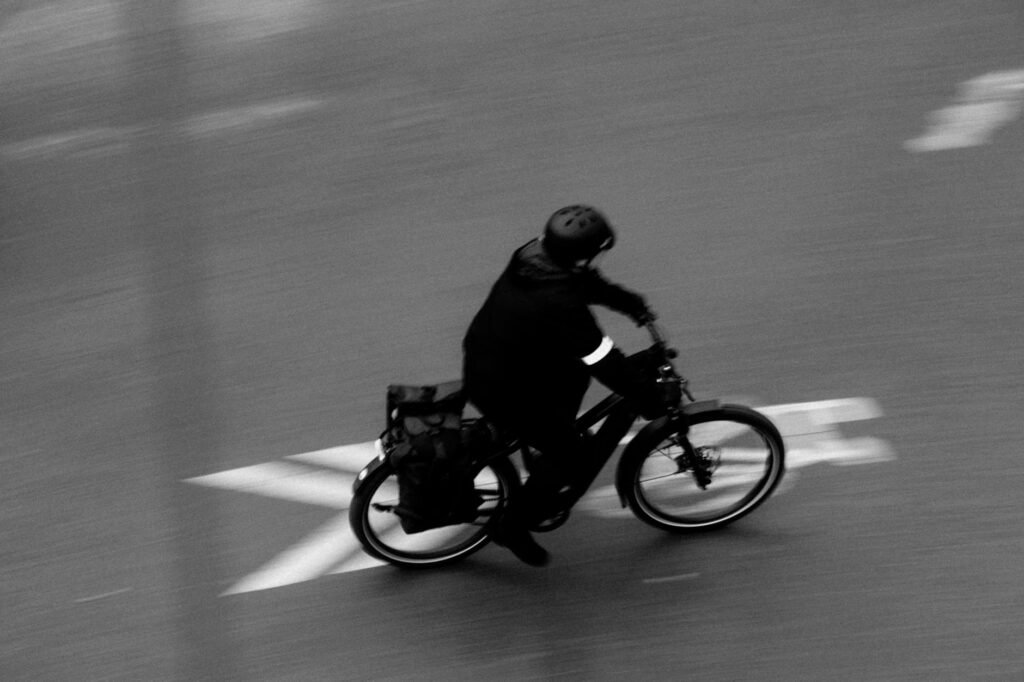
Use the DRIP Score before you touch the lock
You won’t want to contemplate your ride’s durability too long when riding in a rainy, urban environment. You’ll want a dependable tool for quickly deciding what to use. The DRIP Rating offers this solution. Rate each criterion from zero to three while preparing for your upcoming ride.
- D – Downpour and thunder: 0 for light rain with no thunder, 1 for steady rain, 2 for heavy rain that will meaningfully cut visibility or swamp your usual route, and 3 for any thunder or lightning. If you hear thunder, stop scoring and switch modes. (weather.gov)
- R – Route risk: 0 for protected lanes or slow neighborhood streets, 1 for a familiar route with only a few slick spots, 2 if the route includes painted intersections, metal covers, storm drains, or steep descents, and 3 if you already expect standing water or awkward detours. (nhtsa.gov)
- I – Illumination: 0 if you have a bright front light, a clear rear light, and nothing blocking either, 1 for gray daylight, 2 for dawn, dusk, or heavy spray, and 3 if either light is weak, dead, or obscured. NHTSA recommends a white front light and red rear light with reflectors when visibility is poor. (nhtsa.gov)
- P – Prep: 0 if the brakes feel crisp, the tires are in good shape, and your essentials have a dry-arrival plan, 1 for one minor gap, 2 for two gaps, and 3 if the bike has soft brakes, damaged tires, or no realistic way to keep work gear dry. (bikeleague.org)
The way you utilize the above scale is: a 0-3 indicates ride as originally scheduled; 4-6 indicates making adjustments to the planned route, pace and/or gear; 7-9 indicates altering your trip (shortening), or taking public transit; and 10-12 indicates (though you should still ride your bike) you may want to avoid riding your bicycle altogether. The intent of this scale is not so much bravery as it is preventing an avoidable loss.
The 90-second doorway checklist
- Check radar timing and listen for thunder. A wet ride is one thing; a thunderstorm is another. If thunder is part of the forecast window, wait it out or take another mode. (weather.gov)
- Do a brake test. Spin each wheel and confirm each brake stops it cleanly. If hydraulic brakes feel mushy or a wheel barely slows, fix it before you leave. (rei.com)
- Turn on both lights and walk 20 feet behind the bike. Make sure the rear light is not hidden by a jacket, rack bag, or backpack strap. Low-visibility riding calls for a white front light, a red rear light, and reflectors. (nhtsa.gov)
- Inspect the tires quickly. Keep pressure within the suggested range on the tire, look for sidewall cracks or slits, and do not ignore badly worn tread. (bikeleague.org)
- Pack for arrival, not just for the ride. If your destination matters, protect electronics, lunch, and clothes with a liner or plastic bags, and keep a dry backup at work when you can. (bikeleague.org)
- Choose the wet route. Favor slower streets, routes you know, and surfaces you can read. Be extra careful around painted lines, crosswalks, bridges, metal grates, and puddles that may hide potholes. (nhtsa.gov)
If any one of those checks fails badly, change the trip. In rain, “probably fine” is one of the most expensive phrases a commuter can use.
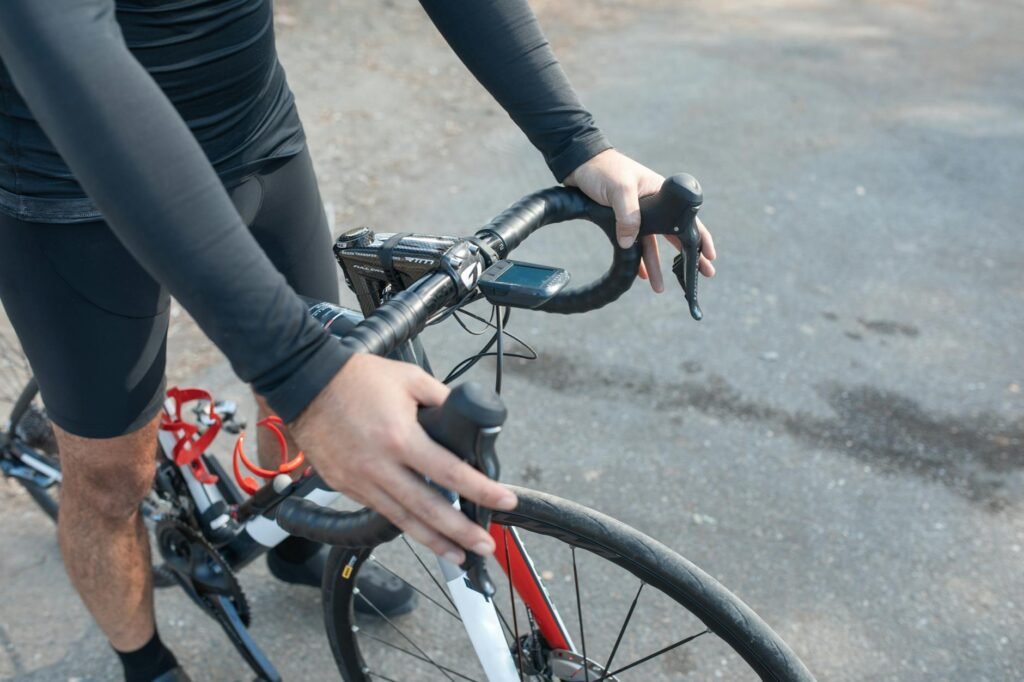
When to ride, when to modify, and when to punt
This table turns the same safety guidance into a quick city-rider decision. It is intentionally conservative. Wet commuting is still commuting; you still need to arrive functional, not just upright. (nhtsa.gov)
| Before you leave | Best call | Decision |
|---|---|---|
| Light rain, daylight, familiar low-stress route, and the bike passes the checklist | Ride, but brake earlier and leave more space than usual. (bikeleague.org) | Go |
| Gray rain or dusk, but both lights are strong and unobstructed | Ride only with both lights on and a route that avoids the fastest roads. (nhtsa.gov) | Go with changes |
| Heavy rain, standing water, or lots of slick street furniture on the route | Reroute, delay, or switch modes. Puddles can hide deep potholes, and slick surfaces stack risk fast. (bikeleague.org) | Usually no-go |
| Any thunder or lightning | Do not ride. Get indoors or use another mode. (weather.gov) | No-go |
| Soft brakes, worn tires, or a dead front or rear light | Fix the problem before you leave. Rain is not the time to hope the bike gets by. (nhtsa.gov) | No-go |
If you find yourself arguing with the table, that is useful information. Most bad rain rides begin with a rider negotiating against obvious signals.
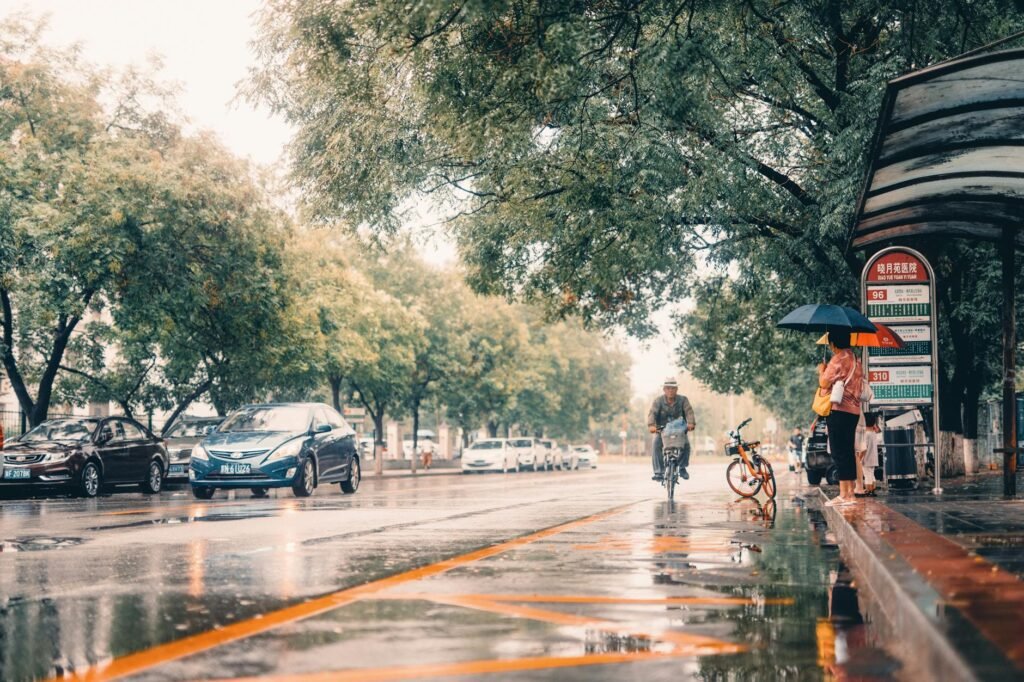
What to buy first if your rain setup is thin
Treat rainy commuting gear as a sequence, not a shopping spree. First solve the failure points that can end the ride or ruin the day. Then spend on comfort. That keeps the budget honest.
- Priority 1: visibility. Reliable front and rear lights come before premium jackets, because a city rider who cannot be seen is solving the wrong problem. (nhtsa.gov)
- Priority 2: braking and tire condition. If the brakes feel weak or the tires are worn, a tune-up or fresh tire beats any accessory. (rei.com)
- Priority 3: dry cargo. A cheap bag liner, zip pouch, and spare socks can save a workday even if the rest of you gets a little wet. Packing gear inside plastic bags or rain covers is a perfectly sensible low-cost fix. (bikeleague.org)
- Priority 4: fenders. They keep rain, dirt, and mud off you, and they make repeat rainy rides far easier to live with. (bikeleague.org)
A realistic budget example
Suppose Maya rides 4 miles each way, three office days a week, and has $160 to improve rainy commuting. Instead of buying the nicest shell she can afford, she spends $40 on a brake tune-up, $45 on full fenders, $55 on a dependable light set, and $20 on a dry-bag liner plus a spare-socks kit. Total: $160.
Now compare that with one rough quarter of panic spending: four $24 rideshares home when the ride suddenly feels unmanageable is $96; one $46 pair of replacement work shoes after a soaked commute brings the total to $142; add one $22 bought lunch because the packed food got drenched, and the total reaches $164. The gear does not guarantee savings on a spreadsheet. It simply replaces repeated emergency spending with one planned purchase and a much safer ride.
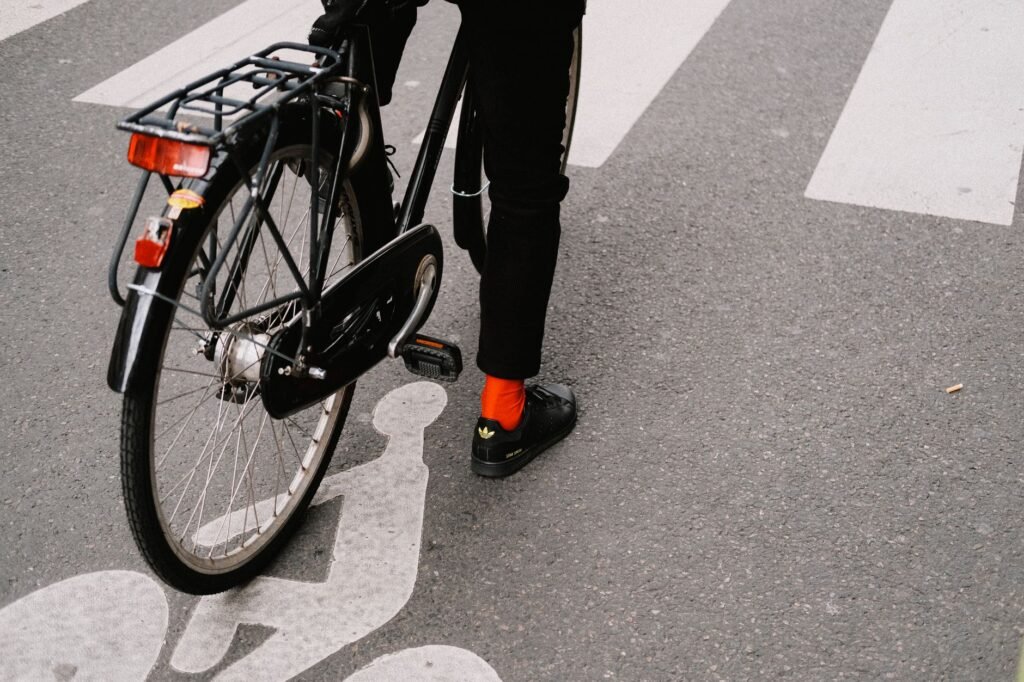
Common mistakes that turn a wet ride into an expensive one
Most miserable rain commutes are not caused by extreme weather. They are caused by ordinary mistakes left uncorrected.
- Leaving with yesterday’s dead rear light because the street looks bright enough. In rain, visibility can be limited well before sunset. (nhtsa.gov)
- Using the same fastest route you use on dry days. Wet commuting rewards calmer streets and better surfaces, not the shortest clock time. (nhtsa.gov)
- Braking late and hard instead of early and smooth. Water on rims and slick surfaces reduce your margin for last-second decisions. (bikeleague.org)
- Ignoring soft brakes or tired tires because the ride is short. A short commute still includes every intersection. (rei.com)
- Buying waterproof clothing before solving cargo protection. A wet laptop, wet lunch, or wet shoes still means the system failed. (bikeleague.org)
- Riding through puddles you cannot read. They may conceal deep potholes and debris. (bikeleague.org)
When the first plan is not enough
Some motorcycle operators consistently follow good procedures, yet their component combinations yield sub-par performance. This happens all the time. As an example: on days when it rains, most motorcycle operators find that they have issues with wet commuting due to either the connections that they have made, the way that they have their bag setup for being opened when they ride in the rain, any obstructions that cause lighting problems, any puddles they ride through, and not being able to contact their bicycles. Therefore follow these steps to continue to have positive results.
- No fenders yet: keep the trip short, protect cargo, and accept that your legs may get dirty. For repeated city commuting, fenders are one of the simplest quality-of-life upgrades. (bikeleague.org)
- Dry arrival still is not happening: keep a spare set of clothes or shoes at work if possible, and double-bag the items that matter most. The goal is not perfect dryness; it is a functional arrival. (bikeleague.org)
- The storm escalates to thunder: get inside a substantial building or other proper shelter and wait. Do not try to “just finish” the last mile. (weather.gov)
- Brake feel is inconsistent midweek: stop treating it as a nuisance item. REI notes that a tune-up is cheaper than an injury caused by a broken bike. (rei.com)
- The route still feels sketchy after all of this: test alternatives on a weekend and choose the one that is calmer, slower, and easier to read in wet conditions, even if it takes a few more minutes. (bikeleague.org)
How to pressure-test your rainy-day setup
- Do one 15-minute neighborhood ride in light rain before you trust the setup on a workday.
- At one quiet stop sign, compare your normal dry braking habit with the buffer you actually want in the wet. If the difference surprises you, the route or bike setup needs work.
- After the ride, inspect the failure points: Was the rear light visible? Did the bag leak? Did your glasses fog? Were your hands warm enough to brake and shift cleanly?
- Write down what got wet and what you never used. Three wet rides will usually show you the holes in the system better than another hour of online shopping.
- Re-run the DRIP Score on the next storm. The goal is a repeatable routine, not a heroic commute.
Verification is important because a commuter’s experience with rain-related commutes involves a series of processes rather than simply well-formed thoughts. A person who checks out their equipment under controlled conditions often has lower overall costs than someone who constantly tries to create a new solution to the next time they have a bad commute.
Bottom line
The smartest rainy-day checklist is short. If there is thunder, do not ride. If the brakes or lights fail, fix them first. If the route is flooded or unreadable, reroute or switch modes. If the ride is merely wet, leave with a dry-arrival plan and enough visibility to be obvious in traffic. That is how city riders keep rain from turning a low-cost commute into an expensive mess. (weather.gov)
FAQ
Do I really need lights in daytime rain?
If visibility is poor, yes. NHTSA recommends a white front light and red rear light with reflectors when visibility is poor, and rainy gray daylight can reduce contrast more than riders expect. (nhtsa.gov)
Is thunder a hard no even if the rain looks light?
Yes. The National Weather Service says there is no safe place outside when thunderstorms are in the area, and if you hear thunder you are likely within striking distance. (weather.gov)
Are fenders worth it for a short city commute?
Usually, yes, if you ride in rain more than occasionally. The League of American Bicyclists notes that fenders help keep rain, dirt, and mud off you, and they make repeated wet rides much easier to tolerate. (bikeleague.org)
What is the first rainy-day upgrade if I only have about $50?
If your lights are weak, start there. If your lights are already solid but the brakes or tires are questionable, spend the money on service or a replacement tire instead. Visibility and stopping come before comfort gear. (nhtsa.gov)
Should I lower tire pressure for wet pavement?
Start by staying within the tire’s suggested range and making sure the tire itself is in good condition. If you want to experiment with pressure, make small changes and test them before a workday rather than guessing on the morning commute. (bikeleague.org)
How do I know whether my helmet is still okay after a crash?
CPSC says bicycle helmets must fit properly and warns that a helmet that has received an impact may be damaged even if that damage is not visible. Follow the manufacturer’s instructions, and replace the helmet if it took a meaningful hit or the maker recommends replacement after impact. (cpsc.gov)
References
- NHTSA – Bicycle Safety – https://www.nhtsa.gov/road-safety/bicycle-safety
- U.S. Consumer Product Safety Commission – Bicycle Helmets Business Guidance – https://www.cpsc.gov/Business–Manufacturing/Business-Education/Business-Guidance/Bicycle-Helmets
- National Weather Service – Lightning Safety – https://www.weather.gov/safety/lightning-safety
- League of American Bicyclists – Commuting – https://bikeleague.org/ridesmart/commuting/
- REI Expert Advice – Get Your Bike Ready for Riding Season – https://www.rei.com/learn/expert-advice/spring-cycling.html